




How to Improve Utilization – And Still Satisfy the Customer
With proper fleet planning techniques, having 25 cars on the lot and 100 expected reservations that day is a very manageable situation.
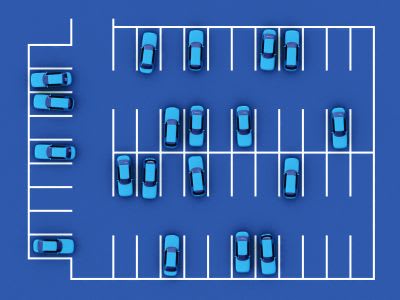
In looking at a vehicle rental operation with the goal of improving profitability, improving utilization is almost always near the top of the list of things to focus on.
However, improving utilization is usually easier said than done.
We choose and train customer service agents who like people and like to make customers happy. A rental agent with good customer service instincts will want to have the correct vehicle cleaned and ready for each reservation and, if possible, other vehicles available in case the customer wants to upgrade or decides that the vehicle reserved is not exactly what is needed.
However, the rate structure in the always competitive vehicle rental industry requires most vehicle rental operations to run high utilization to be profitable. This is why a successful rental operator must foster a culture of high utilization. Employees must be trained to think that running out of cars is good, not bad.
High utilization is impossible without a good fleet plan, which provides the right number and right mix of vehicles throughout the year. Fleet planning is one of the most important aspects of a successful car rental business, and could be the subject of a series of articles or even a book. We will talk about fleet planning techniques that help decide the correct number of vehicles. Fleet mix, manufacturers, risk versus program, and other aspects of a good fleet plan will not be discussed here.
Calculate Your Optimal Fleet Size
Predicting the future is never easy, and as we have seen recently, sometimes impossible. The best place to start looking into the future is to look at the past or, in this case, your history of renting vehicles. You should have a record of the number of vehicles on rent, ideally by day, but at least have monthly averages. If this history goes back two years or more you can look at year-over-year changes and seasonal factors, though even one year’s history is useful.
Though this is changing with the new economy, the industry historically tended to be over-fleeted. This is partly because we often measure ourselves by fleet size and partly because the manufacturers used to make it very tempting and easy to add fleet. Those days are probably gone, but it is still a very useful exercise to look at what size fleet we should have had in the recent past.
If you only have monthly average on-rent data available, divide each month’s average on rent by 0.85. This gives you a simplistic view of the fleet size you would have needed to achieve 85 percent utilization. If you have daily numbers, write down the highest number of vehicles on rent each month. Add 2 percent for vehicles in service. This gives you the number of vehicles you would have needed to never lose a rental by being out of vehicles. However, this is not the correct size fleet, because no operation can afford to never be out of cars. Calculate the average on rent for each month and you will see that the fleet size we just arrived at does not yield good utilization.
[PAGEBREAK] Hopefully this exercise has opened your eyes and put you in the mood to plan your fleet conservatively. Take a look at your history of on rents. Think about what you expect to do in the next 12 to 15 months. Will current trends continue? Will your business be up or down, and by what percentage? Arrive at your best forecast of your on rents for the next 12 months. To decide what fleet you need, divide these numbers by 0.85 or 0.90 for a conservative estimate and 0.80 for a very aggressive estimate. The 0.80 calculation will give you extra vehicles, which allows you enough fleet to grow faster than your on rent forecast, but it will yield lower utilization and profits. (See on Rent History and Forecast Chart below.)
Foster a High Utilization Culture
Once you have the right size fleet, the focus of all employees, starting with senior management, has to be on utilization. “How many cars do we have available to rent today?” should be the first question asked in any conversation with an employee.
I was part of a team that took over a previously corporate-owned location that was completely focused on never running out of cars. The staff would not accept same-day reservations or walkups unless there were enough vehicles actually on the ground to handle reservations that they already had. They did not know how to factor in no shows or predict returns. The result was utilization that rarely exceeded 70 percent and very large losses.
When we took over, we right sized our fleet by turning back 20 percent immediately. We also opened the reservation tap. By Wednesday of the second week, we had enough reservations to keep the fleet busy. That morning the supervisor came running into our office and said “You guys are in trouble! We only have 25 cars and we have more than 100 reservations!” After pointing out that “you guys” included her, we told her that there would be at least 25 no-shows and 70 returns, allowing us to rent another 20 cars or so. She was horrified, but did as we said. The operation had more than 85 percent utilization that day for the first time in over a year. We had more vehicles on rent in our first month than had been on rent the previous month, even though the fleet was down 20 percent.
[PAGEBREAK] Predicting Returns and No Shows
A high utilization culture has to be a team effort. Management has to constantly focus on the key numbers. Even more importantly, management has to back up the frontline staff. Being out of cars can be stressful, and the burden should not always fall on the shoulders of the rental agents.
All staff should be taught how to calculate availability by predicting returns and no-shows. The pattern is surprisingly consistent for both, but occasionally the predictions will be wrong. This is where the staff has to be trained and conditioned to understand that running out of cars is acceptable and, in fact, necessary to be profitable. They must be confident that management will back them up if they are wrong occasionally.
Many rental operations run specialty vehicles very profitably. Utilization is usually much lower for specialties, but rates are high enough to offset. The danger is that staff can be conditioned to expect lower utilization company-wide. Tracking utilization separately for specialties and standard rental vehicles is one good solution.
Dealing with Vehicularly Challenged Days
Staff should be commended and rewarded when utilization is high. We prepared a somewhat lighthearted training document, “Procedures for Vehicularly Challenged Days,” and used it to help develop a high utilization culture. Some of the main points covered were:
• Be prepared. Dealing with an anticipated shortage of cars should start long before you run out. Find another company that will take your reservations, preferably honoring your rates. Go through your reservations and choose which ones to refer — short rentals, not repeat or corporate customers, etc. Start referring before you run out.
Look at specialty vehicles and plan substitutions where possible. Larger vans can be used for minivan reservations. SUVs can be used for luxury reservations. Again, start early when you have lots of options. It is much more difficult if the only vehicle on your lot is a compact and you have a minivan reservation.
• Make sure you can rent every possible vehicle. Get cars out of the shop. Call overdues. Reconcile the “Cars Not on Rent” list.
Assign staff to greet customers as they arrive or to even ride the bus with them. It is very bad customer service to have customers wait in line, and when it is their turn, to be told to get back on the bus to go to another company.
Reward Good Performance
We also instituted a bonus plan that rewarded high utilization. Everyone working received a $5 bonus per shift if company-wide utilization exceeded 85 percent, and everyone working received a $10 bonus if company-wide utilization exceeded 90 percent. (Only one bonus per employee per shift, but the utilization bonuses could add up nicely in a good month.) The bonus plan was generous, but when company-wide utilization was above 90 percent, we could certainly afford it.
It took a few months and some staff replacement, but we got to the point that utilization was almost always above 80 percent and often above 85 or 90 percent.
If your utilization is consistently high, you will probably find that you have a higher daily dollar average because you are not forced to discount as often. Also, your labor costs will be lower because it is easier when you have fewer cars on the ground and your overhead will be lower because you need less space. Isn’t that worth the extra effort?
Jim Tennant has more than 30 years experience in the vehicle rental industry as both a franchisor and franchise operator, and presently as an industry consultant and expert witness.
More Rental Operations

U.S. Business Travel Drives $623 Billion+ in Economic Impact as Spending Reaches $538 Billion
The data also underscores the industry’s strong multiplier effect across the U.S. economy, revealing that each dollar invested in business travel in 2024 generated $1.16 in GDP.
Read More →
Rental Fleet Sales Skating Just Above 2025 Levels
The U.S. economy's continued growth and positive business investment are creating a favorable environment for fleet vehicle demand.
Read More →
Grow Your Rental Business Beyond Cars
Rental fleet operations are facing numerous evolving challenges and opportunities from AI technology to rate and revenue management, to customer service and business growth.
Read More →
Using AI to Create Clarity, Not Conflict, in Rental Car Damage
Rental companies still need people, policy, judgment, and thoughtful implementation, with operators remaining in control of the customer experience.
Read More →
Get Ready To Roll: No Stopping Self-Driving Rental Cars
The autonomous mobility technology revolution will move at its own pace, but sooner rather than later.
Read More →
Southwest Airlines Selects CarTrawler For Its Car Rental Booking Platform
The platform is designed to allow customers to compare and book rental vehicles more easily during the travel booking process.
Read More →
Cross-Pressures, Evolving Trends Drive 2026 Rental Car Industry
A combination of cautious economic behavior, shifts in the rental vehicle market, and technological influences are shaping car rental operator decisions.
Read More →
Government Affairs Executive Wins Leading Rental Car Industry Award
Robert Muhs started in the car rental industry with Avis Budget Group two years before the first International Car Rental Show.
Read More →
Green Motion Expands Its African Presence with Mozambique Launch
This new rental car outlet reflects the growing demand for reliable transportation and the emphasis on sustainable travel across the continent.
Read More →
RentalMatics, GeoInt Partner On Rental Car Speed Tracking Tech
Rental operators can now detect and act on speeding while vehicles are still on rent, thereby reducing fines, admin workload, vehicle wear, and safety risks.
Read More →