




Getting Into Vans?
While 12- and 15-passenger vans offer great earning potential, they require more time and labor and come with greater risk and responsibility. It’s not a business for the casual car rental operator.

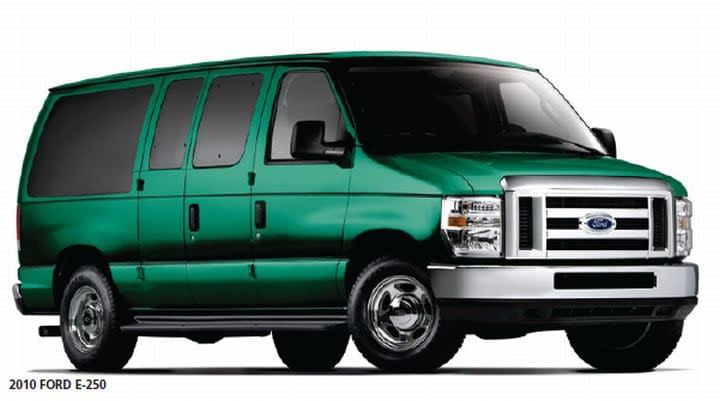
Did your parents ever warn you not to get into strange vans? The same wisdom might hold true when it comes to renting 12- and 15-passenger vans.
Revenue per unit of $2,500-or higher-is possible in good months. However, a limited rental season, maintenance issues, increased time and labor, high insurance premiums and liability exposure should make you think twice about getting into this challenging business model.
No Van for All Seasons
The overriding factor that steers business decisions about 12- and 15-passenger van rentals is its highly seasonal nature. Summer weekends are sell outs, with other peaks around spring break, Thanksgiving and Christmas. At other times business can be virtually non-existent.
Because the rental period is so well defined, the up- and down-fleet periods are the exact opposite of the strong and weak selling months. Rental demand ramps up in the spring when wholesale prices are high. Vans flood the resale market after the summer when demand is soft.
"I need to be wise enough to understand how much fleet to have when my utilization goes up and how much cost I'm going to eat when demand dries up," says Yaz Irani of Airport Van Rentals, a van specialist serving four California airport locations.
"Ideally you should sell them before July 4, though that's the beginning of your biggest month in rental," says Dave Capps of Capps Van and Truck Rental, who rents large passenger vans, cargo vans, pickups and flatbeds out of 15 locations in Texas, Oklahoma and Arizona. "It's a conundrum. I've been trying to get around that for 35 years," he says.
This strict seasonality is managed in part with a mix of risk and repurchase units. However, for a normal summer season, a six-month repurchase program will still encompass two slow months, says Irani.
Verc Rentals serves Boston's south suburbs out of six locations with a mix of passenger cars, SUVs and vans. Jack Vercollone, president, de-fleets repurchase units at the end of summer and holds the risk units, a third of his van fleet, to rent through the winter.
"The minute school starts, [demand] drops like a hot potato," says Vercollone.
[PAGEBREAK]
Opportunity Sales
There are fewer manufacturers' repurchase programs these days; they're expensive and they come with more restrictions, these operators say. Because vans accrue miles quickly, negotiating mileage caps with the manufacturer can get tricky.
For risk units, the auctions are still the primary remarketing outlet. Some try retail, though the vans can sit for awhile. "The advantage to auction, even though it could cost us $1,500 to $2,000, is the quick cash," says Irani.
Capps holds his risk vans for a year to 15 months, though he looks for opportunity sales when the market is right. Capps once found that he'd make more money selling off much of his van fleet in May instead of holding through the summer.
The depreciation curve on large passenger vans is steep in the first year. This suggests longer hold times, though maintenance issues and potential liability temper the desire to run up the miles. These operators say it is ideal to remarket at 30,000-40,000 miles while still under manufacturers' warranties.
Forget Utilization
Vercollone says it's not uncommon for 75 percent of his fleet to sit during the week. "You can't give them away if no one wants them," he says. "You almost want to short yourself and be out on the weekend." Vercollone cuts his rates in half during the week in the winter.
"If you're going to rent any type of commercial vehicle - big pickup, box truck, stakebed, 15-passenger or cargo van - throw the utilization table out the window," says Capps. "It's not a meaningful scenario because there's nothing you can do to increase it."
Instead, Capps uses RPU as a benchmark. Still, "You can't force the RPU," he says, noting that commercial vehicle and van rentals are driven by need, not rates. "Fooling around with rates to compete with the guy down the road is not going to work," says Capps.
No Margin for No-shows
Overbooking to compensate for no-shows will get you in trouble, because there are no alternate choices or upgrades to accommodate 12 to 15 travelers. "A 20 percent overbook on a van is the kiss of death," says Capps.
No-shows are harder to swallow because of the specificity of the equipment. Confirming the reservation is essential. Capps always follows up online reservations with a phone call to double check.
It is common to take a credit card with the reservation. Most operators take a cancellation fee ($50, $100 or a day's rental) in advance, with a 48- to 72-hour cancellation window.
Slow Down and Educate
With passenger van rentals, extra time and labor is required in each part of the process, from the initial phone or Internet reservation to vehicle prep, driver education, check-in inspection and cleaning.
Capps performed a time-and-motion study on prepping a 15-passenger van for rental. He calculated each van costs him $23, compared to $6-$7 for a car.
These operators take extra time with the customer at checkout to ensure they're comfortable driving the van. Irani spends 10 minutes going over the vehicle, explaining ride height and van width, side-mirror settings, how to make turns, speed and braking tips and weather and road conditions.
"In car rental you're used to a fast pace and it's hard to adjust from that," Irani says. "[The renter] is responsible for 14 other people's lives. If you don't take the time to educate the customer, you open yourself to liability. You have to put the fear of God in them."
[PAGEBREAK]
Nervous About Breakdowns
Because large passenger vans are rented for long trips and thus accrue lots of miles, tight preventive maintenance measures are essential. Breakdowns can be extra costly.
"If I have a transmission blow 800 miles away in Flagstaff, Ariz., I have to get them in another van, which costs me another $1,500 to $2,000 to get 15 kids in the middle of nowhere and maybe cover hotels and meals," says Irani. "It's a total loss for me."
Proper tire pressure is important, especially with so many passengers. But check the manual, as newer van models require tire pressures that vary greatly from passenger car models. "The last thing I want is a tire to blow out because I didn't check it," says Irani.
Tread depth and brakes wear out quickly and at unpredictable rates due to heavy loads and irregular driving patterns.
RACs must decide if they'll allow renters to tow a trailer. "If you don't allow it, they might do it themselves," says Capps, who has seen renters cut wiring harnesses and rig an unsafe hitch assembly. Renters will tie gear to the roof as well. Forgetting to check the roof for damage could cost $3,000 in repairs, Capps says.
Accidents Happen
Sharky Laguana of Bandago, a company that specializes in 15-passenger and Sprinter vans for long-term use, such as touring bands and film and TV production, has seen his share of beat-up vans. Laguana says that due to the vans' increased size, it's easier for passenger van drivers to "run into things," such as backing into stationary objects, hitting overhangs at fast food drive-ins and airport parking, or scraping low ceilings in garages.
"An employee backed into a car and did about $4,000 worth of damage. We'll pay that claim out of pocket, because we don't want to run up our insurance," says Laguana, whose six locations serve the San Francisco, Los Angeles, Portland, Chicago, New York and Nashville markets.
Not to be overlooked is the cost to process a claim-regardless of fault-from accident reports and documentation and subrogation to dealing with claims processors and insurance companies, as well as the hit to your cash flow waiting to get the vehicle fixed.
"If you carry physical collision coverage, you'll be filing a lot of claims," says Laguana, who has an employee focused primarily on claims processing. "Will you pay them out of pocket? Or submit them to your carrier, and then have the carrier raise your rates? You need to think about the impact it will have on your bottom line."
[PAGEBREAK]
Protect Yourself
An Internet search for 15-passenger van accidents reveals a history of tragic news reports as well as personal injury law firms that specialize in large van rollover litigation.
Safety and liability issues with large vans converge on several fronts. First, these vans are rented to carry large numbers of people, which magnifies the potential for injuries from an accident.
Second, 15-passenger vans historically have a high incidence of rollovers due to their high center of gravity and large passenger load. A full van places an inordinate amount of weight behind the rear wheel, which further affects driving characteristics. As of 2004, the National Highway Traffic Safety Administration (NHTSA) has required electronic stability control systems on all new 15-passenger vans. This has reduced but by no means eliminated the rollover possibility.
Driving behavior plays a key role. Most van renters - administrators for schools, churches or sports teams - are not experienced 15-passenger van drivers. Combine that with a long drive and 14 people distracting him and it could be a recipe for disaster.
One operator got hit with a lawsuit after a van overturned on black ice. A passenger was paralyzed. The insurance company settled for $5 million. The operator was lucky not to lose the business, instead paying three times the insurance premium for a tenth of the coverage. "This is the first year we're back to paying close to what everybody else is paying," says the operator. "We've had that chain around our necks for a long time."
It is paramount to protect yourself. Irani recommends carrying a minimum of $10-$15 million in umbrella liability coverage to rent large vans. Vercollone self insures with a very high limit on liability on large vans.
Also, check the laws for liability and insurance coverages in surrounding states, as their rules will come into play if your van gets into an accident out of state.
Ideal Business for Van Rentals
Irani likens regular car rentals and passenger van rentals to fast food and a full-service restaurant. Both serve meals, but they have different business models.
These operators say success in the van rental market comes with specialization, which allows them to focus on the peculiar issues inherent in van purchasing, remarketing, maintenance and liability.
"If you're going to do it, you have to make this your thing," says Laguana. "You have to decide what kind of business you're running and focus on it."
[PAGEBREAK]
Rollover risk of 15-passenger vans?
NHTSA research has found that the risk of a rollover crash increases dramatically as passenger load increases to full load in a 15-passenger van. This increased risk occurs because the passenger weight raises the vehicle's center of gravity and causes the center to shift rearward. As a result, the van has less resistance to rollover and handles differently from other commonly driven passenger vehicles, making it more difficult to control in an emergency situation.
For more information on reducing the risk of rollover crashes in 15-passenger vans, visit http://www.nhtsa.dot.gov/cars/problems/studies/15PassVans/
15PassCustomerAdvisory.htm.
Passenger Van Safety
Verc Rentals includes a laminated safety agreement in all passenger vans:
Passenger Van Rentals
For the safety of our customers renting 12- or 15-passenger vans we ask that you read and sign this agreement. Because these vans handle differently than any other vehicle, it is important that the renter and/or driver understand the necessary precautions.
● All passengers must be properly buckled up in seatbelts at all times.
● The van must never exceed the posted speed limit.
● Avoid making sharp turns.
● Allow additional braking time.
● Stay alert; stop to rest frequently; require the passenger in front to stay awake to assist the driver.
● Require passengers to fill the van from the front to the back, not skipping seats.
● No more than 11 passengers plus a driver in a 12-passenger van; 14 passengers plus the driver at any one time in a 15-passenger van.
● Do not exceed combined passenger and cargo weight specifications recommended by the manufacturer: 2,500 lbs. total in a 12-passenger van; 2,700 lbs. total in a 15-passenger van.
More Rental Operations

U.S. Business Travel Drives $623 Billion+ in Economic Impact as Spending Reaches $538 Billion
The data also underscores the industry’s strong multiplier effect across the U.S. economy, revealing that each dollar invested in business travel in 2024 generated $1.16 in GDP.
Read More →
Rental Fleet Sales Skating Just Above 2025 Levels
The U.S. economy's continued growth and positive business investment are creating a favorable environment for fleet vehicle demand.
Read More →
Grow Your Rental Business Beyond Cars
Rental fleet operations are facing numerous evolving challenges and opportunities from AI technology to rate and revenue management, to customer service and business growth.
Read More →
Using AI to Create Clarity, Not Conflict, in Rental Car Damage
Rental companies still need people, policy, judgment, and thoughtful implementation, with operators remaining in control of the customer experience.
Read More →
Get Ready To Roll: No Stopping Self-Driving Rental Cars
The autonomous mobility technology revolution will move at its own pace, but sooner rather than later.
Read More →
Southwest Airlines Selects CarTrawler For Its Car Rental Booking Platform
The platform is designed to allow customers to compare and book rental vehicles more easily during the travel booking process.
Read More →
Cross-Pressures, Evolving Trends Drive 2026 Rental Car Industry
A combination of cautious economic behavior, shifts in the rental vehicle market, and technological influences are shaping car rental operator decisions.
Read More →
Government Affairs Executive Wins Leading Rental Car Industry Award
Robert Muhs started in the car rental industry with Avis Budget Group two years before the first International Car Rental Show.
Read More →
Green Motion Expands Its African Presence with Mozambique Launch
This new rental car outlet reflects the growing demand for reliable transportation and the emphasis on sustainable travel across the continent.
Read More →
RentalMatics, GeoInt Partner On Rental Car Speed Tracking Tech
Rental operators can now detect and act on speeding while vehicles are still on rent, thereby reducing fines, admin workload, vehicle wear, and safety risks.
Read More →