




Guaranteed Reservations: Are We Ready?
No-show fee implementation has recently turned from discussion to action as car rental companies, trade organizations, online travel agencies and global distribution systems work together to solve the technological hurdles. But can the car rental industry manage the change as a customer-friendly initiative?


The hotel industry implemented no-show terms and fees during the 1970s and 1980s, and they are an accepted industry practice among travelers. So why are car rental companies late to the dance?
The financial implications are hard to ignore:
Ten to 30 percent of all post-paid reservations are no-shows, depending on the channel booked (direct to supplier has a lower no-show rate while large travel portals have higher rates).
As a result, car rental companies, especially in high-demand markets, routinely overbook, risking a complete inventory sell-out. This leads to an additional cost of renting cars from competitors and engendering the ill will of customers.
Car rental companies are sometimes forced to upgrade customers at no charge due to sold-out classes, a lost opportunity to charge for that upgraded vehicle.
Car rentals are perishable inventory units; every day a car doesn't get booked is a day of lost revenue that can never be recovered.
Throw into the mix the fact that the car rental industry has undergone a profound shift from using program vehicles to risk vehicles, and the result is less flexibility and room for error in fleet management, placement and pricing.

In Open Discussion
The car rental industry is talking about it. Last fall, Avis Budget Group started talking to the global distribution systems (GDS). American Car Rental Association (ACRA) posted an open letter supporting the initiative and recently had an op-ed published in Business Travel News. Avis Budget, along with several other rental car companies and distributors, is leading a project team within OpenTravel Alliance, a trade travel association, to add no-show related data elements to its standard XML messages.
At the 2010 Car Rental Show (CRS) in Las Vegas in April, ACRA held a meeting to discuss this issue with suppliers and distributors, and held a panel discussion on this topic during the conference.
As with any new business initiative, applying a cancellation policy and assessing no-show fees can be contentious. At the CRS panel discussion, audience members recounted positive and negative accounts of requiring some type of payment, or guarantee of payment, at the time of booking.
[PAGEBREAK]
The Challenges of Implementation
There are competitive issues to consider as well. What if not all the big car rental companies decide to implement these policies? What about the intermediaries, like the big online travel agencies? What if they decide not to honor the no-show policies of their rental car supplier partners by not collecting and sending credit card information to the suppliers?
Avis Budget takes a pragmatic approach to intermediary adoption. "We think the credit card requirement may not work on every channel," said John Barrow, vice president of communications for Avis Budget. Certainly there is some segmentation of car rental customers, like those who are vested in a loyalty program like Avis Budget's Wizard or FastBreak programs, and treating segments differently is a reasonable approach.
There is precedent in the U.S. car rental industry for full- and part-prepaid models, including payment up front for long-term rentals, for discounted rates and for certain types of specialty cars. In Europe and many other parts of the world, the pre-paid model is predominant.
According to Bobby Healy, chief technology officer of CarTrawler, a company that provides rental car inventory to suppliers and distributors around the world, when a consumer pays for the car rental up front, it makes a huge difference in how the consumer manages the transaction.
"Levels of no-show are almost zero when any amount of cash is taken up front, but grows to about 20 percent when no commitment is made to the car rental company or intermediary," said Healy. "Often reconciliation between the supplier and the intermediary is difficult due to the black hole known as no-show, and of course this makes car rental a less attractive revenue generator to intermediaries."
Ready Technology
The technology to support this policy is pretty straightforward compared to the business challenges. This can be accomplished by adding a few fields to search, availability, book messages and the databases, as well as by modifying the user interface to display fees and terms and to collect a credit card number.
There is the not-so-small issue of full development calendars and allocation of scarce and expensive technology resources, but the actual technology work to be done is not cutting-edge.
The OpenTravel Alliance, which creates XML messaging standards travel companies use to exchange travel information and execute transactions, will release messages to enable the communication of no-show fees and policies in December 2010. (Participating companies include Avis Budget, Hertz, Rent-A-Wreck, Ace Rent A Car, Enterprise Holdings, Payless, Sabre, Amadeus and Travelport).
Avis Budget is working with GDS to implement this functionality in EDIFACT, the communication technology used by GDS and the big online travel agencies, although one large OTA is already grumbling about the overuse of free-text fields proposed by Avis Budget in EDIFACT. For this reason, the distribution of no-show fees and policies to the large third-party distributors may not be as smooth, or as speedy, as expected.
Barrow says Avis Budget will implement this policy in 2011 and is discussing timelines and other issues with its trading partners now.
Following the Success of the Hotel Industry
Individual hotels can set their own policies (4 p.m. or 6 p.m. cancellation notification, one night or full-stay charge for no-show, suspension of fees based on weather or other conditions, etc.). However, policies industry-wide are consistently implemented, and experienced travelers are conditioned to give a credit card number and make sure they notify the hotel if they aren't going to show up. As a result, the hotel industry has a no-show rate in the low single digits and can be confident in their pricing and occupancy management practices, not to mention keeping their operations costs down.
There is the issue of terminology, which the car rental industry has not yet solved. The hotel industry uses terms like "guarantee policy," "deposit policy," and "cancellation policy" to present information to guests.
Barrow at Avis Budget thinks the car rental industry has its work cut out for it. "This is a customer-friendly initiative," said Barrow. "Calling it a no-show fee puts it in the worst possible light. At Avis Budget, we're referring to it as a 'credit card requirement.' It allows us to provide discounts on pre-paid rentals and enhances our ability to manage our fleet to our customers' benefit."
The hotel industry was able to get its customers to change their behavior for the benefit of both the hotels and their customers. The rental car industry would be smart to follow suit.
Craig Parmerlee, director of business development for Ace Rent A Car, puts it like this: "If we never collect a penny from a no-show fee, I would be happy. We want the no-show fee to change consumer behavior such that they cancel any reservations they don't plan to use. It's as simple as that."
As executive director of the OpenTravel Alliance, Valyn Perini oversees the operations of the organization, including developing and executing strategies to standardize electronic distribution of traveler information in the travel industry.
More Rental Operations

U.S. Business Travel Drives $623 Billion+ in Economic Impact as Spending Reaches $538 Billion
The data also underscores the industry’s strong multiplier effect across the U.S. economy, revealing that each dollar invested in business travel in 2024 generated $1.16 in GDP.
Read More →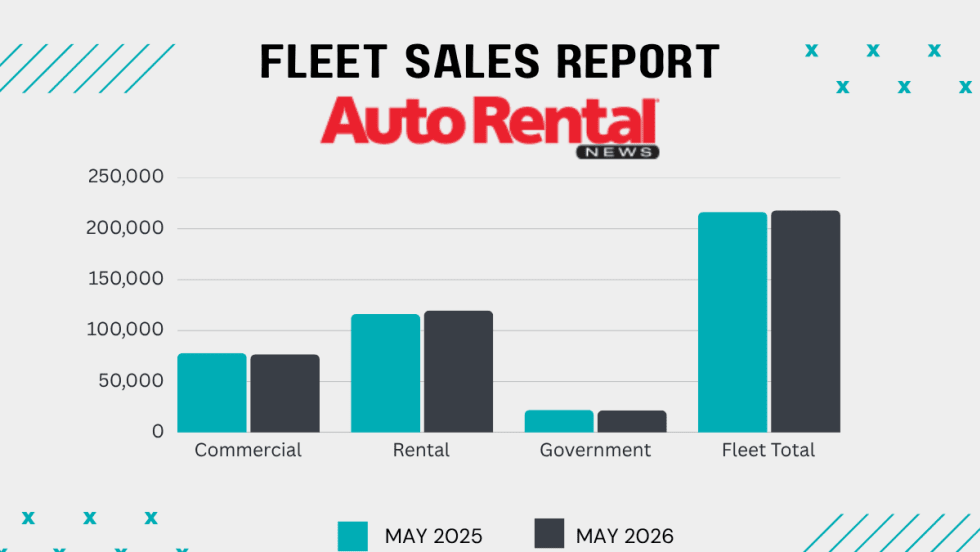
Rental Fleet Sales Skating Just Above 2025 Levels
The U.S. economy's continued growth and positive business investment are creating a favorable environment for fleet vehicle demand.
Read More →
Grow Your Rental Business Beyond Cars
Rental fleet operations are facing numerous evolving challenges and opportunities from AI technology to rate and revenue management, to customer service and business growth.
Read More →
Using AI to Create Clarity, Not Conflict, in Rental Car Damage
Rental companies still need people, policy, judgment, and thoughtful implementation, with operators remaining in control of the customer experience.
Read More →
Get Ready To Roll: No Stopping Self-Driving Rental Cars
The autonomous mobility technology revolution will move at its own pace, but sooner rather than later.
Read More →
Southwest Airlines Selects CarTrawler For Its Car Rental Booking Platform
The platform is designed to allow customers to compare and book rental vehicles more easily during the travel booking process.
Read More →
Cross-Pressures, Evolving Trends Drive 2026 Rental Car Industry
A combination of cautious economic behavior, shifts in the rental vehicle market, and technological influences are shaping car rental operator decisions.
Read More →
Government Affairs Executive Wins Leading Rental Car Industry Award
Robert Muhs started in the car rental industry with Avis Budget Group two years before the first International Car Rental Show.
Read More →
Green Motion Expands Its African Presence with Mozambique Launch
This new rental car outlet reflects the growing demand for reliable transportation and the emphasis on sustainable travel across the continent.
Read More →
RentalMatics, GeoInt Partner On Rental Car Speed Tracking Tech
Rental operators can now detect and act on speeding while vehicles are still on rent, thereby reducing fines, admin workload, vehicle wear, and safety risks.
Read More →