



What’s Your Big Idea?
At the 2010 Car Rental Show, Jim Tennant of the Tennant Group held a profit idea session in which six products, services and ideas were presented that operators could bring home and employ in their businesses. Seminar attendees voted on the best idea. The winner, Sarah Romanowski of Ride Share Systems LLC, received a free pass to a future Car Rental Show. These six concepts could reduce expense and boost your bottom line.



Rent2Buy Goes Upstream to the Extreme
Bryson Hart and Moti Kahana, Rent2Buy
Rent2Buy is an upstream remarketing tool that sells rental units direct to consumers while still in fleet. The units can be sold simultaneously through a Web site developed for the rental company, referred to as "Rent2Buy Private Label" and through www.Rent2Buy.com, which has more than 100,000 monthly unique visitors.
Rent2Buy provides customers with the opportunity to test the vehicle for three days as a rental. The rental fee is waived if the car is purchased. If the car is not sold, the customer simply returns the car and pays the three-day rental fee.
The Rent2Buy model keeps the sales process completely in-house and saves the rental operation time and money related to de-fleeting and remarketing, including prepping, shipping, auction, advertising and other costs.
"I call it 'extreme' upstream remarketing," says Moti Kahana, CEO of Rent2Buy. "You can't sell the car any sooner than when it is still on rent. And the middleman, such as a broker, auction or online auction, is cut out of the process."
Customers access a list of cars for sale online, which informs the customer of when and where the car will be available. The customer then makes a reservation to pick up the car the day it comes off rent.
Rent2Buy is only available currently to consumers through Hertz Rent2Buy. "Hertz has been using the model, and we view this as a proven business model," Kahana says.
This non-compete agreement expires at the end of 2010, at which time any other car rental company can set up a similar sales structure using the new Rent2Buy engine.
How Rent2Buy Works
Traditional auction sale (two weeks average to sell)
Wholesale auction value - $13,500
Cost to sell, ship, clean - $500
RAC net proceeds - $13,000
Via RAC sales lot (four weeks to sell)
Wholesale value - $13,500
Retail value - $16,500
Cost to sell:
Marketing/advertising - $650
Salesperson salary per car - $350
Other brick-and-mortar costs - $400
Sales price after overhead, before profit - $14,900
Used car sales division profit - $1,500
Sales price to make a profit - $16,400
Rent2Buy: direct to consumer (car sold directly off rent)
Sales price direct to consumer - $15,000
Cost of service, only on success - $250
Consumer savings over retail book value - $1,500
RAC net over traditional auction - $2,000
RAC net over car sales lot - $500
[PAGEBREAK]
Damage Appraisals: Get What You're Entitled to
Michael Towers, Hawthorne Estimating
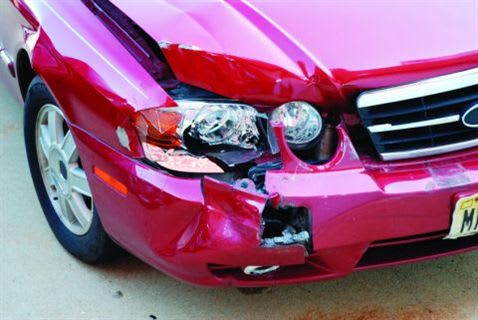
In car rental the appraisal process is typically set up for the cheapest bid to win the right to repair the car. But this doesn't help the operator recover the highest amount possible under the law. There is a misconception that you can only collect what you pay to fix the car, which isn't true.
The rental company is entitled to recover all the parts and procedures necessary to restore the vehicle to pre-loss condition. There is a requirement for a rental agency to pass along all the discounts routinely available, such as parts and labor. However, you can choose to repair none, some, or all of the damages, and that does not change what the insurance company is required to pay. You don't need to prove your cost to repair, only what discounts you are receiving.
Often, what a body shop repairs and what a manufacturer recommends are different. For instance, with front-end accidents, body shops will pull and reshape frame rails instead of replacing them. Also, "skinning" a door will void the warranty. But insurance companies can't expect you to have a voided warranty or go against manufacturers' recommendations, so they are obligated to pay for an entirely new door or frame rail.
When it comes down to recoverability, an insurance company is not looking at a dollar amount threshold; they look for inaccuracies or deficiencies in the estimate. They don't care if the deficiency is in the insurance company's or the rental company's favor, they just need something to support their in-house review and subsequent rewrite of the estimate in a way that will support them in court. A detailed estimate supported by documentation and photographs is most important.
We write our appraisals to the manufacturers' design and repair specifications, as well as I-CAR's (Inter-Industry Conference on Auto Collision Repair) Uniform Procedures for Collision Repair (UPCR). Each model year, we buy the manufacturers' design and repair specifications manuals, while local appraisers simply cannot justify the cost.
In a recent audit for a local Los Angeles-based rental agency, out of 190 estimates written by Hawthorne Estimating, not a single estimate was challenged by insurers. In close to 25 percent of the cases, Hawthorne's estimates reached a threshold at which the carrier agreed to treat the claim as a total loss. This eliminated the loss the rental agency would have suffered at the time of sale, had it repaired and put the vehicle back in the fleet.
[PAGEBREAK]
Get Toll Violations Relief and Boost Incremental Sales
René Mitchell, Clearwater Transportation, Dollar and Thrifty licensee
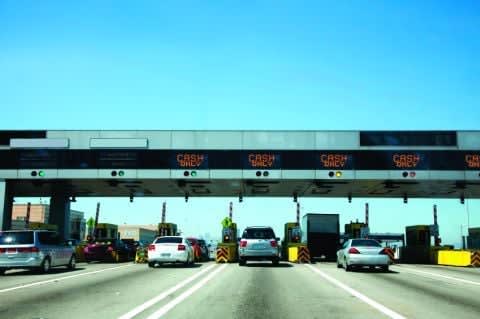
A toll road that feeds the Austin airport is cashless and cannot be used unless the vehicle has an account. The toll road is patrolled by video cameras that take a photo of vehicles' license plates. Clearwater Transportation, a Dollar and Thrifty licensee, was spending considerable employee resources to match hundreds of violations to rental contracts. The violations would then be reassigned back to the toll authority, which would then go after the renter, or Clearwater would pay the toll and try to collect directly from the customer.
Clearwater signed up with Rent A Toll, which assumes the processing of all tolls. Clearwater sells Rent A Toll's Pass24 to customers as a service, for $8.95 a day, similar to a CDW or a navigation unit upsell. Clearwater keeps a percentage of the fee. Rent A Toll processes the tolls and invoices the RAC weekly. The RAC collects the fee, nets the commission, and remits to Rent A Toll.
The customer has unlimited use of tolls in that tolling jurisdiction for a 24 hour period. For renters who decide not to opt in and then violate a toll, Rent A Toll opts in the renter and charges the daily Pass24 fee plus a $25 administration fee for each day a toll was run. This information is disclosed to the customer at time of rental and the customer must sign off on the disclosure before the rental begins.
Colorado, Texas (primarily), Florida, and Northern California toll authorities use video tolling technology. For tolling areas that do not employ video, such as Northeast and Midwest states in the E-Z Pass group, Rent A Toll provides transponders to the RAC to place in cars. Daily rate varies from $5.95 to $9.95 by market. The Pass24 system interfaces with TSD and Bluebird.
The renter could pass through enough tolls to make it worth the expense, though the value is positioned as more of a convenience, says Jim Glasheen, vice president, sales and marketing of Rent A Toll. Pass24 allows the renter to avoid long toll lines, the possibility of a fine and fumbling for change, a particular benefit to international travelers, says Glasheen. Additionally, when the rental is returned the Pass24 service is included in the rental receipt and there are no post-billing charges for tolls. This avoids chargeback problems and customer service issues. For corporate accounts, it is an easy way to expense tolls. This solution takes away the entire violation exposure for the rental company while generating new revenue, says Glasheen.
In Clearwater's case, assuming an 8 percent take rate and 80 percent utilization on a 500-vehicle fleet, Clearwater will realize annual additional revenue of $36,420. In addition, Clearwater estimates a $25,000 savings in employee productivity for not having to process tolls.
[PAGEBREAK]

Unwashed Vehicles Save Costs and the Environment
Tom Diaz, Frontline Performance Group (Khoury Consulting)
Research finds that a large percentage of energy consumption in our industry comes from water used to clean cars. With this program, customers get $2 off their daily rate, capped at $6 per rental, if they elect to rent a car with an unwashed exterior. The discount can alternatively be structured as a percentage of the daily rate.
Studies have shown the average cost to clean and prep a vehicle is about $7. The total cost to clean a 100-vehicle fleet (chemicals and labor only) is $6,000, assuming 3.5 days average length of rental and 857 transactions per month.
A 50-percent customer uptake on the discount will result in $3,000 in savings. (Jucy, a car rental company in New Zealand, reports 75 percent uptake for the discount on new bookings.) Approximately half of the savings will be shared with the customer as a discount.
The savings are not only attractive for the renter, but the RAC can position itself as an environmentally friendly company. Fewer washes results in less water and chemicals used and lower utility costs. Fewer washes also minimizes damage and injury risk from the wash process.
This "green" initiative can be marketed in several ways. A coupon can be added to the Web site, along with statistics on approximate gallons of water saved. It can also be built into an offer when disclosing price for upgrades.
[PAGEBREAK]

Reduce Residual Exposure with GDP and Risk Diversification
Michael Black, Jay Harland Corp., U-Save licensee
With a diversified fleet, we are able to reduce our exposure to a constantly changing vehicle resale market. Fleet diversification is not only different makes, models and car classes. The goal of fleet diversification must be to control depreciation and ultimately fleet cost.
The proper fleet has a mix of GDP (guaranteed depreciation program) and risk units. The increased cost of GDP units will be offset by the lower holding cost of risk units.
Ideally, GDP units will be assigned to reservations traveling long distances. This counter procedure of assigning GDP units will help lower miles of the risk units, therefore allowing an operator to run risk units for 24-36 months. This is in turn will help resale values for risk units.
In order for this type of fleet diversification to succeed, GDP and risk units must be easy for managers and counter agents to identify. Fleet managers must be up to date on GDP program rules and regulations.
The next step is to determine each location's mix of GDP and risk. The ultimate goal is to have as many risk units as possible without jeopardizing fleet holding cost. Take advantage of market timing by selling risk units in strong spring and summer markets. Try to plan turnback on GDP units with seasonal influxes as peak demand changes.
Proper fleet diversification along with market timing will ultimately control fleet costs and build a profitable rental operation.
[PAGEBREAK]

Take the Risk Out of Debit Cards
Sarah Romanowski, Ride Share Systems LLC, DBA Dollar Rent A Car; Dollar licensee
Accurint is an identification verification service we use in conjunction with debit card transactions. We have found that running a credit check intimidates renters. Accurint, a service from Lexis Nexus, verifies identity, not credit; therefore it does not affect customers' credit.
Accurint verifies public records to match driver's licenses' addresses and home phone number given to the issuing bank of the debit card. This system also provides asset verification, driver's license searches in some states, skip trace searches for missing cars and it will even locate neighbors and relatives.
The format is pay per search, with a minimum monthly charge of $250 per account. There are two search levels: Instant ID costs $0.45; Fraud Defender with the Instant ID costs $0.90. The program scores each applicant for predicted veracity of information on a scale of 0 to 50.
We run the lower cost search on every debit card. If we get a marginal passing score (20 or above) and still feel uncomfortable with the renter, we run the costlier fraud check.
From September 2009 to March 2010 in our six locations we kept our search costs to $200 - $300 per month, per location. As rentals increase in the summer we expect to pay $400 per month. These costs equal the cost of one rental that has lost 10 days of time and mileage. Using Accurint, we have cut our outstanding debit card receivables by 65 percent. It has also helped reduce accident costs.
Accurint offers a free 30-day trial with limited search options.
More Fleet Insurance
Using AI to Create Clarity, Not Conflict, in Rental Car Damage
Rental companies still need people, policy, judgment, and thoughtful implementation, with operators remaining in control of the customer experience.
Read More →
Go Rentals, Repair Provider Partner To Ease Insurance Claims Experience
The arrangement helps reduce the stress of collision repair for vehicle owners by connecting them to reliable, timely rental cars.
Read More →
U.S. Collision-Related Rental Length of Rental Declined Modestly in Q4 2025
While LOR continues to decrease from post-pandemic highs, ongoing market and economic conditions could impact future results.
Read More →
Beyond The Rental Desk: Inside Car Rental’s Push To Simplify
Greater transparency, simplified digital access, and connected fleets will be the key factors in determining who comes out on top over the next 10 years.
Read More →
Tripiamo Brings Certified Driving Confidence Training For Car Renters
Driving abroad is one of the leading causes of death among international travelers, who are not used to new traffic patterns.
Read More →
AI in Car Rental Should Be the Customer’s Advocate, Not Accuser
Opinion/Editorial: What happens when AI randomly overcharges car renters outrageous fees and penalties?
Read More →
TSD Mobility, Canopy Connect Partner to Ease Insurance Verification
The new integration brings streamlined functionality to rental agents and dealerships.
Read More →
Length of Rental Could Be Finding a New Normal of More Days
The industry may not be returning to the lower LORs of 2019 and 2020 as two years of declining repair shop backlogs appear to flatline.
Read More →
Gallagher Insurance Hires Broker Focused on Rental Car Operations
The former rental fleet executive informs his insurance practices with the everyday realities of managing rented vehicles.
Read More →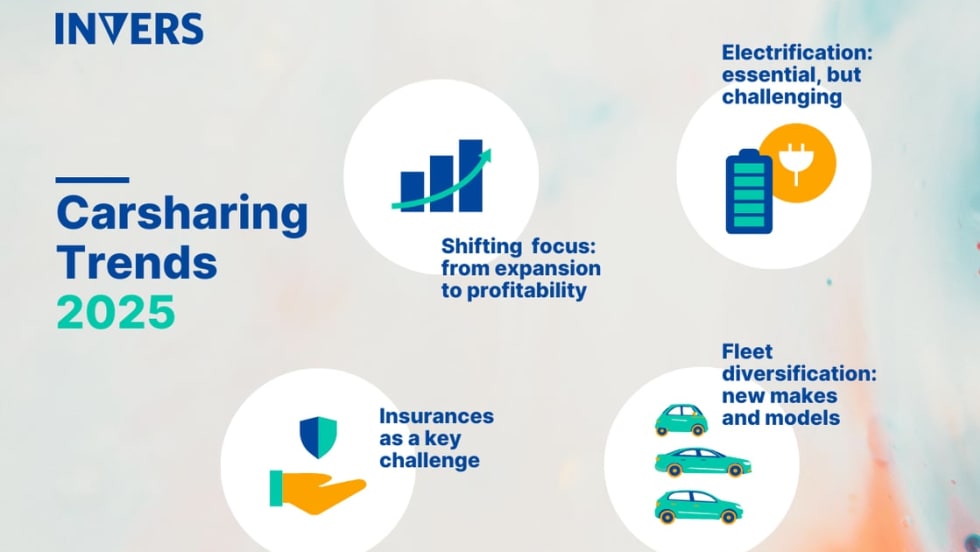
4 Global Trends in Carsharing for 2025
Despite operational challenges and questions, the global car-sharing market continues growing and will likely double during the next decade.
Read More →