



Travel Taxes in the U.S.: The Best and Worst Cities to Visit
In the fourth incarnation of the Global Business Travel Association’s travel tax study, the average overall effective tax rate on car rentals has gone down for the first time — but don’t call it a trend.
American businesses, and therefore business travelers, continue to face two forces that combine to strain company budgets. Weak sectors throughout the economy have placed a considerable burden on business revenues and the budgets that those revenues must support. And ongoing fiscal difficulties have governments at all levels searching for additional revenue of their own.
Despite these challenges, however, business travel remains an indispensible part of American business life and an important source of economic activity in its own right.
In order to more clearly understand the tax burden imposed on business travel throughout the country, the GBTA Foundation — the education and research arm of the Global Business Travel Association (GBTA) — engaged ERS Group to collect and report up-to-date travel tax data on 50 top U.S. business travel destinations. This is the fourth incarnation of the study that began in 2008.
ERS Group calculated the amount of taxes paid by travelers who stay at a hotel, rent a car and eat restaurant meals for one day and one night and for a longer stay of three days and two nights. The average prices used in this study take the 2010 study prices as a base and increase them by the appropriate component of the Consumer Price Index.
Each of the 50 cities examined in this report (click here for a PDF of the four charts ranking all 50 cities from GBTA) is represented by both a central city and airport location. Within each of the two locations, taxes are presented for hotels, restaurant meals, and rental car transactions — individually and as a combined expense. Finally, these breakouts are provided for both a one-day and three-day scenario.
Tax calculations begin with general sales taxes at the state, county, city and special tax district level. Next, discriminatory travel taxes and fees are added in. These taxes often include a bewildering combination of charges such as excise, occupancy, transportation, tourism, special, facility and capital improvement taxes, plus a long list of other taxes and fees frequently imposed by overlapping jurisdictions.
Continued from last year’s study, the base cost of rental cars is discounted to reflect the negotiated car rental discount among GBTA members, at an average daily car rental rate of $55.22.
The study offers several different sets of travel tax data condensed for this article. Charts 1 and 2 list car rental taxes for the top 10 and bottom 10 airports and central city locations. Charts 3 and 4 show the burden imposed by discriminatory car rental taxes above and beyond general sales taxes.
Taxes Drop?
The tax rate on car rentals has been increasing steadily since the mid-90s, owing to increases in sales taxes as well as a series of politically expedient excise taxes to fund non-car rental specific projects such as stadiums, light-rail systems or city capital improvements.
The first three years of the GBTA tax study reflect this. The average overall effective tax rate on car rentals (excise taxes plus sales taxes) in 2008 was 13.04 percent across the 50 destinations in the study. That figure climbed to 13.39 percent in 2009 and then to 13.73 percent in 2010. However, in 2011, the average tax rate has gone down to 13.21 percent.
“From 2008 to 2010 we saw a fairly steady increase in the tax rate on car rentals,” says Joe Bates, director of research, GBTA Foundation. “This year is the first of the four years that we’ve seen a decline in that average tax rate.”
However, the study contends that these changes do not represent an affirmative decision to actually lower tax rates. They all came about because previously enacted taxes were legislatively mandated to expire — and there simply wasn’t the political support to keep them in place.
The most significant was the cut in California’s state sales tax by a full percentage point. Eight of the 50 cities in the 2011 study are in California, and in past studies California cities have appeared among the top 10 highest taxed locations in the hotel and restaurant categories.
Similarly, the North Carolina state sales tax fell by one percentage point on July 1. The changes in both California and North Carolina reflect the expiration of temporary increases that each state enacted in 2009.
More Rental Operations

Turo and Tesla Take the Next Step Toward Autonomous Car Rentals
The partnership brings Tesla's Full Self-Driving (Supervised) technology into the rental experience, offering a glimpse of how increasingly automated vehicles could change car rental.
Read More →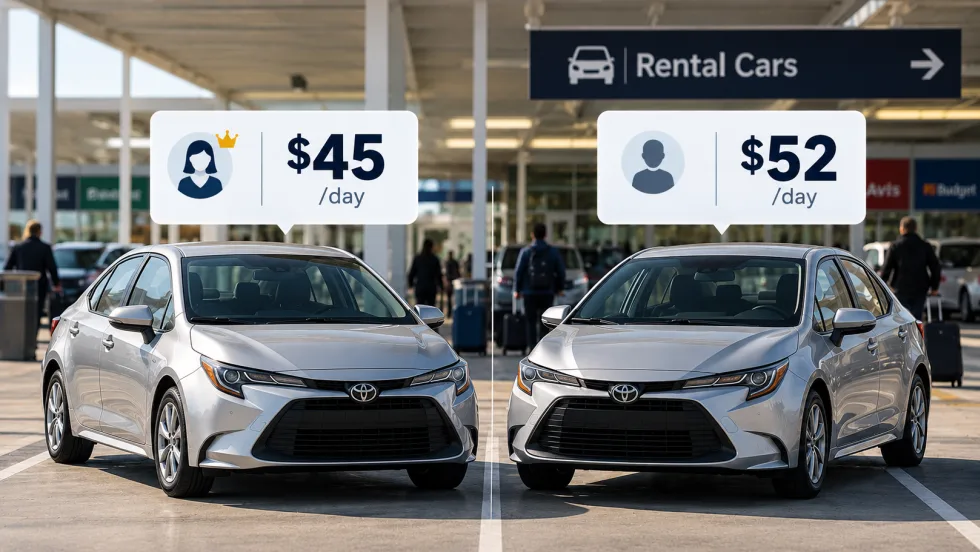
How Rental Operators Can Navigate Personalized Pricing Rules
As regulators scrutinize the use of customer data in pricing, rental operators need to know whether they can explain why one renter pays more than another.
Read More →
Direct, Broker or Hybrid? How Travel Retailers Source Rental Cars
As travel retailers weigh direct supplier relationships against third-party distribution, rental operators need to understand how those decisions affect their business.
Read More →
How Did This Independent Rental Operator Grow to 170 Vehicles in 4 Years?
With 170 vehicles across three Kentucky locations, Joel Price relies on an overseas team to handle reservations, payments, and after-hours customer service. It's one part of an unconventional approach to growing an independent rental operation.
Read More →
What Does It Take to Succeed in B2B Rentals?
The fundamentals may be familiar to daily car rental operators, but project-based truck rentals put different demands on the fleet and the business.
Read More →
NPR Builds on International Partnerships to Grow Rental Bookings
With Ana Laborde supporting broker development, NPR Auto Group is tailoring distribution strategies, rate packages, and partnerships to grow international reservations across its three brands.
Read More →
Advantage, Sixt Place Among Top Five in Annual Satisfaction Study
While Enterprise and National retain the top spots in JD Power’s 2026 rankings, the latest customer satisfaction results suggest renters can find competitive service beyond the biggest car rental names.
Read More →
The $100,000 Insurance Trap in Exotic Car Rentals
Exotic rental agencies often rely on customers’ personal auto policies to protect six-figure vehicles. But policy language can dramatically change the coverage for vehicles over $100,000 MSRP.
Read More →
The Booking Is Confirmed, But Is Your Customer Ready to Drive?
For international renters, a confirmed reservation doesn’t always mean they’re eligible to drive. Earlier checks can help operators catch documentation and payment issues before the customer reaches the counter.
Read More →
ICRS 2027 Opens Call for Papers
The International Car Rental Show seeks session proposals on the business, operational, and technology issues facing car rental operators. Submissions are due Jan. 15.
Read More →