




ALG Predicts Gain for Detroit 3 in Residual Values
While 2009 was one of the roughest roads the auto industry has traveled, the road ahead looks more promising for the Detroit 3 with on average gain of approximately 3 percentage points in the 36-month residual outlook.
Automotive Lease Guide’s Detroit 3 Outlook
GM and Chrysler required a hefty infusion of tax-dollars to stay alive in 2009. As part of its federal financing deal, Chrysler was required to form a strategic alliance with Italian automaker Fiat. Ford, the sole bailout exception, avoided bankruptcy, and of the three Detroit automakers performed well in 2009.
Yet overall U.S. auto sales in 2009 dropped to 10.4 million units, down from 13.1 million in 2008. Even though the Cash for Clunkers program was popular with approximately 700,000 cars sold, foreign automakers benefited more than U.S. automakers in 2009.
In 2010, sales performance is showing new signs of life for the Detroit 3. GM was up 14 percent year-over-year and Ford performed with sales growth of 25 percent year-over-year in January 2010. On the other hand, Chrysler was down 8 percent year-over-year, while Toyota and Honda experienced a sales decline of 16 percent and 5 percent year-over-year, respectively. However, the overall industry posted a sales gain of approximately 6 percent year-over-year.
General Motors
At the start of 2009, GM had eight brands. It has since dropped or sold off Hummer, Pontiac, Saab and Saturn. In 2010 and forward, GM is focusing on its four core brands (GMC, Chevrolet, Buick, Cadillac). While shedding less performing brands as well as exiting bankruptcy swiftly, the impact on perception has been less visible.
• Sales forecast - GM displays the highest forecasted growth in total annual sales according to CSM Worldwide, up 30 percent from 2009 levels to approximately 2.6 million units.
• Residual outlook – GM’s current 36-month residual performance is at 40.8 percent on average which is 4.9 percentage points higher than in 2009 (only January/February and March/April editions are included).
Ford
Ford successfully reduced incentives and fleet sales, leading to an improved residual outlook. The automaker also has the best reputation and perceived quality among the Detroit 3. Additionally, Ford performed well without any government bailout which has impacted consumer perception – Ford posted the strongest gains in ALG’s perceived quality score (PQS) in the Fall 2009 survey versus the Fall 2008 iteration.
• Sales forecast - Ford shows 11.6 percent year-over-year growth for 2010 from 2009 levels to approximately 1.7 million units.
• Residual outlook – Ford’s current 36-month outlook is at the top among the Detroit 3 OEMs with 41.5 percent, 2.8 percentage points higher than in 2009.
Chrysler
Even though Chrysler has managed to come out of bankruptcy quickly in 2009 with minimized impact on resale values, uncertainty about the product plan under the alliance Fiat still remains. This has also impacted the perception of the Chrysler brands while clearly slipping in ALG’s PQS by significant amounts relative to pre-bankruptcy perception.
• Sales forecast - Chrysler is relatively flat at <1 percent expected YOY growth from 2009 levels.
• Residual outlook – Chrysler’s current 36-month outlook has slipped to the bottom of the Detroit 3 at 39.2 percent, a gain of 1.3 percentage points over 2009.
Conclusion
2009 was one of the roughest roads the auto industry has traveled with significant difficulties for the Detroit 3. Yet the road ahead looks more promising for the Detroit 3 with on average a gain of approximately 3 percentage points in the 36-month residual outlook.
GM is projected to be the big gainer, coming from a low point. Because of uncertainty Chrysler remains rather flat in the sales outlook and gains little in ALG’s residual forecast falling back to third position. Ford is on track to further strengthen its leadership position among the three (followed closely by GM). ALG predicts an industry gain of approximately 2 percentage points in 36-month residuals over 2009.
More Fleet Acquisition
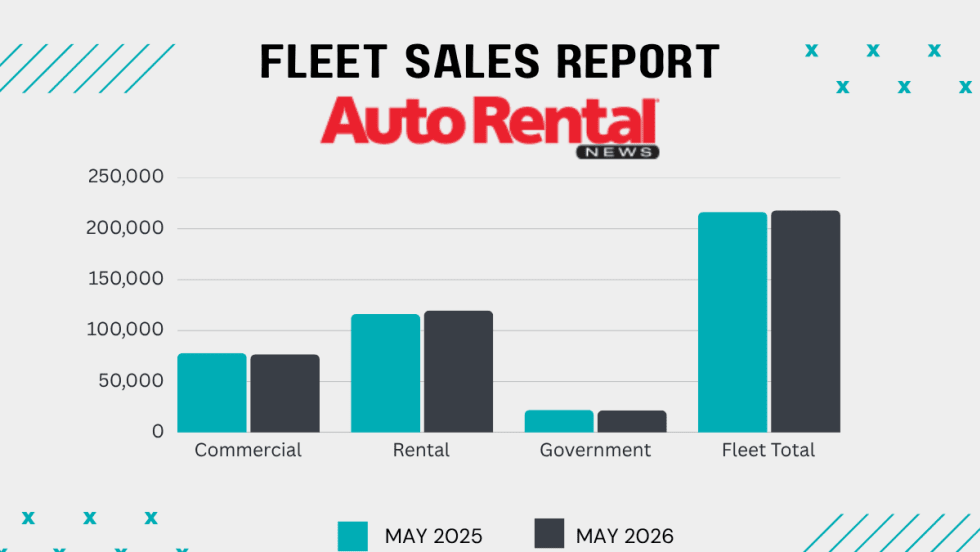
Rental Fleet Sales Skating Just Above 2025 Levels
The U.S. economy's continued growth and positive business investment are creating a favorable environment for fleet vehicle demand.
Read More →
Get Ready To Roll: No Stopping Self-Driving Rental Cars
The autonomous mobility technology revolution will move at its own pace, but sooner rather than later.
Read More →
Cross-Pressures, Evolving Trends Drive 2026 Rental Car Industry
A combination of cautious economic behavior, shifts in the rental vehicle market, and technological influences are shaping car rental operator decisions.
Read More →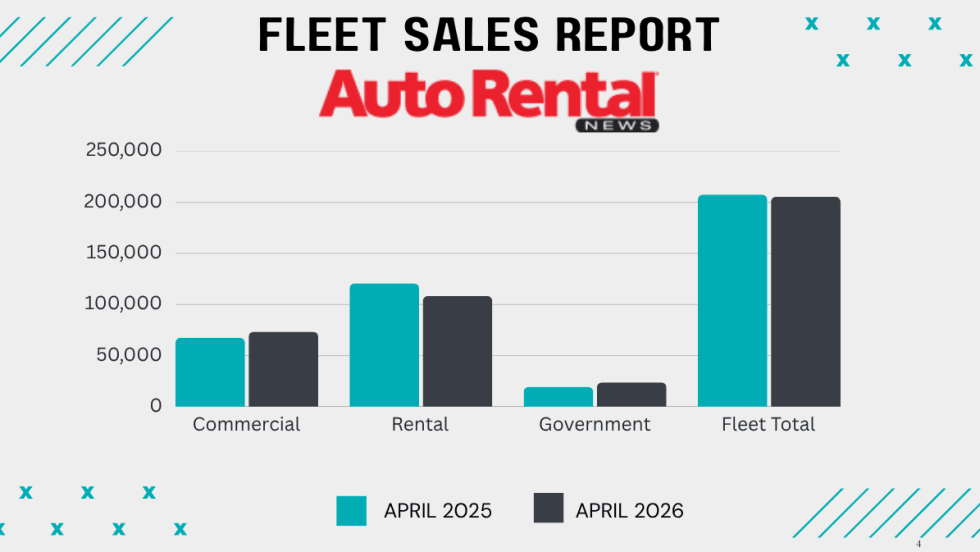
Monthly Rental Fleet Sales Dip Again As YTD Numbers Flatten
Pull-ahead demand for rental cars in the second half of 2025 appears to be slowing purchases so far this year.
Read More →
DriveItAway Transitions To OTCID, Expands To 40 U.S. Markets
The dual milestone propels the company toward its goals of accessing longer-term capital markets and deploying a national platform.
Read More →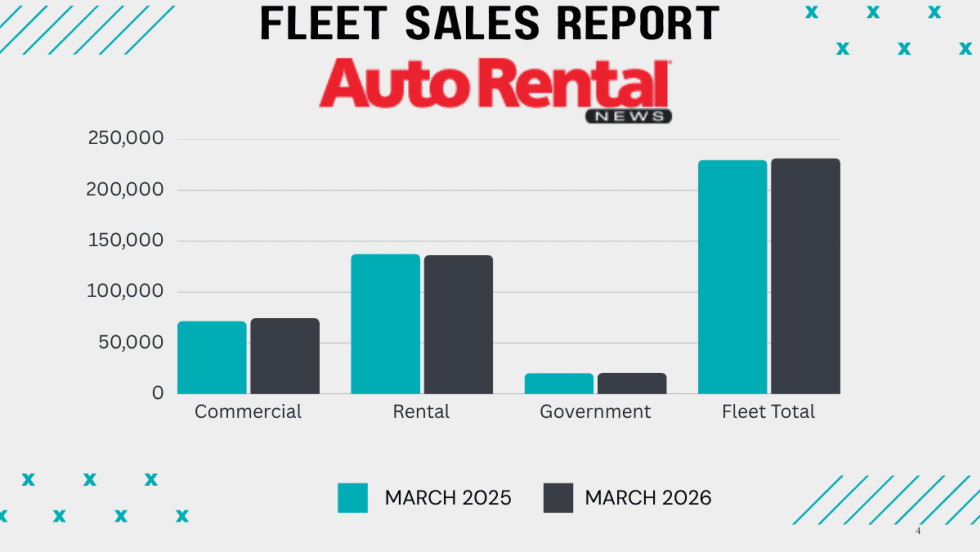
Rental Fleet Sales Stay Ahead In Q1 Despite Monthly Dip
Vehicle sales into commercial fleets are outpacing rental car fleet purchases so far this year.
Read More →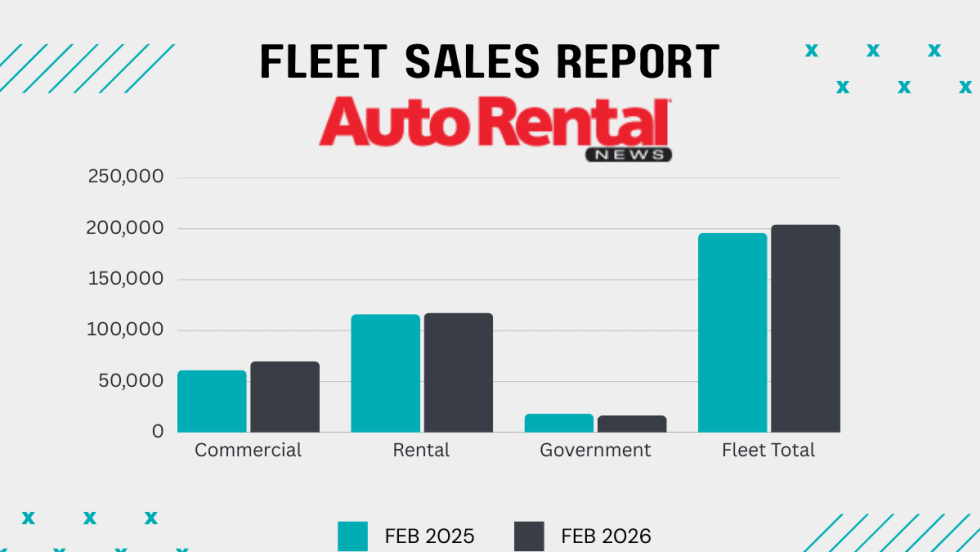
Rental Fleet Sales Slow In February Ending A Strong Streak
Commercial fleets posted the most gains, sustaining increases in monthly and year-to-date fleet sales
Read More →
How It's Still Possible To Run An Electric Rental Fleet
This Season 2 / Episode 4 of Auto Rental News’ Industry Newsmakers series broaches a difficult subject in car rental: How do you make EVs succeed?
Read More →
Avis Budget Group Reports Near $1 Billion Loss Tied To 2025 EV Fleet Write-Down
Following Hertz, the company is the second global car rental conglomerate to sustain sizable losses due to lower customer demand and usage of electric rental cars.
Read More →
Rental Fleet Sales Shoot Ahead From The Starting Line
Rental car operations continued their 2025 reputation as the top driver of fleet sales.
Read More →