




Wall Street Likes Car Rental Stock
This week's strong performance by Dollar, Avis and Hertz is a positive step as analysts expect 2010 to remain a challenging year for the industry.
The strong performance by major rental companies Dollar Thrifty Automotive (DTG), Avis Budget Group (CAR) and Hertz Global Holdings (HTZ) in the stock market this week created some positive responses from financial analysts.
DTG stocks went up 3.6 percent to $34.72 on Tuesday, according to Chip Brian at Benzinga.com. DTG’s performance is indicative of the auto rental industry’s current uptrend, the analyst wrote.
Option volume on CAR accelerated Tuesday, after analysts at Sidoti gave the stock a “buy” rating, according to Andrea Kramer at Schaeffer’s Investment Research. “By the closing bell, the car rental concern saw roughly 8,700 calls and 5,000 puts exchanged – about eight times its expected call volume, and more than 10 times its predicted put activity,” she wrote.
Analysts at Northcoast Research upgraded HTZ shares from “neutral” to “buy” this week and established a price target of $14. Year-to-date, HTZ shares have underperformed both CAR and DTG shares by approximately 3 percent and 38 percent, respectively. However, the firm said it upgraded the HTZ’s shares for several reasons, including its belief that corporate travel demand is increasing and the rental business is showing signs of stabilization.
The firm said 2010 will continue to be a difficult year for the industry, but price stabilization and gains in utilization will help improve profitability.
“Overall we believe conditions in the equipment rental market will remain challenging in the first half of 2010 with stabilization occurring in late 2010,” said Northcoast Research. “While revenues in 2010 may likely be lower on a year-over-year basis, we are optimistic that equipment rental companies can improve profitability with stabilizing pricing and gains in utilization.”
More Rental Operations

U.S. Business Travel Drives $623 Billion+ in Economic Impact as Spending Reaches $538 Billion
The data also underscores the industry’s strong multiplier effect across the U.S. economy, revealing that each dollar invested in business travel in 2024 generated $1.16 in GDP.
Read More →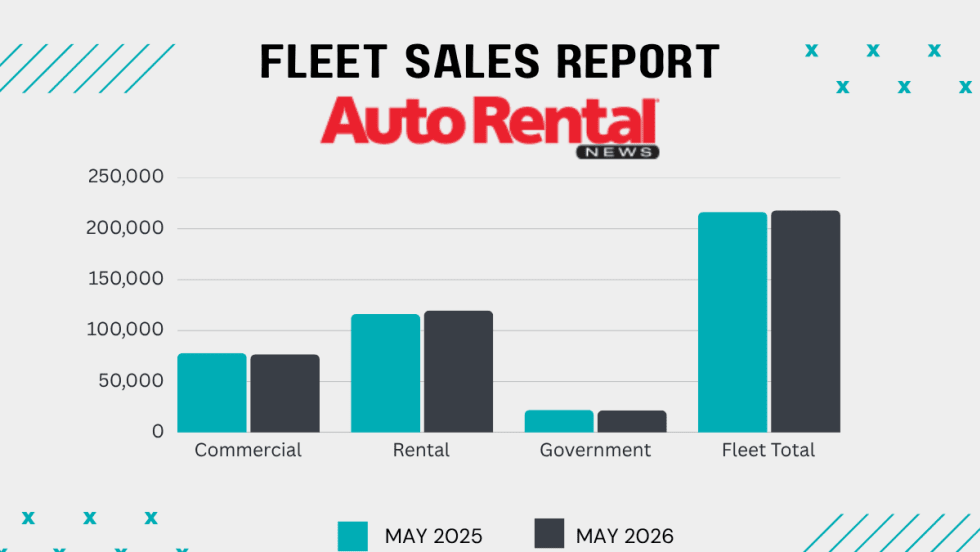
Rental Fleet Sales Skating Just Above 2025 Levels
The U.S. economy's continued growth and positive business investment are creating a favorable environment for fleet vehicle demand.
Read More →
Grow Your Rental Business Beyond Cars
Rental fleet operations are facing numerous evolving challenges and opportunities from AI technology to rate and revenue management, to customer service and business growth.
Read More →
Using AI to Create Clarity, Not Conflict, in Rental Car Damage
Rental companies still need people, policy, judgment, and thoughtful implementation, with operators remaining in control of the customer experience.
Read More →
Get Ready To Roll: No Stopping Self-Driving Rental Cars
The autonomous mobility technology revolution will move at its own pace, but sooner rather than later.
Read More →
Southwest Airlines Selects CarTrawler For Its Car Rental Booking Platform
The platform is designed to allow customers to compare and book rental vehicles more easily during the travel booking process.
Read More →
Cross-Pressures, Evolving Trends Drive 2026 Rental Car Industry
A combination of cautious economic behavior, shifts in the rental vehicle market, and technological influences are shaping car rental operator decisions.
Read More →
Government Affairs Executive Wins Leading Rental Car Industry Award
Robert Muhs started in the car rental industry with Avis Budget Group two years before the first International Car Rental Show.
Read More →
Green Motion Expands Its African Presence with Mozambique Launch
This new rental car outlet reflects the growing demand for reliable transportation and the emphasis on sustainable travel across the continent.
Read More →
RentalMatics, GeoInt Partner On Rental Car Speed Tracking Tech
Rental operators can now detect and act on speeding while vehicles are still on rent, thereby reducing fines, admin workload, vehicle wear, and safety risks.
Read More →