



Sixt Reports Rental Revenue Increase in 2012
The company said the driving force in its rental revenue increase of 6.5% over 2011 was its foreign business operations, which expanded over the year by 20.1%.
Germany-based Sixt announced its full-year financial earnings on March 14. In 2012, Sixt generated consolidated earnings before taxes (EBT) of EUR 118.6 million, which was 14.6% down on the record figure of EUR 138.9 million generated in 2011.
For its rental segment, Sixt reported an increase in revenue, particularly for its operations outside Germany.
Sixt said these are preliminary figures and will release more details on its 2012 financial year on April 16.
Group Revenue and Earnings Performance in 2012
Sixt reported that its rental revenues rose in 2012 by 6.5% to EUR 953.7 million (2011: EUR 895.7 million). The company said the driving force was its foreign business operations, which expanded by 20.1% to EUR 349.0 million.
“The fact that we managed to generate such a good result in 2012, despite the recessionary climate in Europe, the general cost increases and in spite of the start-up costs for such future projects as setting up our U.S. business, proves the inner strength of the Sixt Group,” said Erich Sixt, chairman of the managing board of Sixt AG. “The dynamic growth in Europe outside Germany is particularly gratifying. Although our plans for 2013 are cautious because of the difficult market environment, we will continue all growth initiatives unabated.”
Sixt gained market shares in key European rental markets, such as France and Spain. In Germany, the company said demand ebbed off during the course of the year because of the drop in business activity, bringing rental revenue of EUR 604.7 million, which was roughly in line with 2011’s level (-0.1%).
In view of the growing economic uncertainties, Sixt said it started to call vehicle orders more cautiously and flexibly in the second half of 2012. Over the entire financial year, the Sixt Group added around 153,600 vehicles to the rental and leasing fleet (2011: 158,900 vehicles) with a total value of EUR 3.69 billion (2011: EUR 3.75 billion). This equals a decrease of 3.3% in the number of vehicles and 1.6% in the value of vehicles.
Other 2012 Sixt financial highlights include:
Consolidated earnings before interest and taxes (EBIT) came to EUR 167.7 million, which was 11.7% less than the year before at EUR 189.8 million.
After taxes, the Sixt Group reported a profit of EUR 79.2 million compared to EUR 97.5 million the year before (-18.7%).
Outlook for 2013
Sixt expects demand in Germany to drop for vehicle rental, while the growth path in the other European countries and the U.S. is set to continue. All in all, the managing board expects consolidated rental revenues to contract slightly in 2013.
As well, Sixt will once again adhere to the principle of giving preference to adequate margins over volume growth ("Earnings before growth"). Nonetheless, strategic growth initiatives, such as the expansion in the U.S., will continue without restrictions.
Developments in Rental
At the end of 2012, Sixt had 1,970 rental offices worldwide, 494 of them in Germany. In Western Europe and the U.S., Sixt operates its own subsidiaries, while in the other European countries and the other regions of the world, the company is represented by a close-knit network of franchisees.
The activities that started in 2011 to gradually develop the U.S. market continue to outperform expectations. Currently, Sixt maintains 12 stations of its own, with the focus on Florida. Parallel to these, 2012 saw the set-up of a franchise network, and Sixt is also sounding out the Canadian market.
The premium car sharing service DriveNow remains also on expansion course. In 2012 it won over 60,000 new registered users, bringing the total to more than 85,000 to date. In addition, the vehicle portfolio was extended to further BMW and MINI models.
More Rental Operations

Palm Beach Airport Code Change Creates Car Rental Distribution Gap
A test of rental searches under the old PBI and new DJT airport codes returned largely different sets of brands and vehicles, highlighting a potential distribution problem for rental operators.
Read More →
U-Save Continues Dominican Republic Expansion with Launch in Punta Cana
The new franchise location builds on U-Save’s existing Santo Domingo operation and will begin taking reservations for October 2026.
Read More →
When AI Books the Rental Car, Who Controls the Sale?
As AI moves from comparing rental rates to completing transactions, operators need to understand how travelers find, interpret, rank, and ultimately see their offers. (Part 2 of 2.)
Read More →
European Booked Car Rental Rates Fell 5%, Results Varied by Country
Ireland, Cyprus, and the United Kingdom saw steep declines, while booked rates rose in Poland and Hungary.
Read More →
Is It Time to Rethink Rental Categories?
As traditional economy and compact cars disappear from the market, longtime rental operator Mike DeLorenzo asks whether the industry’s familiar vehicle categories still make sense — and what operators need to rethink along with them.
Read More →
Who Owns the Rate? AI Is Creating a New Distribution Problem for Car Rental
Generative Engine Optimization asks whether AI can find a rental company, but operators also need to know whether the agent inspected enough of the market, compared equivalent offers, and presented a rate the traveler can actually book. (Part 1 of 2)
Read More →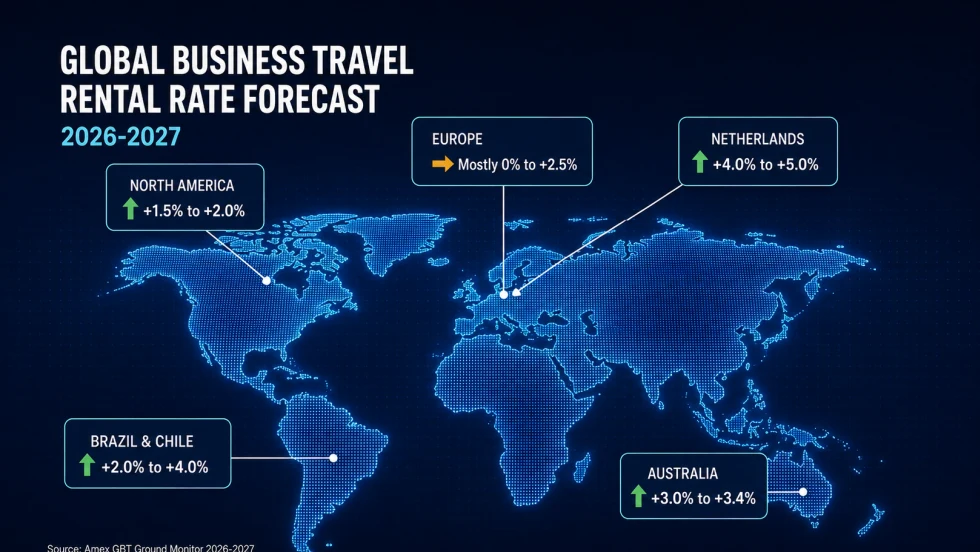
U.S. Business Travel Car Rental Rates Forecast to Rise Up to 2%
Improved fleet supply should limit pricing gains in 2026-27, while insurance, repair costs, and softer residual values continue to pressure rental operations, according to Amex GBT.
Read More →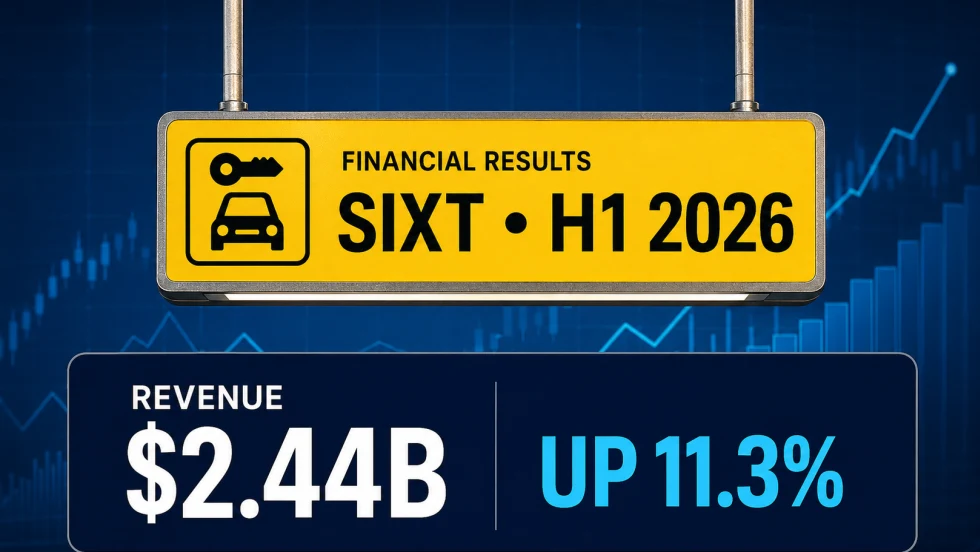
Sixt Revenue Tops $2.4 Billion in First Half of 2026
Sixt’s first-half revenue surpassed $2.4 billion for the first time as demand outpaced fleet growth, lifting utilization and earnings despite weaker consumer sentiment in North America.
Read More →
In Memoriam: Bobby Klyce, Avis Licensee Legend
The longtime Birmingham Avis operator and 2018 Auto Rental News Impact Award recipient was remembered as an advocate for independent licensees and the broader car rental industry.
Read More →
How to Build Custom Fleet Tools With AI and Vibe Coding [Webinar]
A new Automotive Fleet webinar explores how fleet managers are using AI and vibe coding to automate routine work and create simple operational tools without traditional programming skills.
Read More →