




Travel Taxes in the U.S.: The Best and Worst Cities to Visit
In the fourth incarnation of the Global Business Travel Association’s travel tax study, the average overall effective tax rate on car rentals has gone down for the first time — but don’t call it a trend.
American businesses, and therefore business travelers, continue to face two forces that combine to strain company budgets. Weak sectors throughout the economy have placed a considerable burden on business revenues and the budgets that those revenues must support. And ongoing fiscal difficulties have governments at all levels searching for additional revenue of their own.
Despite these challenges, however, business travel remains an indispensible part of American business life and an important source of economic activity in its own right.
In order to more clearly understand the tax burden imposed on business travel throughout the country, the GBTA Foundation — the education and research arm of the Global Business Travel Association (GBTA) — engaged ERS Group to collect and report up-to-date travel tax data on 50 top U.S. business travel destinations. This is the fourth incarnation of the study that began in 2008.
ERS Group calculated the amount of taxes paid by travelers who stay at a hotel, rent a car and eat restaurant meals for one day and one night and for a longer stay of three days and two nights. The average prices used in this study take the 2010 study prices as a base and increase them by the appropriate component of the Consumer Price Index.
Each of the 50 cities examined in this report (click here for a PDF of the four charts ranking all 50 cities from GBTA) is represented by both a central city and airport location. Within each of the two locations, taxes are presented for hotels, restaurant meals, and rental car transactions — individually and as a combined expense. Finally, these breakouts are provided for both a one-day and three-day scenario.
Tax calculations begin with general sales taxes at the state, county, city and special tax district level. Next, discriminatory travel taxes and fees are added in. These taxes often include a bewildering combination of charges such as excise, occupancy, transportation, tourism, special, facility and capital improvement taxes, plus a long list of other taxes and fees frequently imposed by overlapping jurisdictions.
Continued from last year’s study, the base cost of rental cars is discounted to reflect the negotiated car rental discount among GBTA members, at an average daily car rental rate of $55.22.
The study offers several different sets of travel tax data condensed for this article. Charts 1 and 2 list car rental taxes for the top 10 and bottom 10 airports and central city locations. Charts 3 and 4 show the burden imposed by discriminatory car rental taxes above and beyond general sales taxes.
Taxes Drop?
The tax rate on car rentals has been increasing steadily since the mid-90s, owing to increases in sales taxes as well as a series of politically expedient excise taxes to fund non-car rental specific projects such as stadiums, light-rail systems or city capital improvements.
The first three years of the GBTA tax study reflect this. The average overall effective tax rate on car rentals (excise taxes plus sales taxes) in 2008 was 13.04 percent across the 50 destinations in the study. That figure climbed to 13.39 percent in 2009 and then to 13.73 percent in 2010. However, in 2011, the average tax rate has gone down to 13.21 percent.
“From 2008 to 2010 we saw a fairly steady increase in the tax rate on car rentals,” says Joe Bates, director of research, GBTA Foundation. “This year is the first of the four years that we’ve seen a decline in that average tax rate.”
However, the study contends that these changes do not represent an affirmative decision to actually lower tax rates. They all came about because previously enacted taxes were legislatively mandated to expire — and there simply wasn’t the political support to keep them in place.
The most significant was the cut in California’s state sales tax by a full percentage point. Eight of the 50 cities in the 2011 study are in California, and in past studies California cities have appeared among the top 10 highest taxed locations in the hotel and restaurant categories.
Similarly, the North Carolina state sales tax fell by one percentage point on July 1. The changes in both California and North Carolina reflect the expiration of temporary increases that each state enacted in 2009.
More Rental Operations

ICRS 2027 Opens Call for Papers
The International Car Rental Show seeks session proposals on the business, operational, and technology issues facing car rental operators. Submissions are due Jan. 15.
Read More →
Turo to Launch Vehicle Delivery Service
Turo Delivered will let travelers search for vehicles that hosts can deliver directly to hotels, homes, airports, train stations, and other locations.
Read More →
Palm Beach Airport Code Change Creates Car Rental Distribution Gap
A test of rental searches under the old PBI and new DJT airport codes returned largely different sets of brands and vehicles, highlighting a potential distribution problem for rental operators.
Read More →
U-Save Continues Dominican Republic Expansion with Launch in Punta Cana
The new franchise location builds on U-Save’s existing Santo Domingo operation and will begin taking reservations for October 2026.
Read More →
When AI Books the Rental Car, Who Controls the Sale?
As AI moves from comparing rental rates to completing transactions, operators need to understand how travelers find, interpret, rank, and ultimately see their offers. (Part 2 of 2.)
Read More →
European Booked Car Rental Rates Fell 5%, Results Varied by Country
Ireland, Cyprus, and the United Kingdom saw steep declines, while booked rates rose in Poland and Hungary.
Read More →
Is It Time to Rethink Rental Categories?
As traditional economy and compact cars disappear from the market, longtime rental operator Mike DeLorenzo asks whether the industry’s familiar vehicle categories still make sense — and what operators need to rethink along with them.
Read More →
Who Owns the Rate? AI Is Creating a New Distribution Problem for Car Rental
Generative Engine Optimization asks whether AI can find a rental company, but operators also need to know whether the agent inspected enough of the market, compared equivalent offers, and presented a rate the traveler can actually book. (Part 1 of 2)
Read More →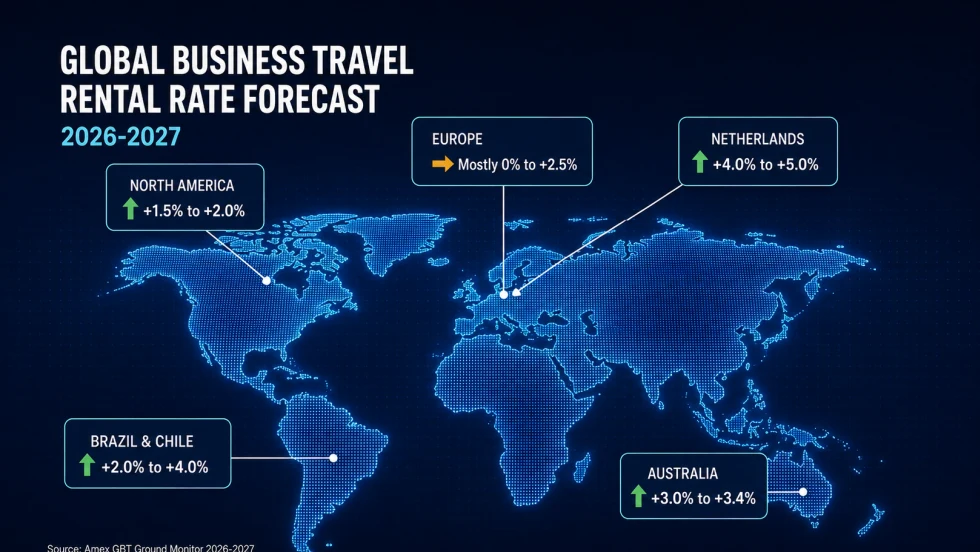
U.S. Business Travel Car Rental Rates Forecast to Rise Up to 2%
Improved fleet supply should limit pricing gains in 2026-27, while insurance, repair costs, and softer residual values continue to pressure rental operations, according to Amex GBT.
Read More →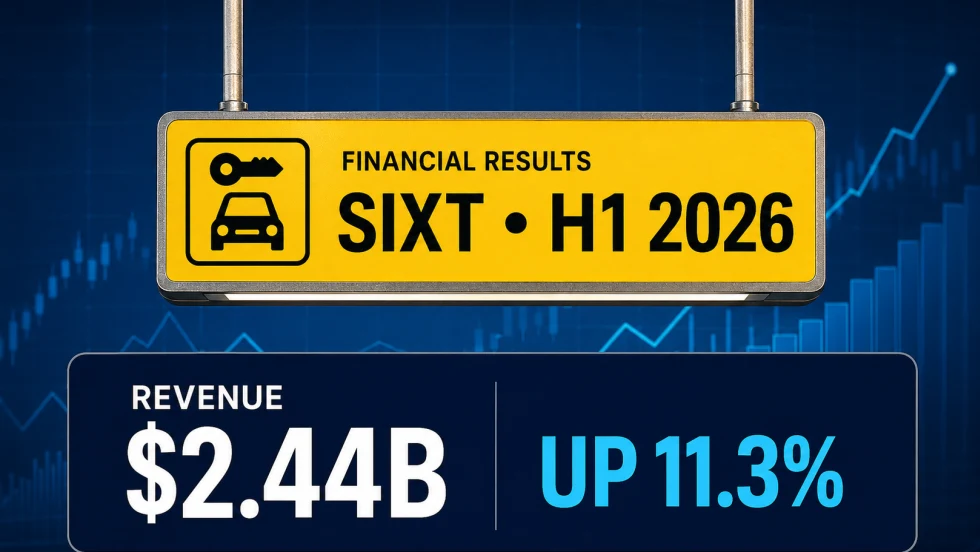
Sixt Revenue Tops $2.4 Billion in First Half of 2026
Sixt’s first-half revenue surpassed $2.4 billion for the first time as demand outpaced fleet growth, lifting utilization and earnings despite weaker consumer sentiment in North America.
Read More →