




Vehicle Recalls Reach 9-Year High
While the total number of recalled vehicles hit 21.9 million vehicles in 2013, 2014 is on pace to break the record.

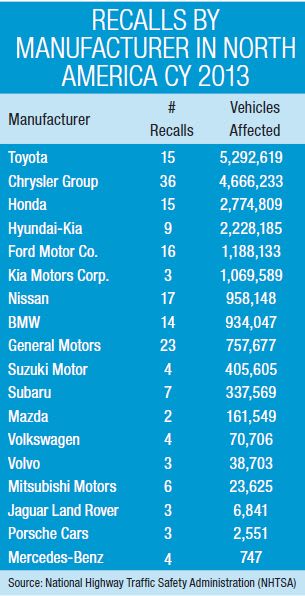
The number of vehicles recalled in the U.S. reached a nine-year high in 2013, with auto manufacturers recalling a total of 21.9 million vehicles, the National Highway Traffic Safety Administration (NHTSA) reported.
Automakers issued a total of 632 recalls in 2013, up 9% from 2012. In comparison, 2012 saw a total of 581 recalls in the U.S., affecting 16.4 million vehicles.
In 2013, Chrysler Group issued the most recalls: 36, which covered nearly 4.7 million vehicles. But Toyota’s 15 recalls affected the highest number of vehicles from a single manufacturer: nearly 5.3 million.
A Record Recall Year in 2014?
The first four months of 2014 saw global recall announcements from Toyota covering a total of 6.4 million vehicles (including 1.8 million in the U.S.) and General Motors for 6.26 million vehicles.
GM’s widely reported recall to fix power steering issues (for more than 1.3 million vehicles in the U.S.) covers model years 2004 to 2010, while the recall involving ignition switches for 2.2 million vehicles covers model years 2003 to 2011.
While these recalls fall outside of the model years currently used in the great majority of rental fleets, other recent GM recalls do cover later model vehicles, mostly van and truck models.
These include recalls for 2009- to 2014-MY Chevrolet Express and GMC Savana vans, 2008- to 2013-MY Buick Enclave, GMC Acadia and Chevrolet Traverse SUVs, 2014-MY Chevrolet Silverado and GMC Sierra trucks, 2015-MY Suburban and Tahoe SUVs and some 2015-MY Yukon SUVs.
As well, GM announced a recall for Chevrolet Cruze 1.4L turbo sedans from the 2013 and 2014 model years.
Toyota’s recalls announced in 2014 are for vehicles in model years 2010 and older.
Automakers have recalled about 9 million vehicles in the U.S. through mid-April. If this pace continues, 2014 would break the record of total recalled vehicles of 30.8 million set in 2004.
Recalls and Car Rental
The American Car Rental Association (ACRA) backs S. 921, the Safe Rental Car Act, which would mandate the immediate grounding and repair of any rental car under a recall.
While this bill makes its way through the legislative process, car rental companies are not under any legal obligation to immediately ground and fix vehicles. Nonetheless, while individual car rental company’s policies on recalls vary, they generally call for recalled vehicles “to be repaired as promptly as possible.” This has become an even greater challenge in light of the high number of recalls recently.
“Just in the last few weeks, it has been raining recalls and the dealers seem ill-prepared to actually correct them until a later date,” says Monty Merrill, an Austin-based Dollar and Thrifty licensee.
Merrill praises Toyota, however, in its handling of the 2010 recalls for sticking accelerator pedals. At that time, the manufacturer sent technicians to his rental lot to make the repairs. “We scheduled [repairs] during lower utility periods and it was not really too disruptive,” he says.
Today, Merrill tries to schedule recall repairs during slower periods, but it isn’t easy, he says. Overall, Merrill says he tries to mitigate the logistical hassles of recalls by varying the models in his fleet.
[PAGEBREAK]
When the legislation finally passes, the fleet logistics and customer service challenges of immediately grounding all recalled rental vehicles to make repairs will only be intensified, which will force rental companies to fine-tune fleet planning even more as a result.
For updates on recalls, car rental operators should visit NHTSA’s website, www.nhtsa.gov, and use its searchable database for models by year, make and model.
More Rental Operations
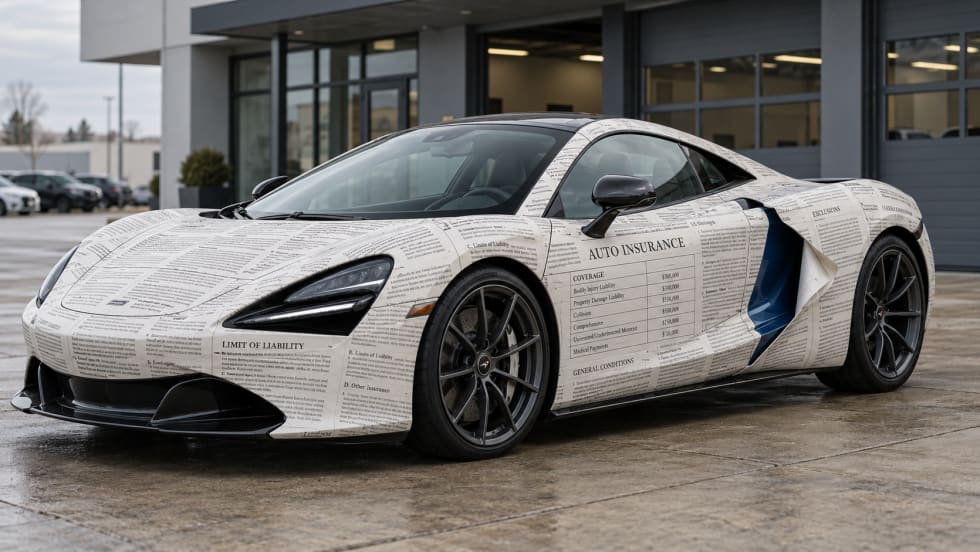
The $100,000 Insurance Trap in Exotic Car Rentals
Exotic rental agencies often rely on customers’ personal auto policies to protect six-figure vehicles. But policy language can dramatically change the coverage for vehicles over $100,000 MSRP.
Read More →
The Booking Is Confirmed, But Is Your Customer Ready to Drive?
For international renters, a confirmed reservation doesn’t always mean they’re eligible to drive. Earlier checks can help operators catch documentation and payment issues before the customer reaches the counter.
Read More →
ICRS 2027 Opens Call for Papers
The International Car Rental Show seeks session proposals on the business, operational, and technology issues facing car rental operators. Submissions are due Jan. 15.
Read More →
Turo to Launch Vehicle Delivery Service
Turo Delivered will let travelers search for vehicles that hosts can deliver directly to hotels, homes, airports, train stations, and other locations.
Read More →
Palm Beach Airport Code Change Creates Car Rental Distribution Gap
A test of rental searches under the old PBI and new DJT airport codes returned largely different sets of brands and vehicles, highlighting a potential distribution problem for rental operators.
Read More →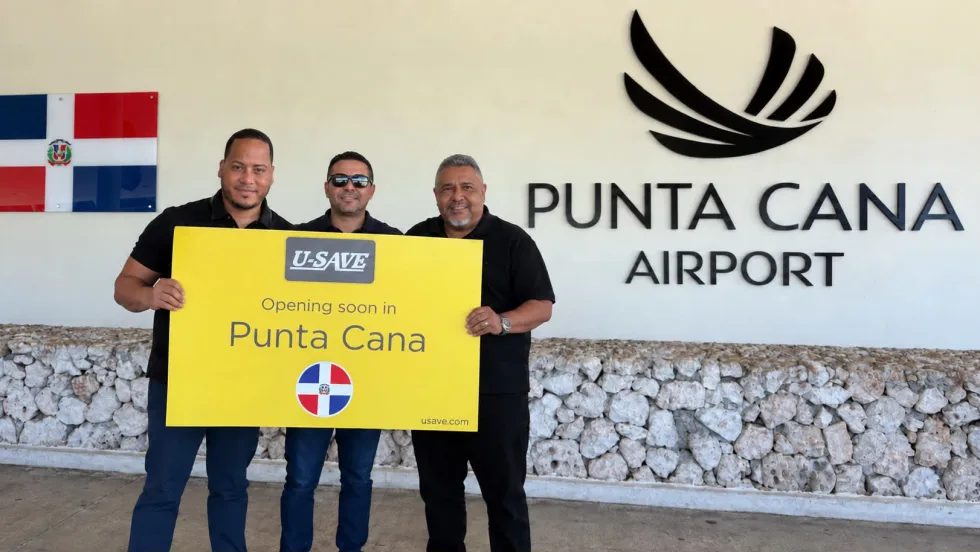
U-Save Continues Dominican Republic Expansion with Launch in Punta Cana
The new franchise location builds on U-Save’s existing Santo Domingo operation and will begin taking reservations for October 2026.
Read More →
When AI Books the Rental Car, Who Controls the Sale?
As AI moves from comparing rental rates to completing transactions, operators need to understand how travelers find, interpret, rank, and ultimately see their offers. (Part 2 of 2.)
Read More →
European Booked Car Rental Rates Fell 5%, Results Varied by Country
Ireland, Cyprus, and the United Kingdom saw steep declines, while booked rates rose in Poland and Hungary.
Read More →
Is It Time to Rethink Rental Categories?
As traditional economy and compact cars disappear from the market, longtime rental operator Mike DeLorenzo asks whether the industry’s familiar vehicle categories still make sense — and what operators need to rethink along with them.
Read More →
Who Owns the Rate? AI Is Creating a New Distribution Problem for Car Rental
Generative Engine Optimization asks whether AI can find a rental company, but operators also need to know whether the agent inspected enough of the market, compared equivalent offers, and presented a rate the traveler can actually book. (Part 1 of 2)
Read More →