


About the Author
Mark Mackey is corporate counsel for The Hertz Corporation.
 MENU
MENU SEARCH
To date, the car rental industry has been mostly left out of the picture regarding autonomous vehicles and liability. It's time to consider these issues well before autonomous vehicles are deployed.
Much has already been said about liability as it pertains to autonomous vehicles (commonly referred to as self-driving or driverless cars), but car rental companies (RACs) have mostly been left out of the picture.
Some auto manufacturers (OEMs) have already stepped up and stated publicly that they should and will take responsibility for accidents caused by the autonomous vehicles that they produce.
Consumer advocates and legal scholars have advocated for this scenario, as well, since it incorporates various current elements of tort law, including product liability.
While the chain of liability is relatively simple between a plaintiff and an OEM, the waters become muddied when RACs enter the picture, which they will inevitably do. OEMs are forming partnerships with taxi and ride-sharing services around the world in order to support an imminent growth explosion in driverless taxis. RACs will likely need to embrace the technology in one form or another.
Many OEMs are developing proprietary technology to enable varying degrees of autonomy in vehicles, with the eventual goal of vehicles becoming fully autonomous. Technology companies such as Google and Apple have been at the forefront of such initiatives, although the likelihood of those companies manufacturing and selling vehicles on a large scale — versus licensing their technology and systems to some OEMs — is tenuous.
Some degree of autonomy is already present in the market, including lane-keep assist, proximity warnings, electronic stability control, and even cruise control. The path to a completely driverless vehicle will be paved with increasingly autonomous features, requiring varying degrees of driver control and awareness.
The National Highway Traffic Safety Administration (NHTSA) has promulgated defined degrees of autonomy ranging from zero to four. For the purposes of this article, a vehicle falling within the first three categories will be designated as a semi-autonomous vehicle (SAV), or those that require some degree of manual driver control and awareness.
A category four would be designated as a fully autonomous vehicle (FAV), requiring no user input and potentially excluding steering wheels, gas, and brake pedals. SAVs pose the most pressing risks, both because they will be first to market (therefore the risks will present themselves sooner) and also because of the increased likelihood of user error.
Numerous states have either enacted laws pertaining to autonomous vehicles or have such legislation pending. While the majority of these laws merely direct applicable regulatory organizations to promulgate substantive rules, some of them contain authorizations to test autonomous vehicles and even describe criteria for the operation of SAVs or FAVs on public roads.
In the absence of laws specific to the operation of autonomous vehicles, liability for moving violations and accidents falls on the human operating the vehicle or in the driver’s seat (absent claims of defects and other liability that remove the driver from fault). The future landscape of applicable autonomous vehicle laws will hopefully be coordinated as to requirements and allocation of liability. Several model statutes have been drafted and proposed, though none specifically address RACs.
Collectively, the car rental industry should look to insert express language in future autonomous vehicle laws and carry over liability structures from generic autonomous vehicle laws to existing RAC-specific statutes.
Given potential insurance industry initiatives to create no-fault funds for accident victims, and the potential for either separate SAV operator licenses or license endorsements and even FAV occupants not needing to have a license, there will be many specific RAC requirements that should be edited accordingly.
The Graves Amendment (blocking vicarious liability of RACs for accidents caused by renters, absent negligent entrustment) may need to be updated, or it may be at risk overall.
There are many unique liability situations that will result from increasing autonomous vehicle capabilities, most of which have not yet been fully fleshed out. RACs should make sure to keep up with developments in technology and applicable laws to ensure that they can adequately account for and mitigate risks.
In the May/June issue, we’ll discuss those potential RAC-specific liability risks relating to autonomous vehicles and strategies to mitigate them.

The International Car Rental Show seeks session proposals on the business, operational, and technology issues facing car rental operators. Submissions are due Jan. 15.
Read More →
Turo Delivered will let travelers search for vehicles that hosts can deliver directly to hotels, homes, airports, train stations, and other locations.
Read More →
A test of rental searches under the old PBI and new DJT airport codes returned largely different sets of brands and vehicles, highlighting a potential distribution problem for rental operators.
Read More →
The new franchise location builds on U-Save’s existing Santo Domingo operation and will begin taking reservations for October 2026.
Read More →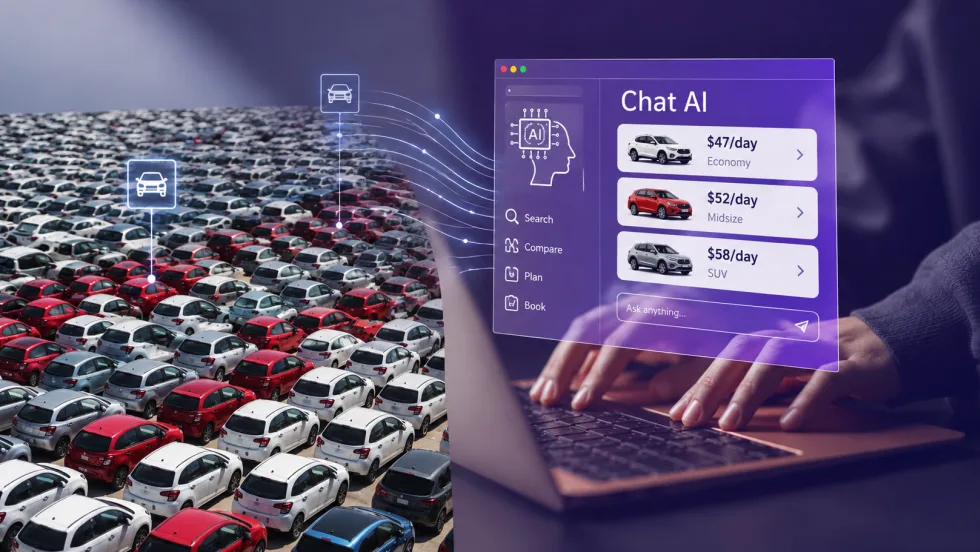
As AI moves from comparing rental rates to completing transactions, operators need to understand how travelers find, interpret, rank, and ultimately see their offers. (Part 2 of 2.)
Read More →
Ireland, Cyprus, and the United Kingdom saw steep declines, while booked rates rose in Poland and Hungary.
Read More →
As traditional economy and compact cars disappear from the market, longtime rental operator Mike DeLorenzo asks whether the industry’s familiar vehicle categories still make sense — and what operators need to rethink along with them.
Read More →
Generative Engine Optimization asks whether AI can find a rental company, but operators also need to know whether the agent inspected enough of the market, compared equivalent offers, and presented a rate the traveler can actually book. (Part 1 of 2)
Read More →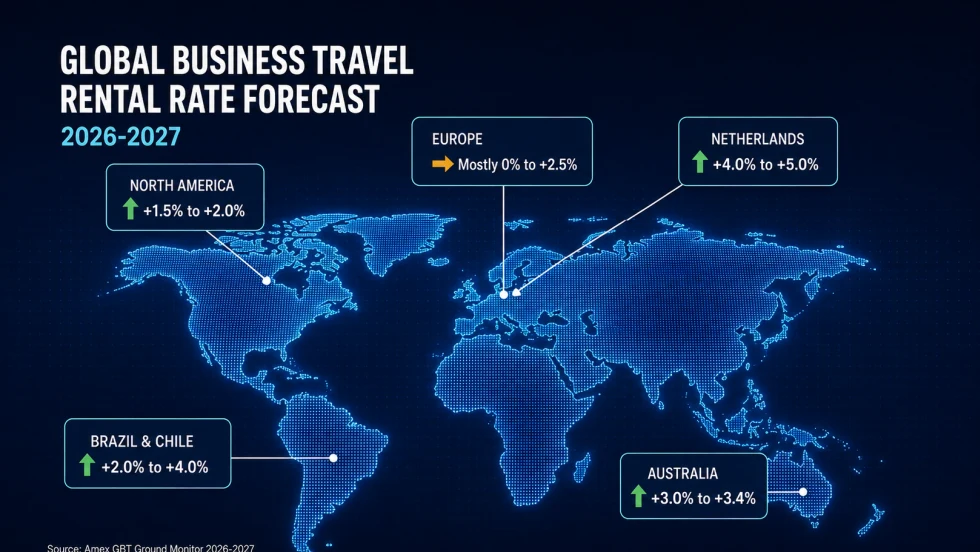
Improved fleet supply should limit pricing gains in 2026-27, while insurance, repair costs, and softer residual values continue to pressure rental operations, according to Amex GBT.
Read More →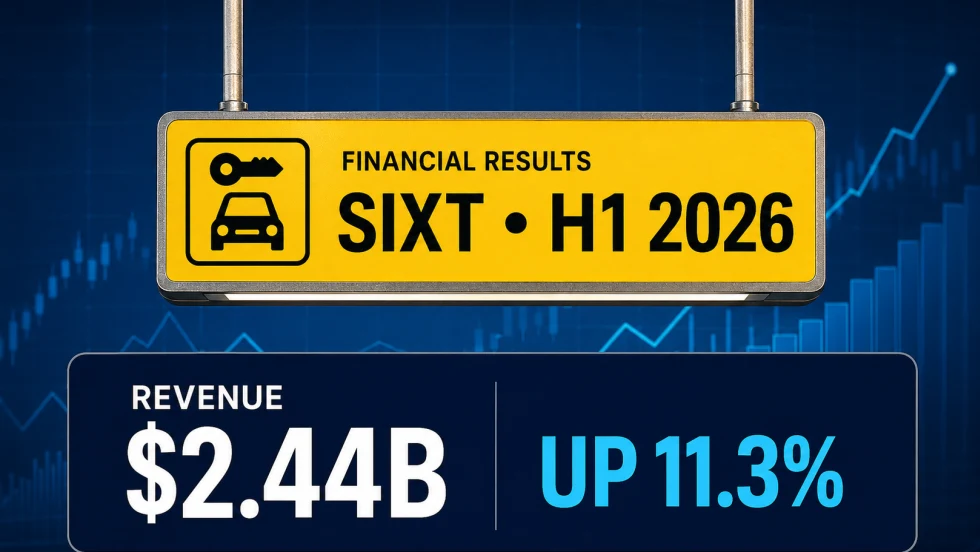
Sixt’s first-half revenue surpassed $2.4 billion for the first time as demand outpaced fleet growth, lifting utilization and earnings despite weaker consumer sentiment in North America.
Read More →