


Handling Negative Online Reviews
With Yelp's continued influence on companies' reputations, here are some tips to manage your company's online Yelp page, including how to respond to negative reviews.
Graphic via iStockphoto.com/BrianaJackson.
Graphic via iStockphoto.com/BrianaJackson.
Since Yelp’s launch in 2004, the online review platform has crowdsourced almost 60 million individual reviews of businesses across the globe. In the process, it has drastically changed the customer service landscape across every industry.
In today’s business climate, which is increasingly dominated by social media and online presence, rental car operators must add another bullet point to their resumes: online brand managers.
The upside of social media is that businesses now have a new set of tools to engage customers, boost loyalty and increase revenues. But there is also a downside: Negative online reviews and feedback can have an ever-increasing effect on a company’s bottom line.
Ignoring negative online feedback can have real consequences. For instance, a 2011 Harvard Business School study — analyzing Yelp restaurant reviews — found that a Yelp one-star rating increase can lead to a revenue increase of 5% to 9%.
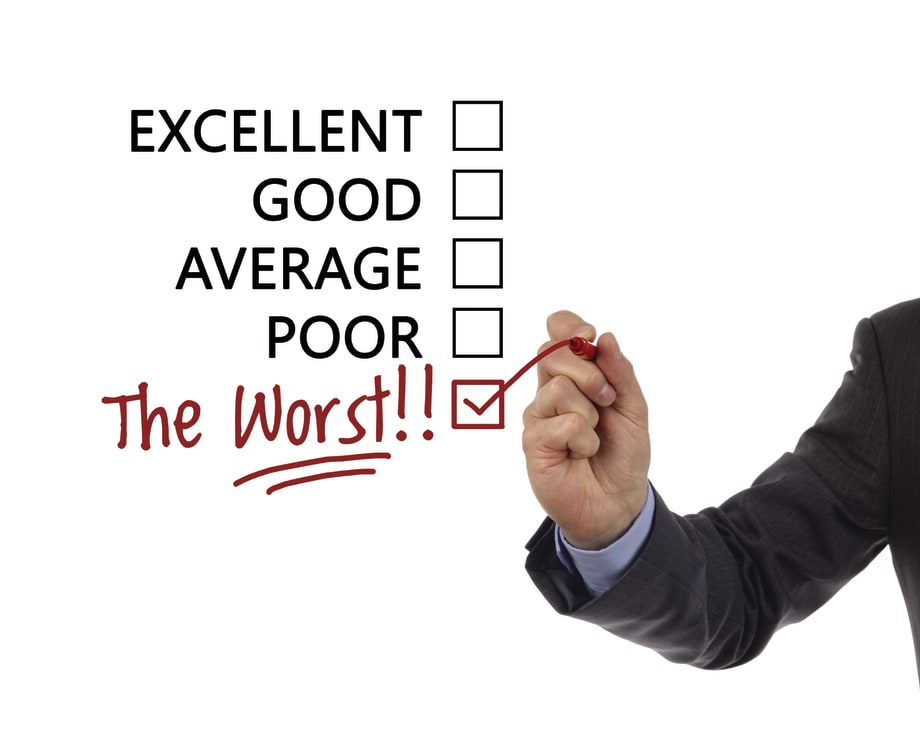
When a customer is not satisfied, he or she will almost always leave negative feedback on Yelp, TripAdvisor or similar online services. It can be difficult to not take it personally when a negative comment is made about you or the business, but it’s important to demonstrate self-control when dealing with such reviews.
How Does Yelp Work?
By creating Yelp reviewer accounts, individual users can write reviews about local businesses — everything from restaurants to home services to health clinics to car rental companies.
Based on its analysis, Yelp’s proprietary algorithm places both positive and negative reviews into the “recommended” or “filtered/not recommended” category.
Even if a business owner doesn’t register with Yelp, the company might still be on the website collecting reviews. To this end, a business owner should “claim” or “verify” his or her company’s Yelp page, which means registering as the owner of the business.
Once they claim the page, owners can interact with reviewers, participate in conversations about the business, send private messages to users and track the number of page views.
You Received a Negative Review. Now What?
Sometimes a negative review is justified based on a real user’s experience. Increasingly, however, negative reviews may not be warranted and can be fake or left for malicious purposes. Businesses are increasingly reporting they are becoming targets of false, made-up and/or defamatory reviews.
In some cases, these reviews originate through competitors, which present additional problems from a legal standpoint.
In one Pennsylvania case, the employee of a business posted more than 100 negative reviews about a competitor on Yelp, Citysearch and other online review sites. In the end, the employee’s company was found liable for defamation.
Responding to a Negative Review
When on the receiving end of negative feedback, first take a step back and digest the feedback. Often, our first instinct is to beat our chests defiantly, deny the feedback has any merit and then go on offense against the reviewer. This is the wrong path to take.
Know that some customers will be dissatisfied with your product or service, even if you do everything right. The best way to drown out the negative reviews is to get even more positive ones.
While it’s certainly a good idea to encourage customers to leave positive reviews, remember that Yelp expressly forbids “incentivizing” such reviews with compensation, free services or benefits. Similarly, do not have your friends, family or employees leave positive reviews; this is known as “astroturfing.”
If Yelp discovers that your business has been inappropriately soliciting positive reviews, your Yelp page will feature a large red badge indicating you pay for positive reviews.
Although a response might not bring about a change to the review or the person’s attitude, business owners should respond to every negative review, even if it is simply acknowledging the customer’s complaint and asking what can be done to change the negative experience into a positive one.
It is crucial to respond to each negative review in a timely and constructive manner. Today, it is easy for negative reviewers to “go wide” with their opinions and copy/paste them on multiple websites. Then they can post the negative reviews on social media for all their contacts to see — a much wider audience will learn of their negative experience.
Whether responding to the user publicly or privately, write it as if the response will appear on the front page of a major newspaper. Make sure the claims contained in the response are supportable and the language is factual.
Yelp reviewers can delete their own reviews by clicking the “remove” button at the bottom of their review, or they can change their star rating and/or the associated commentary. A respectful and personalized response to a dissatisfied customer’s review often initiates a voluntary removal — or modification — of a negative review by the user.
Know the Parameters of Your Control
The best-case scenario is to find a way to have a negative review removed. However, if a user is unwilling to remove or modify his or her review voluntarily, your next step is to seek out assistance from the online platform.
Does the review violate the terms and conditions of the service? Study Yelp’s terms and conditions and find ways to pigeon-hole the contents of the negative reviews into the prohibited categories. Did the Yelp reviewer leave a name or contact information, inviting others to contact him or her to discuss the experience? Did the review defame the business or an employee?
If the answer is yes to either of these questions, contact Yelp and they might remove the review. Both of those examples violate Yelp’s feedback policy, which prohibits the leaving of personal information in reviews.
Other bases for the removal of Yelp negative feedback include the Yelp content guidelines, which provide that reviews must be “relevant” (should address the “core of the consumer experience” and not “extraordinary circumstances”) and accurate (exaggerations and misrepresentations are expressly prohibited).
Also, Yelp doesn’t need a reason to remove or otherwise modify a user’s review, as noted in its terms and conditions. A business has nothing to lose by requesting a review modification or removal on that basis.
Last Resort: Take Steps toward Litigation
Litigation — or the threat thereof — should always be a last resort in situations involving negative feedback on Yelp. Consult an attorney before proceeding with the following steps as each circumstance is different. However, should the circumstances require, you and/or your attorney may consider the following steps:
Send a cease-and-desist letter to the reviewer requesting the conduct stop immediately and/or the review be taken down. If the reviewer is anonymous, you may need to file a lawsuit and subpoena Yelp for the person’s information, including his or her IP address. A 2014 Virginia Supreme Court decision held that Yelp couldn’t shield this information under free speech protections because Yelp reviewers were not Yelp’s customers. Your state’s position on that issue may vary.
Determine if the negative reviews are coming from a competitor, disgruntled ex-employee or some other source.
Find out if the contents of the review meet your state’s legal standard for defamation. Remember that a user’s opinion is probably not defamation, but if it otherwise qualifies, Yelp does not shield the user from liability pursuant to the terms and conditions, which caution users not to defame businesses.
Behind the Curtain: Yelp's Algorithm
Yelp has always been tight-lipped about its proprietary algorithm. From the outside, the algorithm seems to promote and demote reviews at random, with no reason given why. Yelp has never fully disclosed how it determines which reviews (positive or negative) are considered part of a company’s overall Yelp rating.
In part, Yelp attributes this to its desire to avoid having reviewers learn how to game the system, such that only positive or only negative reviews make it through the filters.
Here are some of the criteria in the Yelp rating process:
Quality of the review: The review must present new, insightful and objective information about the business. Rants and raves tend to be disregarded by the algorithm, especially if they lack specifics about a user’s experience. The algorithm tries to find a “trend” (or an average) to accurately track what the “average” customer experience would be at the business.
Reliability of the reviewer: Yelp’s algorithm favors users who give more information about themselves. For example, when signing up for Yelp, users can sync other social media accounts (such as Facebook), which provides Yelp with more information about the user. The more information Yelp has, the more “reliable” the reviewer is considered. This should theoretically weed out the new users who sign up only to complain about one bad experience before disappearing.
Reviewer activity: The algorithm then filters out “active” and “non-active” reviewers. If a user is deemed “reliable” and writes many reviews, it is more likely that a user’s recommendation will be promoted and considered in a company’s score.
For reference, Yelp’s leading reviewer last year, Victor G., wrote 1,712 reviews in 2013 alone, for a total of more than 7,000 reviews since he joined. In addition to a number of reviews, the algorithm tracks criteria such as how many “friends” the user has on Yelp and how often they log in.
In the same vein, reviewers’ IP addresses are tracked. This is to prevent reviews originating from inside a company or a competitor. Yelp uses the example of passing a laptop across the table to a customer sitting in the restaurant, which it says is high pressure and prohibited.
About The Author
Daniel Warsh is an attorney at Maddin, Hauser, Roth & Heller P.C., a law firm that represents entrepreneurs and Fortune 500 companies across a wide swath of industries, including the auto and travel/restaurant/hospitality industries, in areas such as franchising, employment law and litigation.
More Rental Operations

Advantage, Sixt Place Among Top Five in Annual Satisfaction Study
While Enterprise and National retain the top spots in JD Power’s 2026 rankings, the latest customer satisfaction results suggest renters can find competitive service beyond the biggest car rental names.
Read More →
The $100,000 Insurance Trap in Exotic Car Rentals
Exotic rental agencies often rely on customers’ personal auto policies to protect six-figure vehicles. But policy language can dramatically change the coverage for vehicles over $100,000 MSRP.
Read More →
The Booking Is Confirmed, But Is Your Customer Ready to Drive?
For international renters, a confirmed reservation doesn’t always mean they’re eligible to drive. Earlier checks can help operators catch documentation and payment issues before the customer reaches the counter.
Read More →
ICRS 2027 Opens Call for Papers
The International Car Rental Show seeks session proposals on the business, operational, and technology issues facing car rental operators. Submissions are due Jan. 15.
Read More →
Turo to Launch Vehicle Delivery Service
Turo Delivered will let travelers search for vehicles that hosts can deliver directly to hotels, homes, airports, train stations, and other locations.
Read More →
Palm Beach Airport Code Change Creates Car Rental Distribution Gap
A test of rental searches under the old PBI and new DJT airport codes returned largely different sets of brands and vehicles, highlighting a potential distribution problem for rental operators.
Read More →
U-Save Continues Dominican Republic Expansion with Launch in Punta Cana
The new franchise location builds on U-Save’s existing Santo Domingo operation and will begin taking reservations for October 2026.
Read More →
When AI Books the Rental Car, Who Controls the Sale?
As AI moves from comparing rental rates to completing transactions, operators need to understand how travelers find, interpret, rank, and ultimately see their offers. (Part 2 of 2.)
Read More →
European Booked Car Rental Rates Fell 5%, Results Varied by Country
Ireland, Cyprus, and the United Kingdom saw steep declines, while booked rates rose in Poland and Hungary.
Read More →
Is It Time to Rethink Rental Categories?
As traditional economy and compact cars disappear from the market, longtime rental operator Mike DeLorenzo asks whether the industry’s familiar vehicle categories still make sense — and what operators need to rethink along with them.
Read More →