



Hertz: Lower Revenue, Higher Expenses "Transitory"
Hertz Global Holdings Inc. reported its third quarter 2014 U.S. revenue of $1.8 billion. For the full-year 2014, corporate EBITDA is anticipated between $1.3 billion to $1.45 billion, which reflects the impact of adjustments relating to the ongoing accounting review.
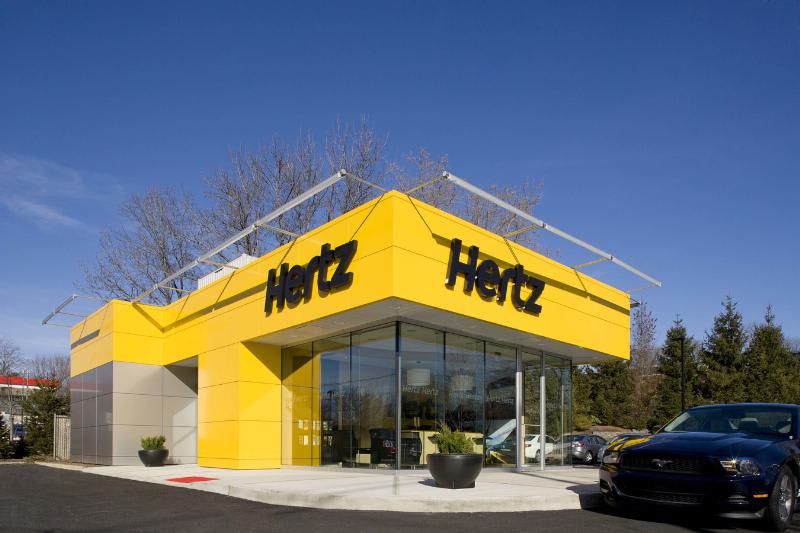
Photo courtesy of Hertz Corp.
Photo courtesy of Hertz Corp.
Hertz Global Holdings Inc. reported its third quarter 2014 U.S. revenue of $1.8 billion, in line with last year’s third quarter. This year-over-year revenue comparison is partly impacted by the ending of the Advantage vehicle sublease in November 2013, says the company.
In third quarter 2014, transaction days increased 5% year-over-year. Although there was a rise in contracted bookings in June, transaction days in Q3 were tempered by tight fleets in the face of increasing OEM recalls, according to Hertz.
Hertz’s U.S. car rental total revenue per day (RPD) decreased 4% year-over-year. For airport rentals, Hertz’s total RPD declined 2% in transaction days.
For the full-year 2014, corporate EBITDA is anticipated between $1.3 billion to $1.45 billion, which reflects the impact of adjustments relating to the ongoing accounting review, says the company. These earnings are being affected by lower U.S. car rental fleet efficiency and higher fleet maintenance, damage and depreciation expenses.
"We believe the lower revenue growth and higher direct operating expenses we are experiencing in 2014 are transitory, primarily associated with fleet and systems integration challenges related to the Dollar Thrifty acquisition as well as some execution issues,” said Brian MacDonald, interim CEO of Hertz. “We are addressing the operational issues by strategically repositioning the fleet, hiring incremental sales and maintenance staff and migrating the Dollar and Thrifty financial and counter systems onto Hertz systems. Accordingly, 2015 will represent a transitional year with a more normal base performance becoming evident in 2016."
In order to reduce costs by about $100 million annually, Hertz plans to reduce general and administrative expenses, reduce information technology and capital investments, as well as reduce external strategic advisor expenses. According to Hertz, it expects to achieve these savings by the end of 2015.
Additionally, Hertz has announced a new fleet purchasing strategy. It will purchase around 350,000 model-year 2015 vehicles in the U.S., approximately 60% more than the 2014-MY vehicles, according to the company. About 25% of the 2015 fleet buy will be delivered in fourth quarter 2014. And 70% of the U.S. operating fleet is expected to be risk vehicles in 2015 compared to 85% in 2014.
Financing for the fleet vehicles will be funded through Hertz’s credit facilities, which were recently revised to provide incremental growth capital, says the company.
“The Hertz Board and management team have determined that a comprehensive modification to Hertz's U.S. fleet strategy is necessary to establish a more competitive product position, improve the customer experience, provide greater flexibility for demand fluctuations and better protect against a fluctuating used-car sales cycle," said MacDonald.
More Rental Operations

Advantage, Sixt Place Among Top Five in Annual Satisfaction Study
While Enterprise and National retain the top spots in JD Power’s 2026 rankings, the latest customer satisfaction results suggest renters can find competitive service beyond the biggest car rental names.
Read More →
The $100,000 Insurance Trap in Exotic Car Rentals
Exotic rental agencies often rely on customers’ personal auto policies to protect six-figure vehicles. But policy language can dramatically change the coverage for vehicles over $100,000 MSRP.
Read More →
The Booking Is Confirmed, But Is Your Customer Ready to Drive?
For international renters, a confirmed reservation doesn’t always mean they’re eligible to drive. Earlier checks can help operators catch documentation and payment issues before the customer reaches the counter.
Read More →
ICRS 2027 Opens Call for Papers
The International Car Rental Show seeks session proposals on the business, operational, and technology issues facing car rental operators. Submissions are due Jan. 15.
Read More →
Turo to Launch Vehicle Delivery Service
Turo Delivered will let travelers search for vehicles that hosts can deliver directly to hotels, homes, airports, train stations, and other locations.
Read More →
Palm Beach Airport Code Change Creates Car Rental Distribution Gap
A test of rental searches under the old PBI and new DJT airport codes returned largely different sets of brands and vehicles, highlighting a potential distribution problem for rental operators.
Read More →
U-Save Continues Dominican Republic Expansion with Launch in Punta Cana
The new franchise location builds on U-Save’s existing Santo Domingo operation and will begin taking reservations for October 2026.
Read More →
When AI Books the Rental Car, Who Controls the Sale?
As AI moves from comparing rental rates to completing transactions, operators need to understand how travelers find, interpret, rank, and ultimately see their offers. (Part 2 of 2.)
Read More →
European Booked Car Rental Rates Fell 5%, Results Varied by Country
Ireland, Cyprus, and the United Kingdom saw steep declines, while booked rates rose in Poland and Hungary.
Read More →
Is It Time to Rethink Rental Categories?
As traditional economy and compact cars disappear from the market, longtime rental operator Mike DeLorenzo asks whether the industry’s familiar vehicle categories still make sense — and what operators need to rethink along with them.
Read More →