




Related: Understanding E-Signature Pads and the Electronic Rental Agreement
Judge Denies Dollar Thrifty Class Action Suit
A federal judge refused to certify a class of consumers who claim that Dollar Thrifty adds extra charges onto contracts in violation of consumer law.
by Staff
March 16, 2016
Electronic signature pad. Photo courtesy of Computime.
2 min to read

Electronic signature pad. Photo courtesy of Computime.
A federal judge refused to certify a class of consumers who claim that Dollar Thrifty adds extra charges onto contracts in violation of consumer law, according to a report by Court House News. This is the second time a class action suit was dismissed on this case.
In 2012, plaintiffs Sandra McKinnon and Kirsten Tool sued Dollar Thrifty Automotive Group for allegedly defrauding them and other customers in California and Oklahoma. After allegedly orally declining additional services such as damage waivers and insurance, the plaintiffs claim that Dollar employees misled them into checking boxes on the electric signature pad that actually added the extra services.
The plaintiffs claimed that the company relies "on the hustle and rush of airports to send their customers away without having reviewed their rental charges, thereby giving Dollar a basis for claiming that their customers routinely agree to the add-on charges," according to the report.
The two proposed classes at issue included all U.S. residents who obtained a car rental since Jan. 1, 2009 — from certain California locations or online — and were charged for a loss damage waiver when their own car insurance applied to rental cars.
U.S. District Judge Yvonne Gonzalez Rogers denied the plaintiffs' motion for class certification but gave them leave to amend their class definitions. She found that Dollar Thrifty’s practices concerning disclosure of the waivers were "not uniform," since "the placement of signs, the provision of oral disclosures, and initialing procedures all varied temporally and by location."
"While some common evidence might exist specific to each location and within specific time frames, plaintiffs have not put forward a more narrow class subject to proof," Rogers wrote in her 16-page ruling.
Rogers also found that one of the proposed classes — which covers consumers who rented their cars in person rather than online — was not ascertainable, according to the report.
When determining whether a particular individual purchased a waiver "in circumstances in which the requisite disclosures were lacking," Rogers said, "the court agrees that it is not feasible to resolve this question on a class-wide basis."
“It is possible that a much more narrow class focused on the sole issue of lack of signage for specific locations within a specific time period may be appropriate," said Rogers.
Rogers gave the plaintiffs until May 3 to file an amended motion for class certification.
More Rental Operations
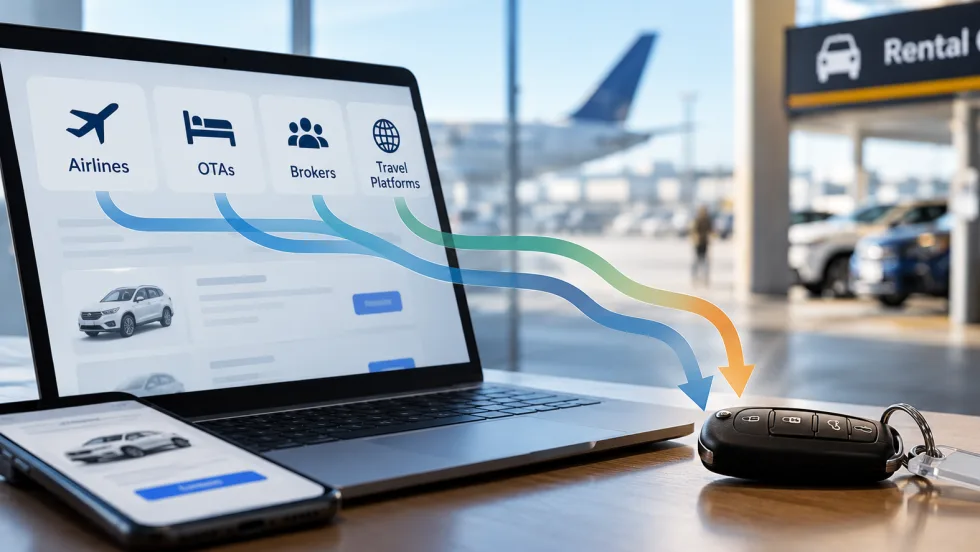
Direct, Broker or Hybrid? How Travel Retailers Source Rental Cars
As travel retailers weigh direct supplier relationships against third-party distribution, rental operators need to understand how those decisions affect their business.
Read More →
How Did This Independent Rental Operator Grow to 170 Vehicles in 4 Years?
With 170 vehicles across three Kentucky locations, Joel Price relies on an overseas team to handle reservations, payments, and after-hours customer service. It's one part of an unconventional approach to growing an independent rental operation.
Read More →
What Does It Take to Succeed in B2B Rentals?
The fundamentals may be familiar to daily car rental operators, but project-based truck rentals put different demands on the fleet and the business.
Read More →
NPR Builds on International Partnerships to Grow Rental Bookings
With Ana Laborde supporting broker development, NPR Auto Group is tailoring distribution strategies, rate packages, and partnerships to grow international reservations across its three brands.
Read More →
Advantage, Sixt Place Among Top Five in Annual Satisfaction Study
While Enterprise and National retain the top spots in JD Power’s 2026 rankings, the latest customer satisfaction results suggest renters can find competitive service beyond the biggest car rental names.
Read More →
The $100,000 Insurance Trap in Exotic Car Rentals
Exotic rental agencies often rely on customers’ personal auto policies to protect six-figure vehicles. But policy language can dramatically change the coverage for vehicles over $100,000 MSRP.
Read More →
The Booking Is Confirmed, But Is Your Customer Ready to Drive?
For international renters, a confirmed reservation doesn’t always mean they’re eligible to drive. Earlier checks can help operators catch documentation and payment issues before the customer reaches the counter.
Read More →
ICRS 2027 Opens Call for Papers
The International Car Rental Show seeks session proposals on the business, operational, and technology issues facing car rental operators. Submissions are due Jan. 15.
Read More →
Turo to Launch Vehicle Delivery Service
Turo Delivered will let travelers search for vehicles that hosts can deliver directly to hotels, homes, airports, train stations, and other locations.
Read More →
Palm Beach Airport Code Change Creates Car Rental Distribution Gap
A test of rental searches under the old PBI and new DJT airport codes returned largely different sets of brands and vehicles, highlighting a potential distribution problem for rental operators.
Read More →