



Ford Partners With Lyft to Test Self-Driving Vehicles
Ford Motor Co. will be working with Lyft to eventually deploy its self-driving vehicles on the ride-hailing company’s platform.
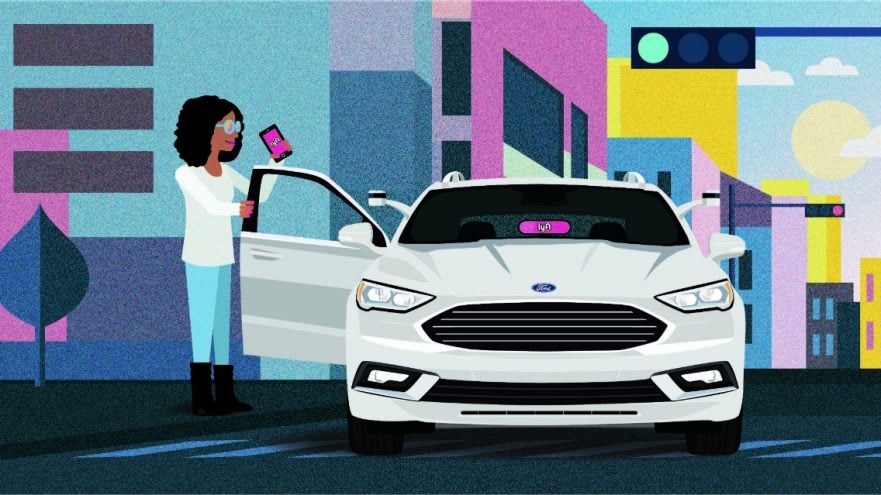
Illustration courtesy of Ford Motor Co.

Illustration courtesy of Ford Motor Co.
Ford Motor Co. will be partnering with Lyft to deploy its self-driving vehicles on the ride-hailing company’s platform.
Lyft brings a network of customers and a growing demand for rides while Ford has experience with autonomous vehicle technology and large scale manufacturing, according to a blog by Sherif Marakby, Ford’s vice president of autonomous vehicles and electrification.
“Both companies have fleet management and big data experience,” wrote Marakby. “With our combined capabilities, we believe we can effectively share information to help make the best decisions for the future.”
Initially, Ford will put human-driven vehicles on Lyft’s network, which will allow for testing Ford’s platform with Lyft’s customer-facing platform, according to the blog.
Ford will connect its self-driving vehicles to Lyft’s network, but customers won’t be able to use them at first. Ford plans to test the self-driving technology before putting customers in autonomous vehicles, according to the blog.
“When ready, we’ll have self-driving cars operating alongside Lyft’s currently community of drivers to help accommodate times of significant consumer demand to ensure that transportation remains timely and affordable,” wrote Marakby.
Click here to read Ford’s full blog report.
Originally posted on Automotive Fleet
More Rental Operations
Advantage, Sixt Place Among Top Five in Annual Satisfaction Study
While Enterprise and National retain the top spots in JD Power’s 2026 rankings, the latest customer satisfaction results suggest renters can find competitive service beyond the biggest car rental names.
Read More →
The $100,000 Insurance Trap in Exotic Car Rentals
Exotic rental agencies often rely on customers’ personal auto policies to protect six-figure vehicles. But policy language can dramatically change the coverage for vehicles over $100,000 MSRP.
Read More →
The Booking Is Confirmed, But Is Your Customer Ready to Drive?
For international renters, a confirmed reservation doesn’t always mean they’re eligible to drive. Earlier checks can help operators catch documentation and payment issues before the customer reaches the counter.
Read More →
ICRS 2027 Opens Call for Papers
The International Car Rental Show seeks session proposals on the business, operational, and technology issues facing car rental operators. Submissions are due Jan. 15.
Read More →
Turo to Launch Vehicle Delivery Service
Turo Delivered will let travelers search for vehicles that hosts can deliver directly to hotels, homes, airports, train stations, and other locations.
Read More →
Palm Beach Airport Code Change Creates Car Rental Distribution Gap
A test of rental searches under the old PBI and new DJT airport codes returned largely different sets of brands and vehicles, highlighting a potential distribution problem for rental operators.
Read More →
U-Save Continues Dominican Republic Expansion with Launch in Punta Cana
The new franchise location builds on U-Save’s existing Santo Domingo operation and will begin taking reservations for October 2026.
Read More →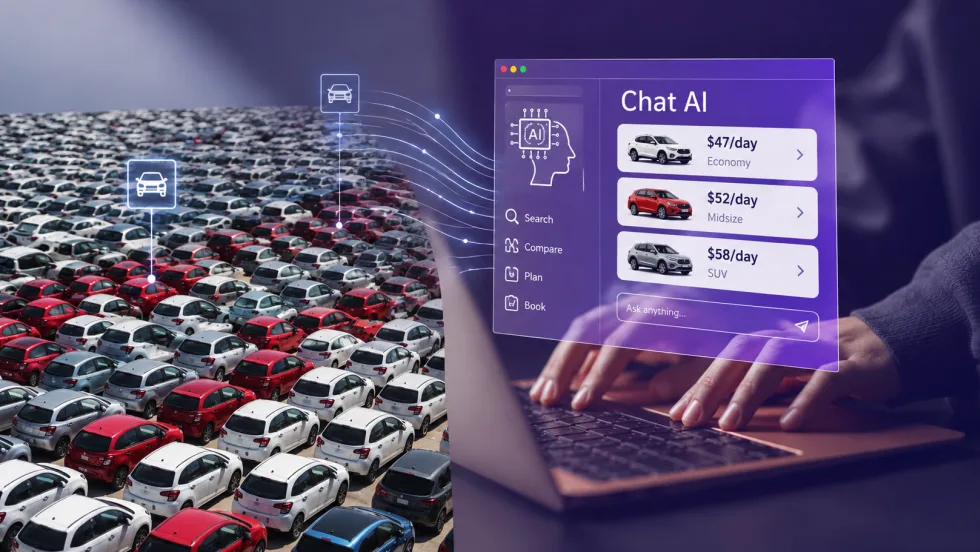
When AI Books the Rental Car, Who Controls the Sale?
As AI moves from comparing rental rates to completing transactions, operators need to understand how travelers find, interpret, rank, and ultimately see their offers. (Part 2 of 2.)
Read More →
European Booked Car Rental Rates Fell 5%, Results Varied by Country
Ireland, Cyprus, and the United Kingdom saw steep declines, while booked rates rose in Poland and Hungary.
Read More →
Is It Time to Rethink Rental Categories?
As traditional economy and compact cars disappear from the market, longtime rental operator Mike DeLorenzo asks whether the industry’s familiar vehicle categories still make sense — and what operators need to rethink along with them.
Read More →