




Black Book: Are Gas Prices Driving the Market?
Ricky Beggs, managing editor of Black Book, presents the Oct. 31 edition of "Beggs on the Used Car Market." In his weekly video, he discusses the performance of the various car and truck market segments, and the possible role of changing fuel prices.
Ricky Beggs, managing editor of Black Book, presents the Oct. 31 edition of "Beggs on the Used Car Market." In his weekly video (transcript below), he discusses the performance of the various car and truck market segments, and the possible role of changing fuel prices.
The auction lanes brought us a variety of trends in the values this past week. It was active enough that the average of 2,078 vehicles adjusted each day was the second most active weekly period since the week ending Sept. 16, which was a near record of 2,625 per day.
The number of increases came in at 18 percent of the adjustments. This is the smallest number of increases in values since the week ending Sept. 30. The overall adjustment amount of almost -$84 is the largest decline in the last five weeks.
As the dealer and survey personnel comments came in this week they ranged widely in how they saw the market. Where someone saw “a more stable market” another dealer said it was “a tough market to sell in.”
Several dealers commented that there seemed to be more dealers on the lanes showing interest. The most consistent comment referenced the under $10,000 units being in strong demand.
Let’s take a closer look at the cars and trucks by segment type. With gas prices moving all over the board they are still well under peak prices. This seems to be pushing or pulling buyers to the trucks and SUVs and away from the car segments.
Overall the car segments declined by $75, the largest overall decline since the week ending Nov. 19, 2010 — almost a full year ago. I continue to be amazed at how little of a move in gas prices drives consumer interest into various segment types. With the extra interest in trucks and SUVs, we had the largest decline with six of the 10 car segments over the past three weeks or longer periods of time. The best performing car segment this past week was the full-size cars (FSC) at a minimal -$16 change.
Did I mention the price of gas pushing interest to trucks? Three truck segments increased for the week. They were the full-size vans in cargo and passenger versions at +$8 and +$22 respectively. The mid-size pickups (MPT) also increased in value by $7. Closely following was the compact pickups at -$8.
When comparing the truck segments of this week to the prior week there were 10 segments that didn’t show the strength of the previous week. The most significant were the compact SUVs at -$99 this week compared to -$54 the previous week and the mid-size crossovers at -$91 as compared to -$55 the previous week.
With all of these changes the trucks still remain more stable in overall change for the past 6 weeks. Within this time period there is only an $11 variance in the weekly change amount, this week’s -$43 and the -$32 for the week ending Sept. 30.
The editors have been busy tracking and reporting the used market. They have also been working diligently to complete the residual projections on the 2012 models as they hit the dealers’ lots. The 92, 2012 models now published and included in the November/December Black Book Official Residual Value Guide are solid numbers for your leasing programs.
More are in the works as the various manufacturers present their models for retail sale. As a subscriber to this printed guide, all access to future residual projections effective Jan. 1, 2012 will be through our online electronic products. Please contact your Black Book sales representative for more information.
From the varied comments at the auctions this past week, we can’t wait to see what will present itself on the auction lanes this coming week. We’ll be there, all across the country, to report those changes.
Have a great week!
Ricky Beggs
Originally posted on Work Truck Online
More Rental Operations

U.S. Business Travel Drives $623 Billion+ in Economic Impact as Spending Reaches $538 Billion
The data also underscores the industry’s strong multiplier effect across the U.S. economy, revealing that each dollar invested in business travel in 2024 generated $1.16 in GDP.
Read More →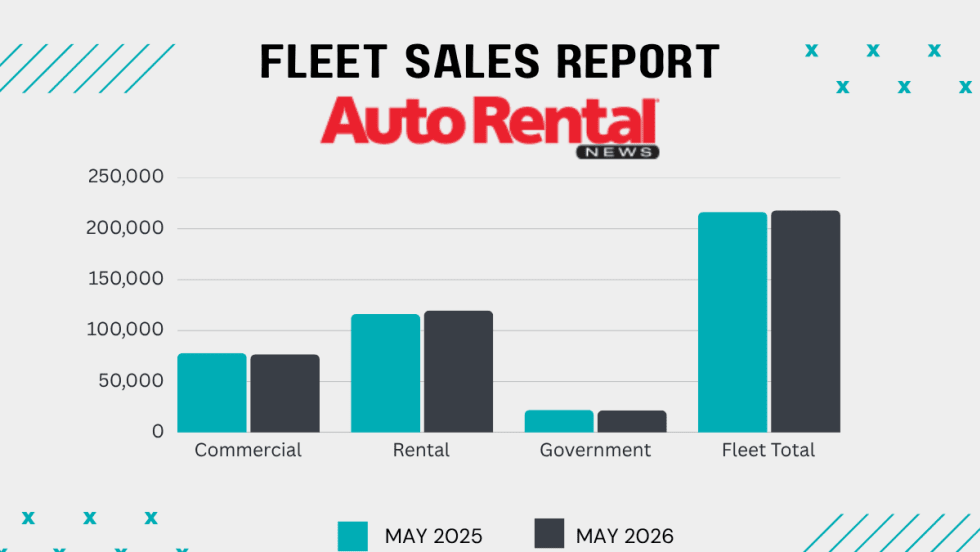
Rental Fleet Sales Skating Just Above 2025 Levels
The U.S. economy's continued growth and positive business investment are creating a favorable environment for fleet vehicle demand.
Read More →
Grow Your Rental Business Beyond Cars
Rental fleet operations are facing numerous evolving challenges and opportunities from AI technology to rate and revenue management, to customer service and business growth.
Read More →
Using AI to Create Clarity, Not Conflict, in Rental Car Damage
Rental companies still need people, policy, judgment, and thoughtful implementation, with operators remaining in control of the customer experience.
Read More →
Get Ready To Roll: No Stopping Self-Driving Rental Cars
The autonomous mobility technology revolution will move at its own pace, but sooner rather than later.
Read More →
Southwest Airlines Selects CarTrawler For Its Car Rental Booking Platform
The platform is designed to allow customers to compare and book rental vehicles more easily during the travel booking process.
Read More →
Cross-Pressures, Evolving Trends Drive 2026 Rental Car Industry
A combination of cautious economic behavior, shifts in the rental vehicle market, and technological influences are shaping car rental operator decisions.
Read More →
Government Affairs Executive Wins Leading Rental Car Industry Award
Robert Muhs started in the car rental industry with Avis Budget Group two years before the first International Car Rental Show.
Read More →
Green Motion Expands Its African Presence with Mozambique Launch
This new rental car outlet reflects the growing demand for reliable transportation and the emphasis on sustainable travel across the continent.
Read More →
RentalMatics, GeoInt Partner On Rental Car Speed Tracking Tech
Rental operators can now detect and act on speeding while vehicles are still on rent, thereby reducing fines, admin workload, vehicle wear, and safety risks.
Read More →