




Toyota Starts EV Car Sharing in the U.S.
In a company first for the U.S., Toyota launched an electric car sharing initiative in partnership with the Advanced Power & Energy Program from University of California, Irvine.
Toyota Motor Corp. partnered with University of California Irvine to bring its electric car sharing initiative to the U.S. for the first time, according to an announcement from UCI on March 21.
Through Toyota’s partnership with the university’s Advanced Power & Energy Program, 30 2013 Scion iQ electric vehicles will be added to the UCI-administered Zero Emission Vehicle-Network Enabled Transport (ZEV-NET) fleet.
ZEV-NET provides battery-powered transportation for the “last mile” of commutes. Commuters to UCI and area businesses who are enrolled in ZEV-NET will be able to pick up a vehicle from the Irvine Transportation Center to rent daily.
“Mobility is evolving, and Toyota is exploring new business models for future transportation needs,” said Craig Scott, advanced technology vehicle manager for Toyota Motor Sales USA Inc. “ZEV-NET helps us understand how electric vehicles are used within an active car sharing program and the viability of this type of program for future technologies.”
Auto Rental News reported last year that Toyota would use the iQ EVs for car sharing programs in the United States, while electric car sharing from Toyota is already available in Japan and also recently launched in France.
More Rental Operations

The Booking Is Confirmed, But Is Your Customer Ready to Drive?
For international renters, a confirmed reservation doesn’t always mean they’re eligible to drive. Earlier checks can help operators catch documentation and payment issues before the customer reaches the counter.
Read More →
ICRS 2027 Opens Call for Papers
The International Car Rental Show seeks session proposals on the business, operational, and technology issues facing car rental operators. Submissions are due Jan. 15.
Read More →
Turo to Launch Vehicle Delivery Service
Turo Delivered will let travelers search for vehicles that hosts can deliver directly to hotels, homes, airports, train stations, and other locations.
Read More →
Palm Beach Airport Code Change Creates Car Rental Distribution Gap
A test of rental searches under the old PBI and new DJT airport codes returned largely different sets of brands and vehicles, highlighting a potential distribution problem for rental operators.
Read More →
U-Save Continues Dominican Republic Expansion with Launch in Punta Cana
The new franchise location builds on U-Save’s existing Santo Domingo operation and will begin taking reservations for October 2026.
Read More →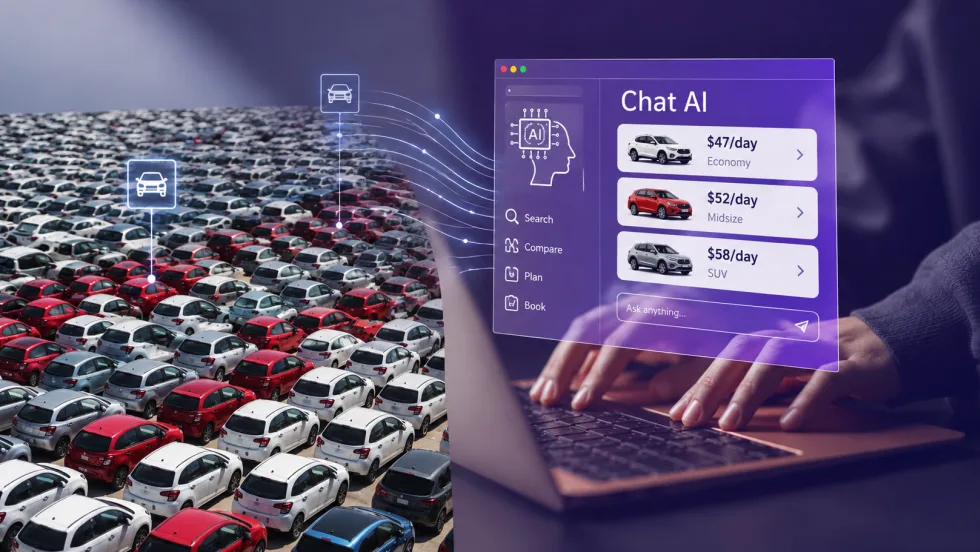
When AI Books the Rental Car, Who Controls the Sale?
As AI moves from comparing rental rates to completing transactions, operators need to understand how travelers find, interpret, rank, and ultimately see their offers. (Part 2 of 2.)
Read More →
European Booked Car Rental Rates Fell 5%, Results Varied by Country
Ireland, Cyprus, and the United Kingdom saw steep declines, while booked rates rose in Poland and Hungary.
Read More →
Is It Time to Rethink Rental Categories?
As traditional economy and compact cars disappear from the market, longtime rental operator Mike DeLorenzo asks whether the industry’s familiar vehicle categories still make sense — and what operators need to rethink along with them.
Read More →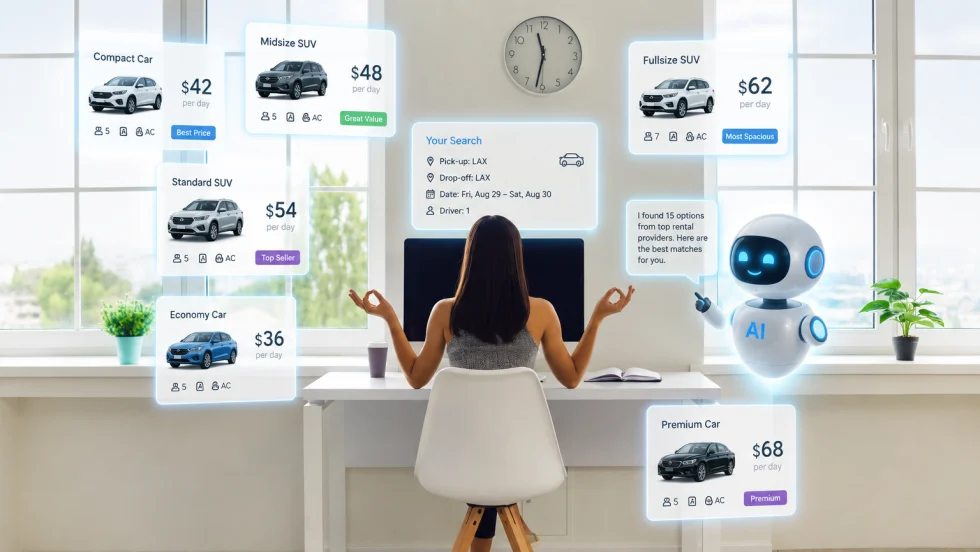
Who Owns the Rate? AI Is Creating a New Distribution Problem for Car Rental
Generative Engine Optimization asks whether AI can find a rental company, but operators also need to know whether the agent inspected enough of the market, compared equivalent offers, and presented a rate the traveler can actually book. (Part 1 of 2)
Read More →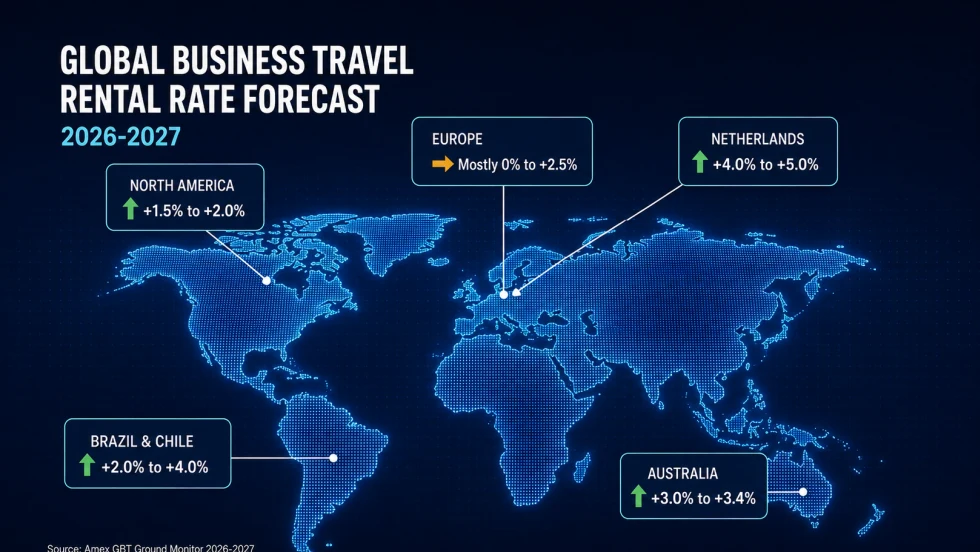
U.S. Business Travel Car Rental Rates Forecast to Rise Up to 2%
Improved fleet supply should limit pricing gains in 2026-27, while insurance, repair costs, and softer residual values continue to pressure rental operations, according to Amex GBT.
Read More →