




Manheim Index Declines in April
Prices for rental risk units sold at auction were 4.1% lower than their year-ago levels.
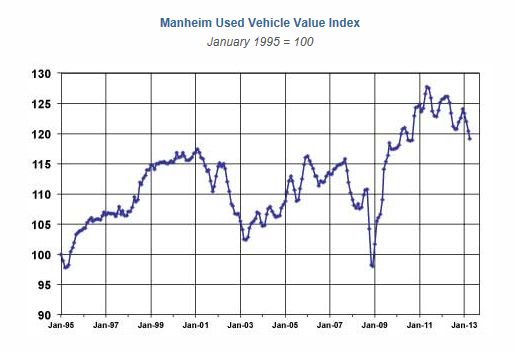
The Manheim Used Vehicle Value Index is 5.5% lower than a year ago.
Source: Manheim Consulting

The Manheim Used Vehicle Value Index is 5.5% lower than a year ago.
Source: Manheim Consulting
Wholesale used vehicle prices (on a mix-, mileage-, and seasonally adjusted basis) declined 1.0% in April, according to Manheim Consulting. This brought the Manheim Used Vehicle Value Index to a level of 119.2, which was 5.5% lower than a year ago.
Although April marked the fourth consecutive monthly decline in wholesale used vehicle values (and produced a cumulative decline of 3.9% since December), the recent movement has been neither alarming nor disruptive to the market, Manheim stated in its monthly Index analysis. Indeed, the easing was long anticipated and, in fact, probably mitigates some of the decline that many were expecting in the back half of the year. Moderating strength in the retail market, however, suggests the possibility of further pressure on wholesale values, Manheim said.
Prices for rental risk units sold at auction (adjusted for changes in mix and mileage) were 4.1% lower than their year-ago levels. Vehicles selling just below the price point for many rental risk units were the weakest segment of the wholesale market in April.
Midsize and compact cars have been the most price-competitive segments of the wholesale market both in recent months and over the course of the past year. That's not surprising given the offerings, pricing, and financing options available on midsize and compact cars in the new vehicle market.
Prices for pickup trucks continued to be strong due to increased demand (as a result of the improvement in the housing industry) and limited supplies in the wholesale market, especially for units with less than 100,000 miles.
More Rental Operations

U.S. Business Travel Drives $623 Billion+ in Economic Impact as Spending Reaches $538 Billion
The data also underscores the industry’s strong multiplier effect across the U.S. economy, revealing that each dollar invested in business travel in 2024 generated $1.16 in GDP.
Read More →
Rental Fleet Sales Skating Just Above 2025 Levels
The U.S. economy's continued growth and positive business investment are creating a favorable environment for fleet vehicle demand.
Read More →
Grow Your Rental Business Beyond Cars
Rental fleet operations are facing numerous evolving challenges and opportunities from AI technology to rate and revenue management, to customer service and business growth.
Read More →
Using AI to Create Clarity, Not Conflict, in Rental Car Damage
Rental companies still need people, policy, judgment, and thoughtful implementation, with operators remaining in control of the customer experience.
Read More →
Get Ready To Roll: No Stopping Self-Driving Rental Cars
The autonomous mobility technology revolution will move at its own pace, but sooner rather than later.
Read More →
Southwest Airlines Selects CarTrawler For Its Car Rental Booking Platform
The platform is designed to allow customers to compare and book rental vehicles more easily during the travel booking process.
Read More →
Cross-Pressures, Evolving Trends Drive 2026 Rental Car Industry
A combination of cautious economic behavior, shifts in the rental vehicle market, and technological influences are shaping car rental operator decisions.
Read More →
Government Affairs Executive Wins Leading Rental Car Industry Award
Robert Muhs started in the car rental industry with Avis Budget Group two years before the first International Car Rental Show.
Read More →
Green Motion Expands Its African Presence with Mozambique Launch
This new rental car outlet reflects the growing demand for reliable transportation and the emphasis on sustainable travel across the continent.
Read More →
RentalMatics, GeoInt Partner On Rental Car Speed Tracking Tech
Rental operators can now detect and act on speeding while vehicles are still on rent, thereby reducing fines, admin workload, vehicle wear, and safety risks.
Read More →