



Frontline Performance Group Makes Fortune’s Best Workplaces List
Global consulting firm Frontline Performance Group (fpg) has earned recognition as one of America’s best places to work by Fortune 100. It was named to the magazine's "100 Best Workplaces" for medium-sized companies.

Ziad Khoury, founder of Frontline Performance Group

Ziad Khoury, founder of Frontline Performance Group
Global consulting firm Frontline Performance Group (fpg) has earned recognition as one of America’s best places to work by Fortune 100.
To identify the 100 Best Companies to Work For, each year Fortune partners with Great Place to Work to conduct the employee survey. The 2016 list marks Fortune’s 19th year of partnering with Great Place to Work.
Regarding criteria to be chosen, two-thirds of a company’s survey score is based on the results of the Trust Index Employee Survey, according to Fortune. This survey asks questions related to employees’ attitudes about management’s credibility, overall job satisfaction, and camaraderie. The other third of the score is based on responses to the Culture Audit, which includes questions about pay and benefit programs as well as training, hiring practices, internal communication, and diversity efforts.
Founded in 1993, fpg has 166 employees worldwide. The company’s mission is to develop frontline ambassadors through a system of customized consulting, ongoing training, and one-on-one coaching. It has generated ancillary revenue for its clients in the industries of travel, hospitality, car rental, contact centers, insurance, and retail, according to the company.
As a change management partner, fpg encourages its clients to make employee engagement and culture a top priority. “We live and breathe what we teach,” says Ziad Khoury, CEO of fpg.
According to Fortune 100, fpg has created one of the best cultures in the country, ranking in the magazine’s “100 Best Workplaces” for medium-sized companies between 100 and 999 employees.
Khoury answers the following questions about fpg’s workplace culture.
What does a Fortune 100 culture look like?
A positive environment, with a team of highly engaged people working together to achieve success for the company as well as for themselves — all while enjoying what they do. They look forward to coming to work and feel empowered to make a difference in the company’s success. This requires mutual admiration, trust, and respect between the company and team. You cannot have one without the other.
How did you create that culture?
By nourishing our company’s most valuable asset — our team members (we never refer to them as employees). We provide them with opportunities to nourish their well-being and help them grow both professionally and personally.
For example, we offer unique benefits such as Giving Days, which allows our team to volunteer at a charity of their choice during work hours, as well as Reflection Days, during which employees are encouraged to step away from their daily schedules to focus on self-awareness, self-discovery, and self-improvement.”
What three words best describe your culture?
1. Passionate; 2. Engaged; 3. Hungry
Why do you believe you earned the distinction as a Fortune 100 company?
We focus on this powerful force called emotion. FPG earned the Fortune 100 distinction because of how strongly our people feel about the company and each other. Our driving force is that we believe in the potential of people, and this starts with us believing in the potential of our people.
We have an exceptional, dedicated team who feel strongly about the company. Collectively, we are focused on moving this business forward and continuing to create the kind of culture where we can all thrive and opportunities can continue to come our way.
What advice can you give to leaders who are struggling to create a positive culture?
We make it clear that creating the right culture is everyone’s job on a daily basis. It is about how management and the team make each other feel, and even more importantly, it is about how team members encourage, recognize, and support each other on a daily basis.
The No. 1 reason employees leave companies is that they “did not feel appreciated.” You must build people up, identify their strengths, and acknowledge them for a job well done. Additionally, we motivate our team with recognition, empowerment, and opportunities for a career that maximizes their potential — not just a job that pays the bills.
Lastly, creating a healthy, successful, and genuine culture requires engaging and motivating your team beyond compensation. A paycheck is just one medium of exchange — a specific number of dollars in exchange for a specific number of hours worked. It takes a higher, clearly defined purpose to drive someone to succeed beyond expectations.
According to Khoury, here are FPG’s culture non-negotiable items:
1. Have a well-defined higher purpose: People follow causes, so make it clear why what you do is meaningful.
2. Create a safe environment: Foster a workplace where team members feel safe to express themselves and take risks.
3. Give trust freely: When you tell someone they have to “earn your trust,” what you are actually saying is, “Although I hired you and brought you into our ‘family,’ I still don’t trust you; you to have earn that.” A lot of wasted, unnecessary, and unproductive effort goes into that scenario.
4. Do NOT micromanage: Your organization is populated with adults — treat them that way.
5. Set mutual expectations: Everyone needs to step. Hold your team accountable, and in return, they should be expected to hold you accountable, as well.
More Rental Operations

The Booking Is Confirmed, But Is Your Customer Ready to Drive?
For international renters, a confirmed reservation doesn’t always mean they’re eligible to drive. Earlier checks can help operators catch documentation and payment issues before the customer reaches the counter.
Read More →
ICRS 2027 Opens Call for Papers
The International Car Rental Show seeks session proposals on the business, operational, and technology issues facing car rental operators. Submissions are due Jan. 15.
Read More →
Turo to Launch Vehicle Delivery Service
Turo Delivered will let travelers search for vehicles that hosts can deliver directly to hotels, homes, airports, train stations, and other locations.
Read More →
Palm Beach Airport Code Change Creates Car Rental Distribution Gap
A test of rental searches under the old PBI and new DJT airport codes returned largely different sets of brands and vehicles, highlighting a potential distribution problem for rental operators.
Read More →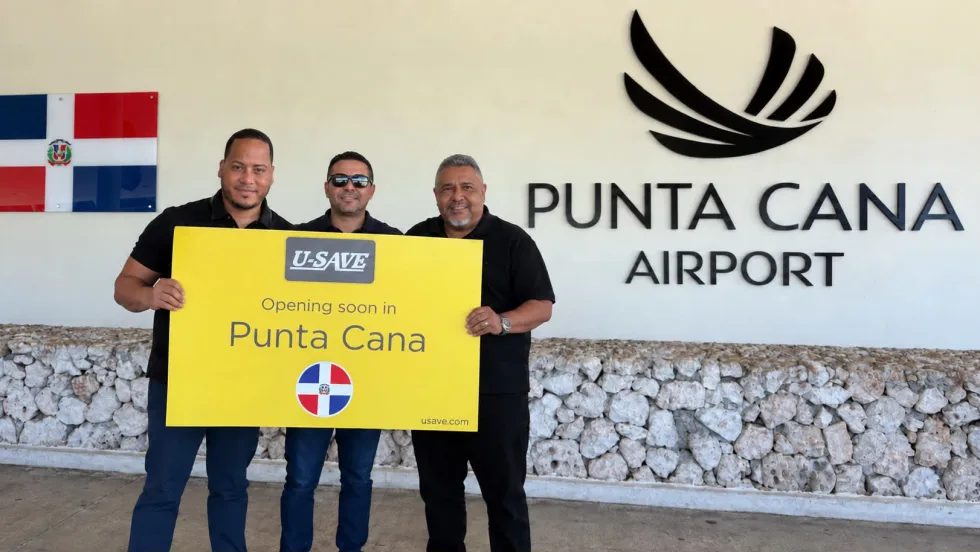
U-Save Continues Dominican Republic Expansion with Launch in Punta Cana
The new franchise location builds on U-Save’s existing Santo Domingo operation and will begin taking reservations for October 2026.
Read More →
When AI Books the Rental Car, Who Controls the Sale?
As AI moves from comparing rental rates to completing transactions, operators need to understand how travelers find, interpret, rank, and ultimately see their offers. (Part 2 of 2.)
Read More →
European Booked Car Rental Rates Fell 5%, Results Varied by Country
Ireland, Cyprus, and the United Kingdom saw steep declines, while booked rates rose in Poland and Hungary.
Read More →
Is It Time to Rethink Rental Categories?
As traditional economy and compact cars disappear from the market, longtime rental operator Mike DeLorenzo asks whether the industry’s familiar vehicle categories still make sense — and what operators need to rethink along with them.
Read More →
Who Owns the Rate? AI Is Creating a New Distribution Problem for Car Rental
Generative Engine Optimization asks whether AI can find a rental company, but operators also need to know whether the agent inspected enough of the market, compared equivalent offers, and presented a rate the traveler can actually book. (Part 1 of 2)
Read More →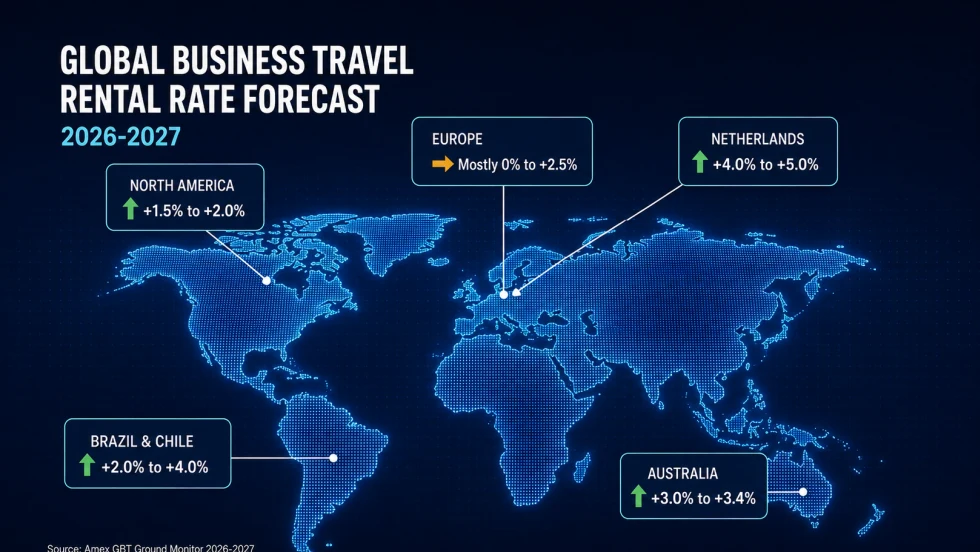
U.S. Business Travel Car Rental Rates Forecast to Rise Up to 2%
Improved fleet supply should limit pricing gains in 2026-27, while insurance, repair costs, and softer residual values continue to pressure rental operations, according to Amex GBT.
Read More →