




Protecting Your Trade Secrets from the Competition
In 1999, Enterprise won a court decision that provides a glimpse into how car rental companies can prevent ex-employees from disclosing confidential data.
When a sales manager or operations manager leaves a car rental company and joins the competition, the ex-employee could take years of knowledge and experience. He or she could also take valuable papers, records, financial details of your operation, and other data that you regard as proprietary and confidential. Can the departing employee legally use your records to compete against you?
In December 1999, an appellate court in Arizona decided one of the few trade-secret cases on record involving a car rental company [Enterprise Leasing Company of Phoenix v. Rich Ehmke, 3 P.3d 1064 (1999)]. A review of this case gives us a glimpse into what car rental records are considered trade secrets, how to protect them, and how to enforce a non-compete covenant.
In September 1996, a senior-level manager of Enterprise in Arizona left the company to form a rent-a-car consulting business. He later became a vice president of Premier Car Rental, then a subsidiary of Budget Rent-a-Car. When joining Enterprise, the employee had signed an agreement that contained non-disclosure and non-competition provisions.
On his departure, the employee took with him 45 documents that became the subject of a trial and an appeal. When Enterprise sued to forbid him from using the records and asked that they be returned, a trial court ruled in the ex-employee’s favor, holding that the records were not trade secrets and not worthy of protection. On appeal, the decision was reversed. The Court of Appeals held that the documents were proprietary, confidential and contained trade secrets, and that Enterprise took steps to treat the documents as secrets.
Enterprise’s winning position forms a blueprint for all car rental companies on how to prevent a former key employee from competing and disclosing confidential information to a competitor. The opinion notes that the records taken were: (1) year-to-date fiscal activities by branch office, (2) revenue per car for each office, (3) number of vehicles at each office, (4) ancillary sales (this probably meant sales of CDW, SLI and the like), (5) analysis of each office’s productivity, (6) operating plans for the fiscal year, (7) expansion plans, (8) market-by-market break-even points, (9) gross revenue and costs on an area basis, (10) number of rental vehicles per office, (11) rental revenue derived from daily rates and ancillary sales, (12) profitability statements on a per-unit basis, (13) fleet size, (14) overall profitability and (15) a “Customer Service Worksheet” described in the appellate case as an operations manual.
The records involved in the case can be found in whole or in part in nearly every car rental operation. If you keep records like this, follow the blueprint described in the court decision and you may increase your chances of protecting them from disclosure to your competitors.
The court first determined whether or not the documents constituted trade secrets. If they were trade secrets, they were then worthy of protection from disclosure. If not, as the trial court had decided, they would not be entitled to protection.
First, the records had to be secret — in other words, not publicly available. That was clearly the case here. And, the court held, the financial records were “sensitive internal economic records.”
The ex-employee countered that the records were, by that time, stale. (Remember, the appeal took place in 1999, but the employee left Enterprise in 1996.) The court disagreed, holding that trade-secret status may continue indefinitely as long as there’s no public disclosure. The law will protect trade secrets as long as they remain secret.
The court also found that the customer service worksheet was entitled to protection as a trade secret. The worksheet included: “market attributes, office appearance and traffic flow; personnel attributes; leadership attributes in delegation, planning, organization and management; car condition and preparation; cycle of service at the telephone, pick-up process, branch arrival, rental contract, car, callback and vehicle return stages; and problem resolution.”
The court held that Enterprise had invested in substantial market research in the worksheet, which described factors helpful to managing a successful rental office. The former employee countered that the worksheet contained only information of general knowledge to the rental industry. However, the court found that, even if that were true, Enterprise’s unique compilation of this general knowledge was confidential, a trade secret and entitled to protection from disclosure.
It’s important to note that the car rental documents in this case are not secrets by definition. The owner of the documents must take reasonable action to declare them secrets and act to protect them in order to invoke a court’s assistance in protecting them from disclosure. The court pointed out that Enterprise had done all those things.
Reasonable efforts do not include extreme and unduly expensive actions, the court said. Enterprise made a conscious effort to limit disclosure of the documents to employees on a need-to-know basis. This included a confidentiality covenant in the employee’s job contract and a confidentiality provision in the management handbook. These efforts were enough to establish the financial data and the worksheet as confidential and secret.
This case, by no means, limits the nature or number of documents or data that you can reasonably expect to protect from disclosure. The case is only an illustration of what one well-managed car rental company viewed as worthy of the secrecy label. Readers in other markets, such as exotic car rentals, will have other data to protect. One thing missing from the opinion is the customer list. In my view, customer lists will be afforded trade-secret status, as long as you treat them as such.
So what to do? The foundation of the case was the written employment contract containing non-disclosure and anti-competitive covenants. It’s probably a good idea to have your key employees under written contract. In my view, a non-disclosure covenant in an employment contract should contain a non-exclusive list of the documents, processes and plans you intend to keep secret. The agreement must also declare that any confidential or secret data developed by the employee during the course of employment belongs to the company.
The confidentiality provision should also state that you treat compilations of certain data as trade secrets, even if an individual part of the compilation is not a secret. Remember, it was important in the Enterprise case that the confidential material was distributed only to employees who needed to know the information to do their jobs. In other words, don’t spread your secrets around. Keep them secret by limiting their distribution. Finally, consult your local attorney regarding the employment laws of your state.
Michael LaPlaca, Esq., is senior partner of LaPlaca McKenzie, P.A., a Washington, D.C. area law firm that specializes in vehicle rental matters. He did not participate in the case that is the subject of this article. The article is not intended as a primer on trade-secret law, but rather an illustration of a trade secret/employment law case involving a car rental company. You can reach the author at Michael@laplacalaw.com.
More Rental Operations

DriveItAway, Free2move Plan Shared Fleet Program for Independent Rental Fleet Operators
Vehicles would be placed with participating rental operations to support car renter demand and provide additional fleet capacity.
Read More →
Stellantis Recalls 1.3 Million Jeep Vehicles Worldwide Over Fire Risk
Stellantis is recalling more than 1.3 million Jeep Wrangler and Gladiator models worldwide over a fire risk linked to power steering pump wiring.
Read More →
Green Motion And U-Save Open Rental Operations In Guatemala
The brands will open their first rental car outlets in the country at La Aurora International Airport in Guatemala City.
Read More →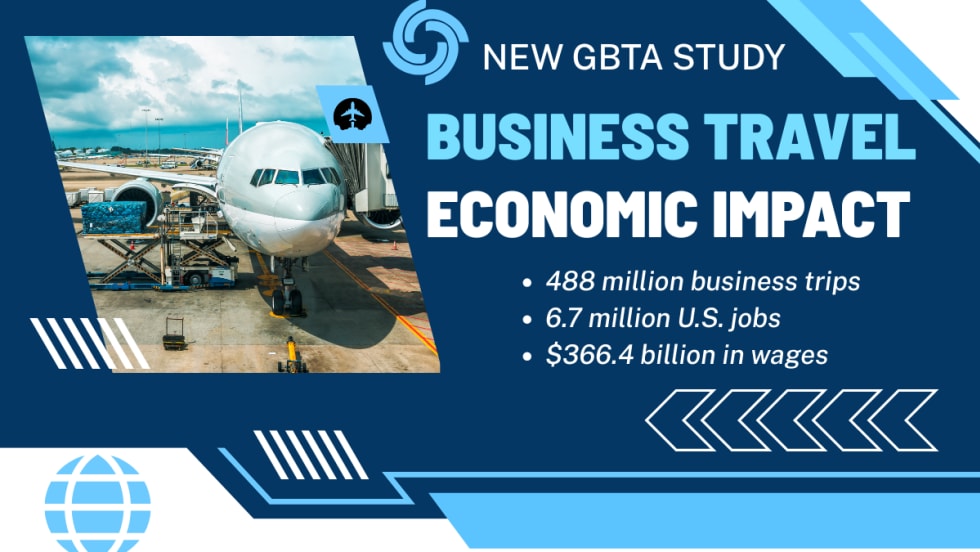
U.S. Business Travel Drives $623 Billion+ in Economic Impact as Spending Reaches $538 Billion
The data also underscores the industry’s strong multiplier effect across the U.S. economy, revealing that each dollar invested in business travel in 2024 generated $1.16 in GDP.
Read More →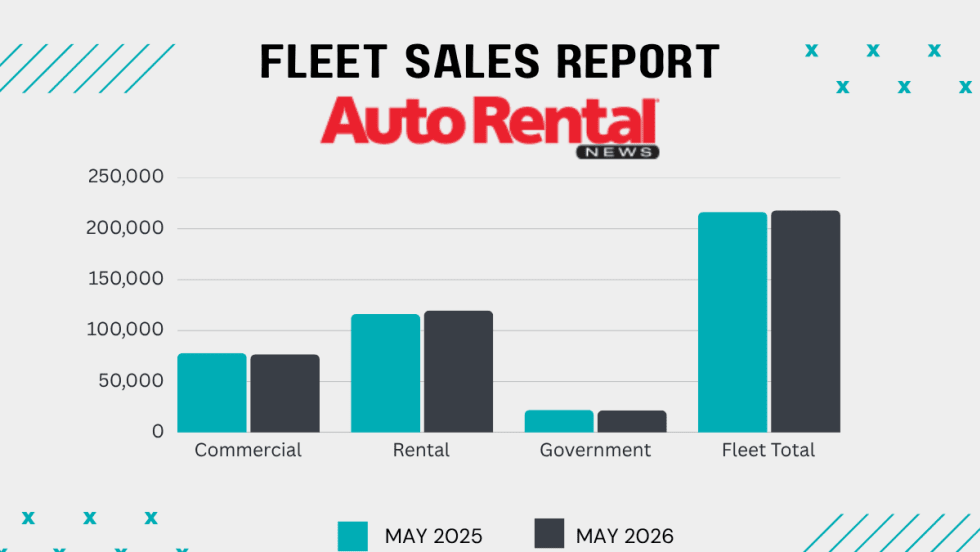
Rental Fleet Sales Skating Just Above 2025 Levels
The U.S. economy's continued growth and positive business investment are creating a favorable environment for fleet vehicle demand.
Read More →
Grow Your Rental Business Beyond Cars
Rental fleet operations are facing numerous evolving challenges and opportunities from AI technology to rate and revenue management, to customer service and business growth.
Read More →
Using AI to Create Clarity, Not Conflict, in Rental Car Damage
Rental companies still need people, policy, judgment, and thoughtful implementation, with operators remaining in control of the customer experience.
Read More →
Get Ready To Roll: No Stopping Self-Driving Rental Cars
The autonomous mobility technology revolution will move at its own pace, but sooner rather than later.
Read More →
Southwest Airlines Selects CarTrawler For Its Car Rental Booking Platform
The platform is designed to allow customers to compare and book rental vehicles more easily during the travel booking process.
Read More →
Cross-Pressures, Evolving Trends Drive 2026 Rental Car Industry
A combination of cautious economic behavior, shifts in the rental vehicle market, and technological influences are shaping car rental operator decisions.
Read More →