




DTG’s Battle-Tested Business Strategy
Keynote speaker Joseph Cappy explains how Dollar Thrifty managed to lead the industry in pre-tax profit margin even in the aftermath of 9/11.
When Joseph Cappy stepped to the speaker’s podium at the Car Rental Show, he had just recently announced plans to retire from his post as chairman and CEO of Dollar Thrifty Automotive Group. After 46 years in the automotive and car rental industries, he had earned a little down time. After all, under Cappy’s leadership DTG became the industry leader in pre-tax profit margin in 2000, and maintained that position the next two years when much of the car rental industry was gasping for life.
Unlike some of its competitors, DTG had adopted a business strategy that made the company less vulnerable to a crisis of 9/11’s scale. In his speech, Cappy recounted the company’s post-IPO growth from 1998 to 2000 as well as DTG’s strategic response to 9/11.
In 1998, 1999 and 2000, DTG concentrated on three primary goals, Cappy explained: focusing on the growing leisure travel market, being the industry’s low-cost operator, and maintaining liquidity and a strong balance sheet.
“When we came out as a public company [in 1997], we attempted to pattern our balance sheet after the strongest competitor in the industry — Hertz,” Cappy said. “Our balance sheet is still very similar to Hertz’s. We have no non-vehicle debt, and our vehicle debt-to-equity ratio is comparable to Hertz.”
During DTG’s first three years as a public company, operating results were “nothing short of spectacular,” Cappy said. He also credited the company’s growth to its ability to execute strategies. But, he stressed, this emphasis on execution didn’t mean he ran DTG like a tyrant. Rather, he welcomed and valued the opinions and suggestions of other employees — and not just those in upper management positions. Without open communication, no company can fully address its weaknesses, Cappy suggested.
“Are all of you here today realists about your weak spots? About your priorities?” he asked the audience. “Are you confusing execution with dictatorship? How many firms go belly-up with a ham-fisted boss? You can’t have an execution culture without input and effort from all of your employees.”
After 9/11, DTG management responded swiftly. By Sept. 30, the company’s fleet was cut by 16%. By Oct. 5, management had implemented a 20% reduction in workforce at Tulsa headquarters. By Dec. 1, employees were advised of additional cost-cutting measures for 2002, including a salary freeze. The company also suspended its 401(k) match as well as its profit-sharing and incentive compensation under a revised 2002 profit plan. DTG’s top 45 executives took salary cuts of 16% to 22%. [PAGEBREAK]
But after all that, DTG management assured employees that further drastic measures were not forthcoming.
“While we all felt bad about those people who lost their jobs, we were able to tell the ‘survivors’ to get back to work and quit worrying about any further cutbacks. Since they didn’t have their take-home pay touched and were secure in their job, they were able to dig in and work hard to improve our situation,” Cappy said.
When companies take the opposite approach and cut their workforce a little bit at a time, employee morale plummets. “It encourages waste and inefficiency, as employees gather at the water cooler or coffee machine and try to guess who’s next,” Cappy noted.
After announcing the cutbacks, DTG also put in place a recovery plan. Management vowed to reinstate the profit-sharing and incentive compensation plans, for example, if the company exceeded the revised profit plan target by at least three to five times.
“And guess what? They did!” Cappy said.
For the first quarter of 2002, Dollar Thrifty was the only major publicly owned RAC to report a pre-tax profit margin — 8.7%, Cappy said. “We continued that leadership position through the second quarter and for the entire year.”
For the first half of 2003, Dollar Thrifty continued to lead the industry in pre-tax profit margin, followed closely by Avis, Cappy told attendees.
So what’s in store for car rental in the next few years? Cappy predicted that air travel volume would remain sluggish.
“The airline industry is facing massive deficits over the next several years,” Cappy noted. “Their performance in 2001, 2002 and the first six months of 2003 has been horrible. Their revenue outlook continues to look grim as business travel remains weak and prices low. Their cost outlook is also dismal with labor costs, fuel costs and insurance costs remaining high.” [PAGEBREAK]
However, Cappy pointed out, there are some promising signs. Airline adjustments in hub schedules have led to some savings in distribution and fleet costs. Moreover, some discount carriers like JetBlue and regional airlines like America West are enjoying success in luring bargain-hunting travelers.
Though air travel isn’t expected to ever return to its pre-9/11 growth pace, passenger volume will continue to rise in coming years, Cappy said. He cited FAA forecasts that air travel passengers will hit the 1 billion milestone in 2013.
Meanwhile, Cappy said, DTG has adopted a growth strategy converting Thrifty from a franchise-based model to a corporate model. The company has set out to acquire Thrifty franchisees in the top 50 airport markets. DTG’s two brands are also consolidating administrative and support functions whenever possible.
But DTG is stopping short of combining counters like ANC did after declaring bankruptcy. Dollar and Thrifty remain separate at all customer touch points.
“The benefits from this change in organization structure provide DTG with a platform for internal growth, cost savings, and cost and capital avoidance,” Cappy said.
Cappy predicted that acquiring Thrifty’s franchises in the top 50 airports will add $300 million to $400 million in rental revenue to DTG’s top line. This revenue would be partly offset, however, by the loss of leasing revenue and fees from franchisees.
Many franchisees have welcomed the chance to sell their business, Cappy said.
“Based upon their enthusiastic response, what we thought would take three and a half to four years to accomplish could likely be achieved in two years,” Cappy said. “When they are ready to sell, they know that there will be a buyer for their business at a very fair price.”
The cost to acquire the remaining top 50 airport locations is estimated to be about $100 million, Cappy said.
More Rental Operations

Rethink The Future To Avert A Race To The Bottom
Rental car operators heard a sobering industry message and a stern challenge at the close of the International Car Rental Show.
Read More →
DriveItAway, Free2move Plan Shared Fleet Program for Independent Rental Fleet Operators
Vehicles would be placed with participating rental operations to support car renter demand and provide additional fleet capacity.
Read More →
Stellantis Recalls 1.3 Million Jeep Vehicles Worldwide Over Fire Risk
Stellantis is recalling more than 1.3 million Jeep Wrangler and Gladiator models worldwide over a fire risk linked to power steering pump wiring.
Read More →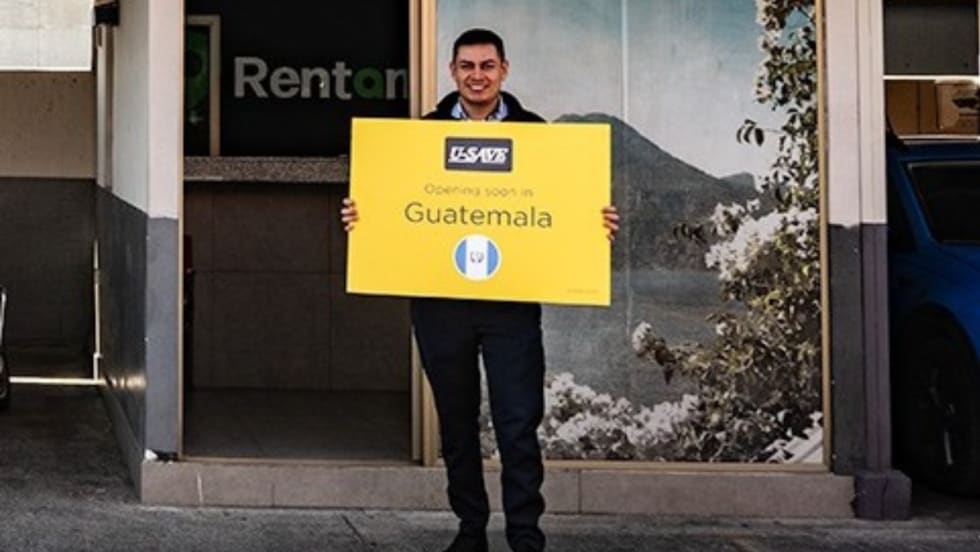
Green Motion And U-Save Open Rental Operations In Guatemala
The brands will open their first rental car outlets in the country at La Aurora International Airport in Guatemala City.
Read More →
U.S. Business Travel Drives $623 Billion+ in Economic Impact as Spending Reaches $538 Billion
The data also underscores the industry’s strong multiplier effect across the U.S. economy, revealing that each dollar invested in business travel in 2024 generated $1.16 in GDP.
Read More →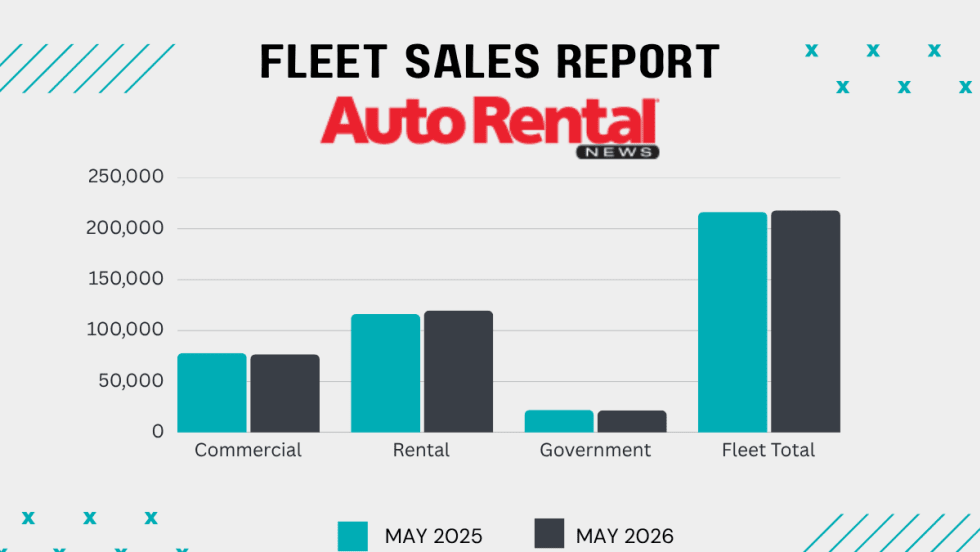
Rental Fleet Sales Skating Just Above 2025 Levels
The U.S. economy's continued growth and positive business investment are creating a favorable environment for fleet vehicle demand.
Read More →
Grow Your Rental Business Beyond Cars
Rental fleet operations are facing numerous evolving challenges and opportunities from AI technology to rate and revenue management, to customer service and business growth.
Read More →
Using AI to Create Clarity, Not Conflict, in Rental Car Damage
Rental companies still need people, policy, judgment, and thoughtful implementation, with operators remaining in control of the customer experience.
Read More →
Get Ready To Roll: No Stopping Self-Driving Rental Cars
The autonomous mobility technology revolution will move at its own pace, but sooner rather than later.
Read More →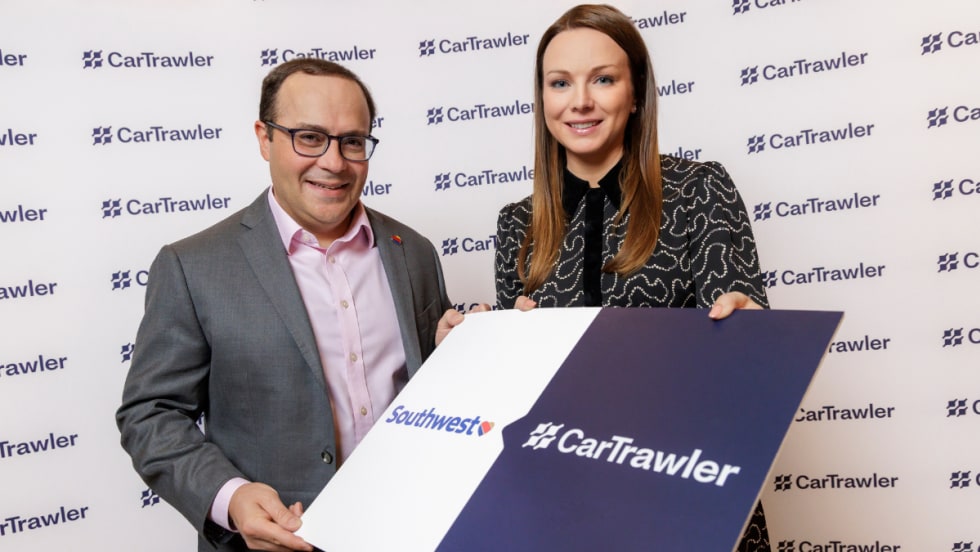
Southwest Airlines Selects CarTrawler For Its Car Rental Booking Platform
The platform is designed to allow customers to compare and book rental vehicles more easily during the travel booking process.
Read More →