




Cut Costs, Not Customer Service
By analyzing these often overlooked areas of car rental operations, you can add to your bottom line without affecting the rental experience.
As a daily rental operator, you work long hours trying to find ways to drive more customers to your counter and keep more of what you earn. Your dilemma is to cut costs and, at the same time, continue to provide the services necessary to maintain and grow your customer base. Can you achieve both?
With most of your expenses somewhat fixed —depreciation, insurance, interest, concession and franchise fees, labor costs, etc.—it might not look like there is much room for savings. However, there are ways to better control the monies spent on these costs.
By analyzing these areas of car rental operations, you can retain real savings. Keep in mind that once a bill is paid, the money is gone. Every penny you save, however, falls to your bottom line.
Vehicle Wash
When was the last time you examined the cost of washing a vehicle?
If you are washing vehicles in-house, do you know how much you are paying for the chemicals used? Most operators don’t. The industry average is 30-50 cents per application, yet some major car rental companies do it for less than a nickel. If you wash 500 vehicles per month and you can reduce your cost of materials by as little as 10 cents per wash, you can add $600 to your bottom line. How many additional rentals do you have to generate to bring in $600?
If your in-house washing involves an automatic car wash and you see soap bubbles either on the vehicle or on the ground, you are wasting product. The purpose of soap in an automatic system is to lubricate the brushes. By reducing the soap flow, you’ll literally stop your money from pouring down the drain.
To understand how you can reduce costs further, you have to know what you are spending. Divide the cost of the product by the number of vehicles washed per reorder to determine your cost per application.
Once you have this number, talk to your chemical supplier. As commissioned salespeople, it is not in their best interest to sell you their most cost-effective products. Ask for a less expensive product that can do the same job. If they will not work with you, reply to some of the dozens of cold sales calls you get from chemical companies each month.
If you are using an outside service to wash your vehicles, now is a great time to either renegotiate your existing program or find alternate vendors who will do the same job for less money. In this economic climate, businesses are hurting and cannot afford to lose existing customers. You might find your longtime supplier more than willing to accept less money to keep your business. If not, there is someone else who wants to work with you.
[PAGEBREAK]
Oil Changes
How often do you change oil in a vehicle? Follow the vehicle’s owner’s manual, not what a quick lube operation tells you.
If you are changing oil in-house, you can cut costs by changing the way you buy your oil filters. Are you buying them as needed or do you stock a 30-60 day supply? If you can buy filters in large blister packs, you’ll save 5-7 cents per filter over buying them individually. While a nickel may not be a lot of money, think about how many filters you buy a year.
Don’t let your vendor over spec your motor oil requirements by selling you synthetic—for rental car purposes, regular mineral-based oil will do just fine.
Are you buying your oil by the quart, gallon, five-gallon, 55-gallon or in bulk? If your operation can support buying a container that is one size larger than what you have now, your cost per gallon will drop.
If an outside vendor is performing oil changes for you, once again, this is a great time to either renegotiate your existing program or find an alternate vendor who can do the job for less money.
Damage Repairs
Cutting vehicle maintenance is one of the worst “savings” you can attempt and in the long run will cost you money. Besides opening yourself to liability, no operation can afford the customer service nightmare when a customer is stuck on the side of the road.
However, for those of you who use an independent body shop to repair vehicles, you can add money to your bottom line simply by supplying the repair parts to the body shop.
Industry averages show that over the life of a rental fleet, 5 percent of your vehicles will need some bodywork done. Of this 5 percent, 80 percent will require replacement parts. If the average bill from a shop is $1,500, the parts portion will average $400-600. If you reduce this parts portion by 25 percent and you have two vehicles per month in the shop, by the end of the year, you would cut expenses by $3,000. How many vehicles do you have to rent to put $3,000 to your bottom line?
As an example of savings, a 300-vehicle fleet in New York had six non-airbag accidents in February 2009. The total spent to repair these vehicles was about $20,000. Of this amount, the list price on parts was about $6,500. The fleet saved almost $1,600 by supplying parts to the body shop.
If February was a typical month, this fleet would realize annual savings of almost $20,000 by supplying parts to their body shops.
There is a second advantage to supplying parts to the body shop. Often a shop will not use all of the parts ordered for your vehicle and the parts get returned. Sometimes shops forget to credit you for these unused parts. By supplying parts to the shop, as the purchaser, all return credits go to you.
To deliver the parts, the RAC operator would negotiate a program with the OE dealer of the particular part. Orders would be called or faxed to the OE dealer with instructions to deliver directly to the body shop doing the work. There is no additional cost to the RAC operator.
Vehicle replacement glass is another area for savings. Do some comparison shopping before reordering to get your current supplier to lower prices.
[PAGEBREAK]
Fuel Purchasing
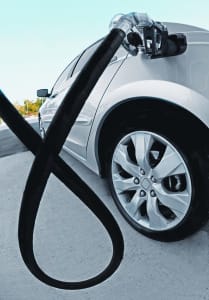
Based upon industry averages, if you are gassing up vehicles before rental, you are pumping about 150 gallons of gas into each vehicle per year. This is factoring 25,000 miles a year per vehicle at 22.5 miles per gallon, with 87 percent of the fuel consumed bought by the customer.
Wringing two cents per gallon in savings will give you $3.00 per vehicle, per year. With a 200 vehicle fleet, you add $600 to your bottom line. At five cents per gallon, savings amount to $7.50 per vehicle, per year. With a 200 vehicle fleet, you can save $1,500.
If you have your own dispensing equipment, you need to analyze your long-term planning to protect your operation against future increases in the cost of fuel.
If you are buying fuel offsite from a local retail operation, are you locked into one station with your price pegged to its retail posting? Fuel card programs, such as those offered by Wright Express and Voyager, can be used at thousands of pumps nationwide, allowing you to be selective on price and brand. The programs offer reporting functions that tell you where the cheapest gas is. Exception reports can red flag unauthorized fill-ups on your account. Fleet studies show savings can be greater than 15 percent.
Extended Warranty Programs
If your business plan calls for keeping vehicles for more than 36,000 miles, have you considered buying an extended warranty program when you purchase new vehicles?
If you have not experienced paying for a major air conditioning repair—easily $700— or a problem with some of the electrical add-on components, consider yourself lucky. Manufacturers are less likely these days to make a good faith repair on vehicles slightly out of warranty. Once the odometer hits 36,001, you pay for everything.
Bottom Line
As you approve invoices for payment, you should be asking yourself “Could I have had the same service, or could I have bought the same item, for less?” With a little time and effort, the answer will be yes.
David Raucher has more than 30 years’ experience in the car rental industry, specializing in vehicle maintenance and damage. He can be reached for consulting at 516-695-1790 or randaconsult@aol.com.
[PAGEBREAK]
The Flipside on Fueling
If you are not fueling vehicles before rental, are you considering the soft costs of bad customer service by making your customer fill up?
You’ve invested time and money to get your customer to your counter. You’ve killed him with service and have upsold as much as possible. You then ruin everything you’ve done by telling him that the first stop he has to make is at a service station to fuel up. Your customer might walk away with the impression that you don’t have enough pride in your product to provide a vehicle ready to get on the road.
There is an economic detriment to not providing a full tank at rental. How often do you “fudge” the amount of fuel on the rental agreement? A vehicle might have between a half and 5/8ths of a tank, but you mark the rental agreement “1/2 tank.” At return, the vehicle may have between 3/8ths and 1/2 tank but, once again, you mark it 1/2.
This common occurrence loses 50 cents to $1 or more on every rental. With the gas gauge pegged on “F,” there never is a question regarding how much is in the vehicle at the time of rental. Having a full tank at rental makes it easier to recover fuel costs at check-in.
What if the vehicle goes out on a half tank, and comes back full? If the operator does not credit the difference, the customer walks away with a bad taste and will only remember the bad experience the next time he rents.
But crediting the customer for the difference can be tricky, depending on the rate used. If the operator uses the rate the company charges the customer for refueling, the operator is giving away money. If the operator uses, say, a five-station average cost per gallon, the operator must have a conversion chart for each vehicle in the fleet to take tank size into consideration.
Moreover, these charts have to be adjusted regularly to reflect fluctuations in fuel costs.
More Rental Operations

Green Motion And U-Save Open Rental Operations In Guatemala
The brands will open their first rental car outlets in the country at La Aurora International Airport in Guatemala City.
Read More →
U.S. Business Travel Drives $623 Billion+ in Economic Impact as Spending Reaches $538 Billion
The data also underscores the industry’s strong multiplier effect across the U.S. economy, revealing that each dollar invested in business travel in 2024 generated $1.16 in GDP.
Read More →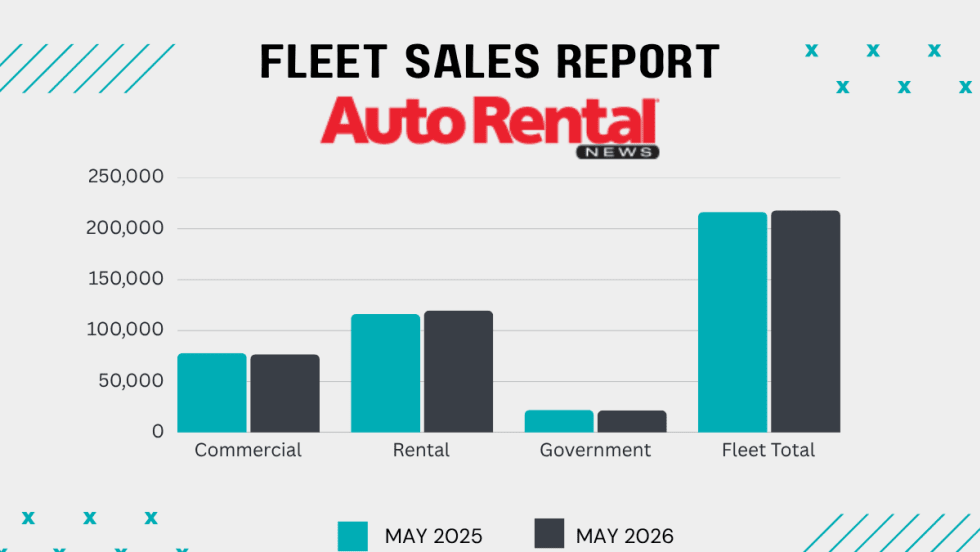
Rental Fleet Sales Skating Just Above 2025 Levels
The U.S. economy's continued growth and positive business investment are creating a favorable environment for fleet vehicle demand.
Read More →
Grow Your Rental Business Beyond Cars
Rental fleet operations are facing numerous evolving challenges and opportunities from AI technology to rate and revenue management, to customer service and business growth.
Read More →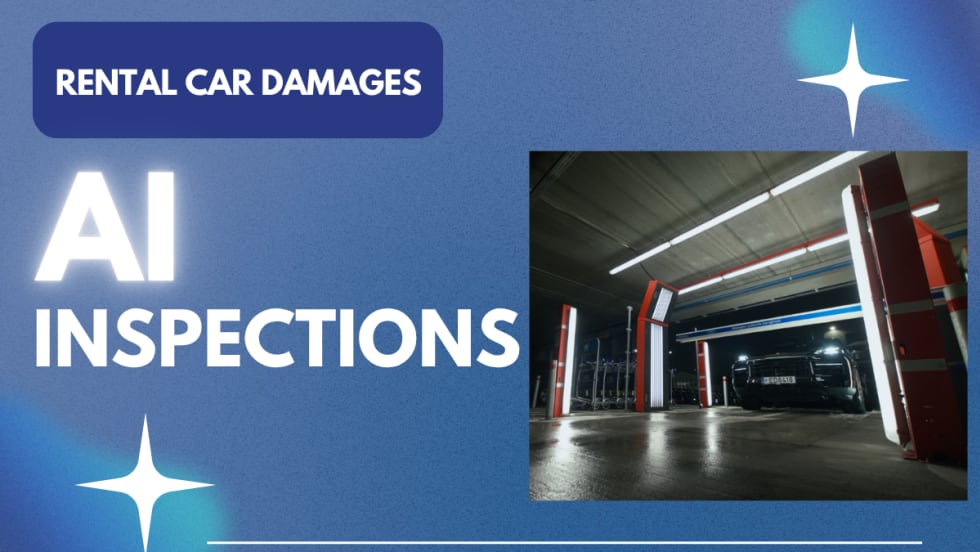
Using AI to Create Clarity, Not Conflict, in Rental Car Damage
Rental companies still need people, policy, judgment, and thoughtful implementation, with operators remaining in control of the customer experience.
Read More →
Get Ready To Roll: No Stopping Self-Driving Rental Cars
The autonomous mobility technology revolution will move at its own pace, but sooner rather than later.
Read More →
Southwest Airlines Selects CarTrawler For Its Car Rental Booking Platform
The platform is designed to allow customers to compare and book rental vehicles more easily during the travel booking process.
Read More →
Cross-Pressures, Evolving Trends Drive 2026 Rental Car Industry
A combination of cautious economic behavior, shifts in the rental vehicle market, and technological influences are shaping car rental operator decisions.
Read More →
Government Affairs Executive Wins Leading Rental Car Industry Award
Robert Muhs started in the car rental industry with Avis Budget Group two years before the first International Car Rental Show.
Read More →
Green Motion Expands Its African Presence with Mozambique Launch
This new rental car outlet reflects the growing demand for reliable transportation and the emphasis on sustainable travel across the continent.
Read More →