




Does Loss of Use Require Proof of Lost Revenue?
A Florida Supreme Court case regarding damaged underground telephone cables threatens to rewrite some state laws and run roughshod over car rental loss of use claims.
Recovering loss of use has been a stable and consistent part of car rental damage claims since the car rental business started. Individual loss of use claims may be small, but over the life of a rental business total recoveries for loss of use can amount to hundreds of thousands of dollars. Third party claims administrators have been so confident of recovering loss of use that their fees for services are often covered—at least in part—by sharing loss of use recoveries with the rental company.
But now a string of cases involving damaged underground telephone cables threatens to rewrite some state laws and run roughshod over car rental loss of use claims. The cases hold that loss of use cannot be recovered unless the owner of the damaged property suffers lost revenue or lost profits. In the car rental setting this could be the same as holding that a car rental company cannot recover loss of use when the company had less than 100 percent utilization during the period the damaged unit was out of service for repair.
The most damaging decision happened in 2008 in the Supreme Court of Florida. Florida is the car rental industry’s most fertile state, so the case merits serious attention. In 2002, a construction company in Miami named Mastec inadvertently severed an MCI fiber optic cable while digging underground on a project unrelated to MCI. It cost MCI only $23,000 to repair the damaged cable, but MCI sued Mastec in U.S. Federal District Court in Miami for another $868,000 for loss of use of the damaged cable.
Prior to trial it was discovered that MCI suffered no interruption of service because it was able to reroute its signal to an undamaged redundant cable. The trial court had no trouble denying the loss of use claim as a windfall profit. Judge Gold disposed of MCI’s claim on simple grounds (MCI Worldcom v. Mastec, Case No. 01-2059-CIV). He ruled on March 13, 2002 that:
The court concludes that [MCI] shall not be entitled to loss of use damages because there has been no complete loss of use of property.
It Didn’t End There
That was an easy call and should have ended the case. But MCI appealed to the U. S. Eleventh Circuit Court of Appeals. That Court wandered off-topic. Despite a 76-year history of clearly reasoned Florida cases on loss of use, the Circuit Court stated that it could not decide how the common law of Florida measured damages for loss of use (MCI Worldwide v. Mastec, 370 F.3d 1074, May 19, 2004).
The Circuit Court passed the ball out of the federal system to the Florida Supreme Court and asked for an answer to this loaded question: Does Florida common law require proof of lost revenue before an owner of damaged property can recover loss of use? In other words, will a car rental company have to prove 100 percent utilization and lost reservations for the damaged vehicle before it can recover loss of use?
[PAGEBREAK]
The Florida Supreme Court, in MCI Worldwide v. Mastec, 995 So.2d 221 (Supreme Court of Florida, July 2008), floundered to an awful decision based not on Florida law but on underground cable cases from Ohio and Virginia. This court sent an answer back to the Eleventh Circuit saying that loss of use could not be recovered unless the claimant could show lost revenue. The effect is that loss of use in Florida now becomes loss of revenue, and the ability to prove lost revenue is far greater than the ability to prove loss of use.
Remedies for Recovering Loss of Use
Private auto carriers are already denying loss of use claims by car rental companies based on the MCI case. Claims adjusters are pushing harder than ever to force car rental companies to submit utilization statistics. So how are car rental companies going to recover loss of use in this climate? My suggested technique involves:
• Understanding the MCI case. In a dissenting opinion in the Florida Supreme Court case, Judge Lewis articulated clearly that lost revenue or lost profits have never been conditions precedent to recovery of loss of use in Florida. He scolded the court for ignoring decades of Florida law and for relying on cases from other states to reach its decision. Car rental risk managers should read the dissent. It is available online at www.laplacalaw.com/MCIcase and at www.rentalclaims.com/MCIcase.
• Taking the position with an auto insurer claims adjuster that the MCI case applies only to underground cable cases. The cable cases from Florida, Virginia and Ohio involved really bad facts—specifically the outrageous loss of use claims by cable companies for huge sums that would have resulted in windfall profits. Courts were inclined from the outset to decide against the cable companies. Car rental losses are far different with established law favoring recovery of loss of use costs.
• Inserting a definition of loss of use in rental agreements that is not dependent on lost revenue or lost profits and having the renter promise to pay loss of use as the rental company defines it. If the insurer refuses to pay, the rental company can file suit against the renter for breach of contract.
Until a Florida court recognizes in a future case that the MCI decision should not apply to car rental claims, car rental companies and their TPAs are going to have to cope with this string of unfavorable cases.
This article was written by Michael LaPlaca, senior member of LaPlaca Law, PC, a law firm in the Washington, D.C. area that specializes in car rental and franchise law. Contact LaPlaca at Michael@LaPlacaLaw.com.
More Fleet Insurance
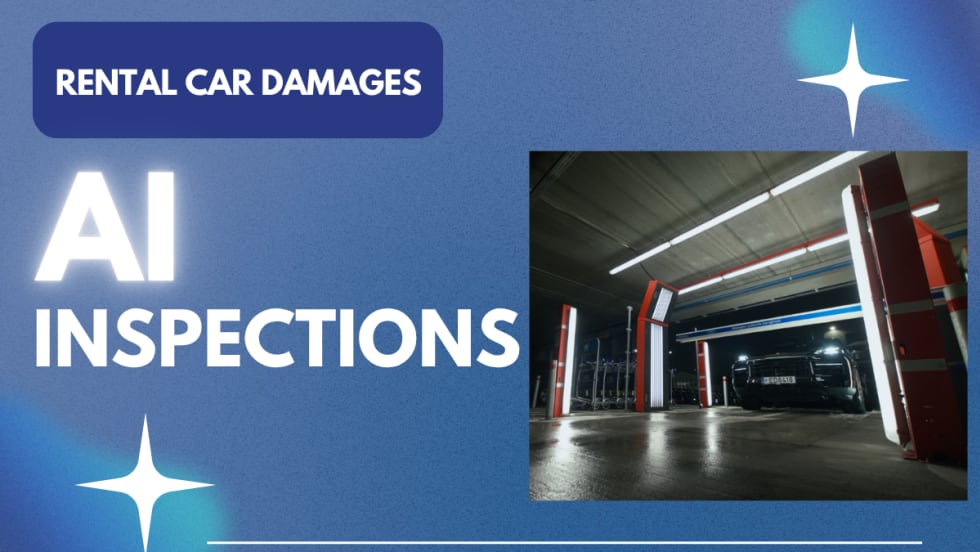
Using AI to Create Clarity, Not Conflict, in Rental Car Damage
Rental companies still need people, policy, judgment, and thoughtful implementation, with operators remaining in control of the customer experience.
Read More →
Go Rentals, Repair Provider Partner To Ease Insurance Claims Experience
The arrangement helps reduce the stress of collision repair for vehicle owners by connecting them to reliable, timely rental cars.
Read More →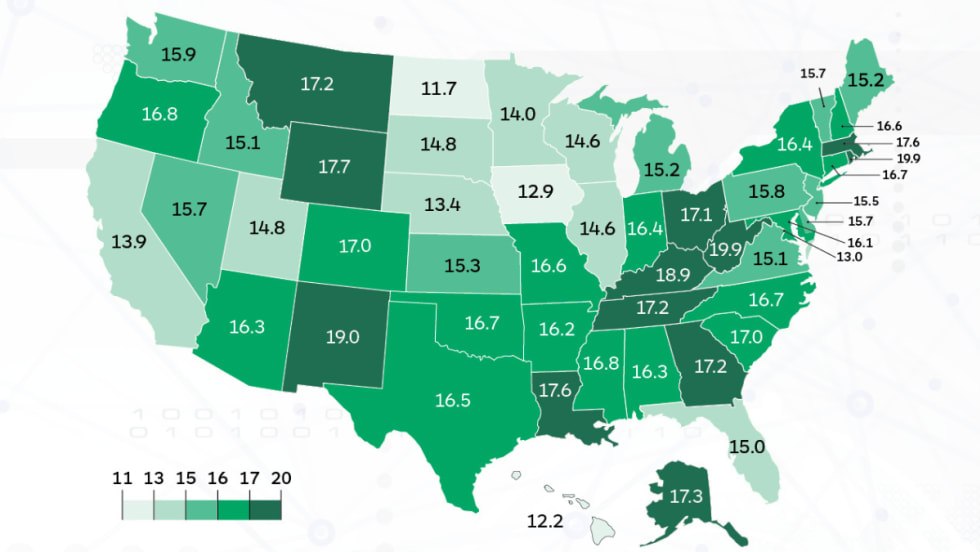
U.S. Collision-Related Rental Length of Rental Declined Modestly in Q4 2025
While LOR continues to decrease from post-pandemic highs, ongoing market and economic conditions could impact future results.
Read More →
Beyond The Rental Desk: Inside Car Rental’s Push To Simplify
Greater transparency, simplified digital access, and connected fleets will be the key factors in determining who comes out on top over the next 10 years.
Read More →
Tripiamo Brings Certified Driving Confidence Training For Car Renters
Driving abroad is one of the leading causes of death among international travelers, who are not used to new traffic patterns.
Read More →
AI in Car Rental Should Be the Customer’s Advocate, Not Accuser
Opinion/Editorial: What happens when AI randomly overcharges car renters outrageous fees and penalties?
Read More →
TSD Mobility, Canopy Connect Partner to Ease Insurance Verification
The new integration brings streamlined functionality to rental agents and dealerships.
Read More →
Length of Rental Could Be Finding a New Normal of More Days
The industry may not be returning to the lower LORs of 2019 and 2020 as two years of declining repair shop backlogs appear to flatline.
Read More →
Gallagher Insurance Hires Broker Focused on Rental Car Operations
The former rental fleet executive informs his insurance practices with the everyday realities of managing rented vehicles.
Read More →
4 Global Trends in Carsharing for 2025
Despite operational challenges and questions, the global car-sharing market continues growing and will likely double during the next decade.
Read More →