




Charging for No-Shows Could Improve Profits
Analysis by Northcoast Research reveals that implementing policies to reduce no-shows could help Avis Budget eliminate potential loss of up to $9 million annually and instead generate profits of up to $13.3 million. This excerpted analysis was published by Northcoast Research, an institutional equity research firm that specializes in car rental, among many other industries.

During the month of November, there was much buzz among car rental industry participants regarding news that Avis Budget Group had contacted online travel partners and informed them that the company was looking to implement policies that would charge customers a fee for not picking up their reserved vehicle.
Based on our prior experience covering the car rental industry, we believe “no-show” rentals are a widespread problem in the industry. We estimate that no-shows represent 20 to 30 percent of all vehicle reservations for many car rental operators. As a point of reference, we define no-shows as a rental reservation that is booked without the customer showing up and actually renting the vehicle.
Currently, the car rental industry lacks consistent policies and behaviors that would reduce no-shows. Unlike the airline and lodging industry, car rental operators do not charge customers for not showing up for reservations.
Avis Budget’s Plan
We applaud Avis Budget’s decision to take the first step in what we believe will move the industry toward implementing consistent reservation policies surrounding no-shows.
Based on our conversations with industry contacts, Avis is hoping that online travel partners will be able to implement a system that will capture the customer’s credit card number upon renting, and if the customer fails to show for his or her rental, he or she will be charged a to-be-determined reservation fee. Our contacts suggest that the fee may potentially be the costs associated with a GDS (Global Distribution System, e.g., Amadeus, Sabre and Travelport) rental reservation, or perhaps the first day of rental. We believe in the near future we will gain visibility into new policies.
Based on our discussion with industry participants, we are optimistic that other car rental operators will likely follow Avis in implementing similar policies in 2010.
No-Shows Cost Rental Companies
The industry clearly views no-shows as an industry-wide problem, as these reservations have a hard cost.
When a customer rents a vehicle through a travel agent or online travel site, a GDS operator will create a rental reservation. Once this reservation is created, car rental operators are charged a reservation fee, in most cases approximately $4 per rental. When customers do not show up to rent a vehicle, car rental companies are unable to recoup the cost associated with the rental reservation.
We believe by implementing policies that will reduce no-shows, car rental companies can recoup this hard cost and reduce the percentage of no-show transactions. We provide an analysis herein of the potential for profitability improvement for the three public car rental companies and if the companies were able to recoup the cost of no-shows. (Editor’s note: Due to space considerations, only the Avis Budget analysis is published here.)
Savings Can Be Meaningful
Our analysis provides three different scenarios that reflect changes in the percentage of no-shows as well as differences in the percentage of transactions that are generated through a GDS partner.
We note that the first part of our analysis attempts to quantify the “hard costs” associated with no-shows (primarily the cost of reservations) and the second part assumes that car rental companies are able to reduce no-shows to approximately 5 percent of their transactions and are able to charge consumers for the first day of their reservation.
[PAGEBREAK]
We believe our scenario analysis for potential profitability improvements contains a number of assumptions that may or may not be precisely accurate for each company; however, we believe our analysis is directionally accurate and demonstrates that savings for car rental companies can be meaningful.
The first chart illustrates our view on the cost of no-shows for Avis Budget and the potential profitability improvements the company can achieve by eliminating these reservations. Additionally, we provide an analysis of the profitability impact of reducing no-shows to approximately 5 percent of reservations and charging the consumer for the first day of his or her rental.
We estimate that no-shows cost Avis Budget $5 million to $9 million annually (approximately $0.03 to $0.05 in earnings per share). We believe by implementing a reservation policy that would charge consumers who do not pick up their reserved vehicle for the first day of a rental, Avis Budget would be able to recoup this expense.
The second part of the analysis attempts to quantify the financial impact if no-shows fell to 5 percent of transactions and Avis Budget was able to charge a rental fee to the consumer for the first day of his or her reservation.
Our analysis suggests that Avis Budget could generate profits of approximately $0.06 to $0.13 in incremental earnings.
Improvements in Utilization
Additionally, outside of the hard cost associated with no-shows, car rental companies could also pull other levers to improve profitability if the industry implemented a no-show policy. We believe that by reducing no-shows, car rental operators could modestly improve utilization at some level and potentially generate additional revenue ahead of the reservation costs.
The “Utilization Profitability Impact” chart illustrates the impact of a 1 percent change in vehicle utilization for Avis Budget Group, Dollar Thrifty Automotive Group and Hertz.
Fighting No-Shows Can Improve Cost Structure
Over the past 12 months, car rental companies have implemented a number of initiatives to improve profitability; we believe that in the months to come, the industry will continue to demonstrate this same commitment to profitability improvements. We applaud Avis Budget’s decision to take the first step in what we believe will move the industry toward implementing consistent reservation policies surrounding no-shows.
Based on our discussion with industry participants, we are optimistic that other car rental operators will likely follow Avis in implementing similar policies in 2010. By reducing no-shows or recouping the costs associated with rental no-shows, car rental companies can further improve their respective cost structures.
We believe charging customers a fee for reserving a vehicle and not showing up for the rental is the only way for car rental companies to cover the cost incurred by GDS providers who charge rental companies a fee for every reservation created. In our opinion, implementing a no-show fee or charging consumers for the first day of a reservation is no different than other policies currently in place by airlines and hotels.
Our thesis remains that car rental companies are operating their business for profits and not market share gains. We believe car rental companies are increasing price, closing underperforming locations, and shrinking their fleets ahead of declining industry rental volumes. We believe price increases and rationalization of the cost structure accompanied by lower vehicle depreciation expense should allow car rental companies to post profitability improvement in 2010.
John Healy covers the car rental sector within his Business Services area of focus for Northcoast Research.
More Rental Operations

Green Motion And U-Save Open Rental Operations In Guatemala
The brands will open their first rental car outlets in the country at La Aurora International Airport in Guatemala City.
Read More →
U.S. Business Travel Drives $623 Billion+ in Economic Impact as Spending Reaches $538 Billion
The data also underscores the industry’s strong multiplier effect across the U.S. economy, revealing that each dollar invested in business travel in 2024 generated $1.16 in GDP.
Read More →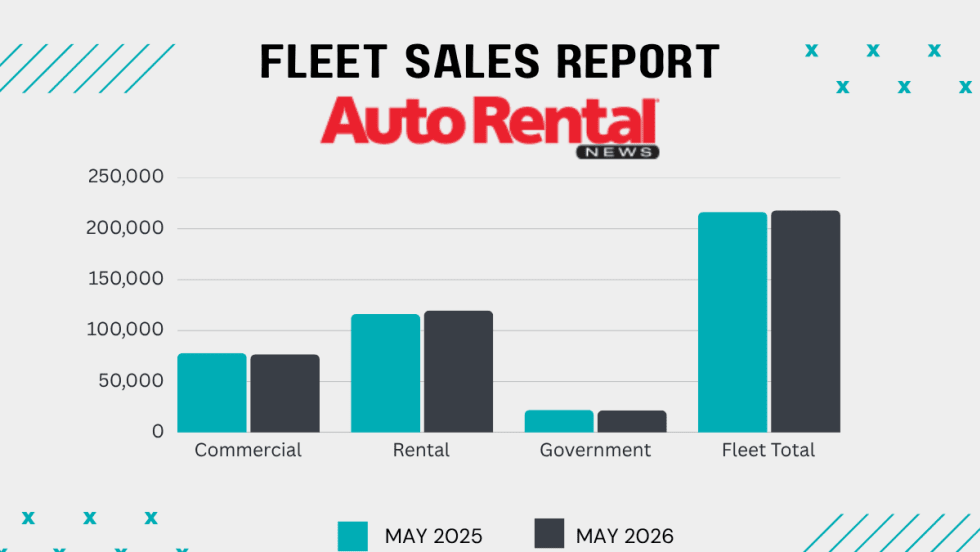
Rental Fleet Sales Skating Just Above 2025 Levels
The U.S. economy's continued growth and positive business investment are creating a favorable environment for fleet vehicle demand.
Read More →
Grow Your Rental Business Beyond Cars
Rental fleet operations are facing numerous evolving challenges and opportunities from AI technology to rate and revenue management, to customer service and business growth.
Read More →
Using AI to Create Clarity, Not Conflict, in Rental Car Damage
Rental companies still need people, policy, judgment, and thoughtful implementation, with operators remaining in control of the customer experience.
Read More →
Get Ready To Roll: No Stopping Self-Driving Rental Cars
The autonomous mobility technology revolution will move at its own pace, but sooner rather than later.
Read More →
Southwest Airlines Selects CarTrawler For Its Car Rental Booking Platform
The platform is designed to allow customers to compare and book rental vehicles more easily during the travel booking process.
Read More →
Cross-Pressures, Evolving Trends Drive 2026 Rental Car Industry
A combination of cautious economic behavior, shifts in the rental vehicle market, and technological influences are shaping car rental operator decisions.
Read More →
Government Affairs Executive Wins Leading Rental Car Industry Award
Robert Muhs started in the car rental industry with Avis Budget Group two years before the first International Car Rental Show.
Read More →
Green Motion Expands Its African Presence with Mozambique Launch
This new rental car outlet reflects the growing demand for reliable transportation and the emphasis on sustainable travel across the continent.
Read More →