



Recapture Your Day
A car rental operator’s “how-to” guide to improving management’s productivity and daily motivation.

Have you ever looked at your watch and asked, “What happened to today?” Have you ever been in a situation where you knew if you did not get a certain task done, the responsibility of accomplishing it would fall through the cracks, but unfortunately you did not have enough time to finish the task with the attention to detail you would have liked? Do you ever feel at the end of the day, it is never over and you still have more to do? Are you in a professional situation in which you have a very small sense of accomplishment because it feels as if you are “spinning your wheels”? If you have answered yes to any of those questions, don’t feel bad because you are not alone. Within the $30 billion global car and truck rental industry there are unfortunately thousands of frontline managers and leaders who feel the same way. The car and truck rental business is one of the most fast-paced, challenging and unpredictable businesses in the world. Committing the time to read this article, confronting the three most popular theories and implementing the five tactics addressed here will help you and your team “recapture the day.” Three Time Management Theories That Don’t Work Just as necessity is the mother of all invention, it can also be said that theories are the father of tactics and techniques. Accepting, analyzing and confronting the following theories about time management and how they relate to our industry are critical. Unfortunately all too often operators who struggle to become more productive cling to the following three theories:
1. Time Is Manageable
Although the term “time management” is the premise of this article, the main issue that comes up in thousands of performance reviews and millions of books and Web discussions is that time is not manageable! Time cannot be stopped, reversed, fast forwarded, slowed down or renewed. What is manageable is how we control our commitments, comments and actions. We have to accept the theory that time cannot be managed, but that it can be measured and monitored.
2. My Hours Worked Equals My Effectiveness
All too often operation managers equate long days with results and productivity. In the vast majority of cases this is not true. It is critical that the manager does not confuse his or her activity with productivity. This confusion exists when a manager does not have a clearly defined role. Clearly defining a manager’s role, and his or her daily, weekly and monthly responsibilities, will help him or her stay focused. Establishing a manager’s weekly three key objectives (TKOs) will provide him or her a test to measure his or her effectiveness.
3. If I Don’t Do It, Nobody Will!
This is the battle cry of the overworked, ineffective and, in some cases, insecure frontline operations manager. This same manager also falls into the mindset that the location “only runs well when I am there.” Convincing the location manager that a true testament of his or her leadership is that the operation should run just as smoothly when he or she is not there is critical. Have the location manager define the small tasks that wind up on his or her plate and then delegate them to a set of supervisors or strong frontline representatives is the most effective action to take. Training the new support team on why the tasks are critical and how to accomplish them is the next step.
[PAGEBREAK] Five Tactics to Become More Productive Addressing these common theories and managers’ preconceived notions on time management will help your managers approach this developmental area with an open mind. It also sets the stage on how to implement the correct tactics and techniques toward becoming more productive.
1. Define the Cost of their Time
Quantifying the true labor cost of one squandered hour per day will open a manager’s mind about the importance of becoming more productive. For example, a manager who earns $45,000 per year and wastes on average one hour per day will cost his or her company $5,500 per year in lost labor. Clearly define your manager’s return on his or her time invested. Half the battle to getting people to change is letting them know what is in it for them, if they change. Use the motivational drivers of ego, incentive and accountability to influence your team to stay consistent with its new approach.
2. Identify Time Traps
It is difficult to measure a manager’s productivity if we do not make the commitment to measure where his or her time is spent. Identifying potential time traps will allow your team to make better decisions. It has been our experience that car rental managers struggle with the following areas:
- Inability to manage disruptions
- Inability to stay organized with handwritten information and electronic information
- Inability to balance administrative tasks while managing urgent customer expectations
- Inability to communicate in a concise fashion These time traps are common challenges for any frontline manager regardless of the industry, but if they go unchecked in the car and truck rental industry their damage will be magnified tenfold. The following tactics and techniques will help your manager become more productive.
3. Organize and Remove Clutter
A recent survey by US News and World Report stated that the average U.S. manager wastes six weeks per year looking for lost information. A similar study reported that an average of 55 minutes per day is wasted on retrieving lost electronic and print information. Developing a system to store key contacts and vital information is important. Having the discipline to have it updated, organized and readily available is the second step to organization. Develop a diary system or notepad system for ongoing information and notes that compile on a daily and weekly basis. Having the discipline to centralize your notes, contacts and commitments in one location will give the operator one place to turn when trying to retrieve information. Communicating this technique to your frontline and supervisor staff will also condition them to place handwritten information for your review in one convenient location. Having your managers develop the mindset of “never leaving home without it…” will keep them focused on their organization. Your managers should also keep a tidy workstation. As the saying goes, “A cluttered desk is a cluttered mind.” Having a workstation that looks as if a tornado hit it invites unwanted visitors and suggests to team members that even if they interrupt, they cannot possibly make anything worse for you and your day. We have found the most organized managers have the least disruptions. [PAGEBREAK] 4. Develop a “Three-Hour Block” Schedule
The most effective managers have championed the mindset of “divide and conquer” by breaking problems down into smaller steps and achievable parts. The same can be said of how they attack their day. It is most effective to break their day into three separate three-hour blocks. Each block has a specific objective and game plan.
For Example:
- Block One - Daily Setup, 8:30-11:30 a.m.: Review operational items from the previous evening, set up daily game plan and availability, review key business needs, communicate previous day’s performance and be very accessible to frontline team and customers. - Block Two - Admin / Organization, 11:30 a.m.-2:30 p.m.: Review results and business trends of the morning activities, return calls and e-mails from AM, conduct conference calls or schedule non-frontline counter appointments, delegate on leadership task to a supervisor or frontline associate. During this period, your accessibility to the team and counter is lower. - Block Three - Daily Review & Evening Setup, 2:30-5:30 p.m.: Re-cap the current day’s performance, review PM staffing needs and fleet availability, set daily game plan for PM shift and delegate one leadership task to a supervisor or frontline associate. Very high accessibility to team and customers. By establishing specific block scheduling for the day, the operations manager can focus on his or her objectives and be available to his or her associates and customers. Communicate this block scheduling strategy to all frontline associates so they feel comfortable with the manager’s ability to respond to all team-related administrative tasks and responsibilities during the second block. Complete a daily game plan that depicts management availability, fleet status, sales recognition and general operations notes. Once a daily game plan is complete on a regular basis, many frontline associates will look to the plan prior to contacting and interrupting the manager for simple-to-find daily information.
5. Get Clarity by Establishing a Weekly “Power Hour”
Every business professional owes it to himself or herself to get one hour per week to plan and organize the week ahead. The most effective operators we work with have one hour a week in which they have a quiet time period to determine what the next week will bring, their current results and to establish their TKOs. In order to get the maximum impact of your weekly “Power Hour,” the operator needs to conduct these personal strategy sessions in a quiet place with zero interruptions, ideally away from the operation. During this planning period it is important to ask yourself the following questions:
- What are my critical areas of influence? (Team, Customer Service and Operations)
- What resources do I need to be effective in my areas of influence?
- How are the results? (month-to-date, year-over-year, market share vs. competition)
- What potential changes or challenges could come up next week?
- How did I do with my TKOs from last week?
[PAGEBREAK] After the “Power Hour” is completed, it is important for the manager to write a brief summation of his or her weekly goals and priorities. Sending the e-mail to his/her direct report and support team establishes an open line of communication about the week’s game plan. Always have the same set time each week for your “Power Hour.” This will help your team members stay focused and will condition them to expect you not to be in the operation during this period. When compiling your goals and information checklist during this critical hour, send out e-mails at the beginning of it. Save any outgoing e-mails toward the end of the hour. This will help you stay focused and will minimize disruptions. These are just a few of the many tactics that will help you and your operations team become more productive. Like any system in business and life, it has to be customized for each individual and locale. Testing these techniques is only the first step in the long journey of becoming a more productive frontline leader. Staying disciplined by implementing all of them and conveying the urgency of them to your support team will help you re-capture the day!
Survey Reveals 73% Of Employees Waste Time At Work Just as management may have suspected, most employees spend part of their day on activities that are not work-related. According to Salary.com’s 2008 Wasting Time at Work study, 73 percent of respondents reported doing non-work activities while at work, a 10 percent increase over 2007. Sixty-four percent said they wasted one hour or less daily; 22 percent waste approximately two hours and 14 percent waste three or more hours. So what were employees doing with this wasted time? According to Salary.com, the top five “time-wasting” activities were: Internet use (48 percent), socializing with co-workers (33 percent), conducting personal business (30 percent), personal phone calls (19 percent) and long lunches or breaks (15 percent). The top five reasons employees wasted their time at work were: job dissatisfaction (46 percent), felt underpaid (34 percent), no deadlines or incentives (24 percent), felt work hours were too long (19 percent) and distracted by co-workers/friends/relatives (18 percent). In addition, 75 percent of respondents felt that office-related activities cut into their productive time at work. The top five work-related distracters are: fixing someone else’s work (54 percent), dealing with office politics (47 percent), waiting for a co-worker to finish something you need (42 percent), attending work-related meetings or events (42 percent) and administrative work (33 percent).
Ken Stellon is a senior vice president for the Frontline Performance Group, a Khoury Group Company. He and his team members are frequent contributors to Auto Rental News. Ken can be contacted at (630) 788-2879 or via email at kstellon@frontlinepg.com. Similar topics can be found at the Khoury Group’s performance blog www.frontlineprofitmachine.com.
More Rental Operations
Rethink The Future To Avert A Race To The Bottom
Rental car operators heard a sobering industry message and a stern challenge at the close of the International Car Rental Show.
Read More →
DriveItAway, Free2move Plan Shared Fleet Program for Independent Rental Fleet Operators
Vehicles would be placed with participating rental operations to support car renter demand and provide additional fleet capacity.
Read More →
Stellantis Recalls 1.3 Million Jeep Vehicles Worldwide Over Fire Risk
Stellantis is recalling more than 1.3 million Jeep Wrangler and Gladiator models worldwide over a fire risk linked to power steering pump wiring.
Read More →
Green Motion And U-Save Open Rental Operations In Guatemala
The brands will open their first rental car outlets in the country at La Aurora International Airport in Guatemala City.
Read More →
U.S. Business Travel Drives $623 Billion+ in Economic Impact as Spending Reaches $538 Billion
The data also underscores the industry’s strong multiplier effect across the U.S. economy, revealing that each dollar invested in business travel in 2024 generated $1.16 in GDP.
Read More →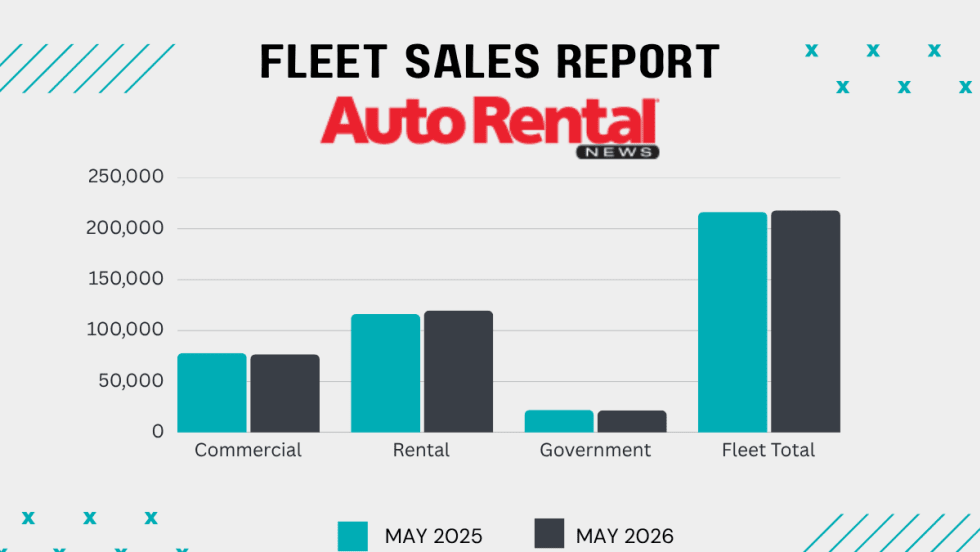
Rental Fleet Sales Skating Just Above 2025 Levels
The U.S. economy's continued growth and positive business investment are creating a favorable environment for fleet vehicle demand.
Read More →
Grow Your Rental Business Beyond Cars
Rental fleet operations are facing numerous evolving challenges and opportunities from AI technology to rate and revenue management, to customer service and business growth.
Read More →
Using AI to Create Clarity, Not Conflict, in Rental Car Damage
Rental companies still need people, policy, judgment, and thoughtful implementation, with operators remaining in control of the customer experience.
Read More →
Get Ready To Roll: No Stopping Self-Driving Rental Cars
The autonomous mobility technology revolution will move at its own pace, but sooner rather than later.
Read More →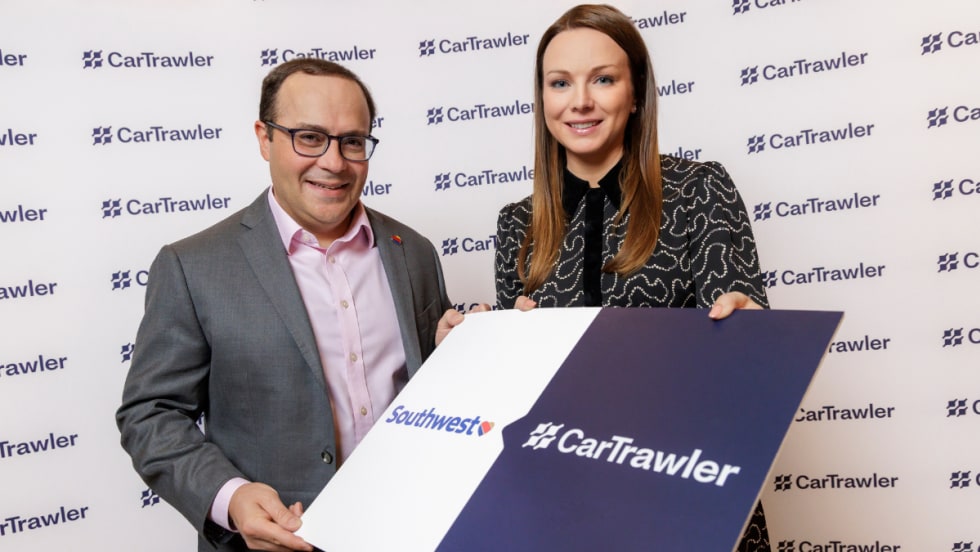
Southwest Airlines Selects CarTrawler For Its Car Rental Booking Platform
The platform is designed to allow customers to compare and book rental vehicles more easily during the travel booking process.
Read More →