




Graves Amendment Under Attack
The legislation that eliminated vicarious liability of owners of rented or leased vehicles has held up in most decisions. However, its constitutionality is being challenged in cases in New York and Florida.

How Graves Changed the Leasing and Rental Industries
The Graves Amendment eliminated vicarious liability of owners of rented or leased vehicles beginning Aug. 10, 2005. The amendment was named after Missouri Congressman Sam Graves, one of its sponsors, and it was part of a much broader piece of transportation legislation signed that day by President Bush.
Those involved in the car rental industry as well as the truck rental and leasing industries led the fight for passage of the amendment, and celebrated the day it became law.
Prior to the signing date, an owner of a rented or leased vehicle could be found responsible for damage caused by that vehicle, even if the owner was not at fault. In one of the worst cases—just prior to the passage of the Graves Amendment—Budget was held liable for millions in damages when one of its renters struck and seriously injured a pedestrian in New York City.
Vicarious liability was the law in 14 jurisdictions, most with a cap on damages. However, in New York, Connecticut, Idaho, Iowa, Washington, D.C. and Puerto Rico, vehicle owners could be held liable in unlimited amounts. This uncertainty as to the ceiling on risk led insurers to become wary of writing coverage in states with unlimited loss potential.
Passage of the Graves Amendment put life back into the car rental industry in states such as New York, where independent and franchised car rental operators were going out of business because of their inability to obtain liability insurance at reasonable prices. New York may still have a few laws oppressive to car rental companies, but vicarious liability is no longer among them.
In the years immediately before 2005 some auto manufacturers and their lease financing arms even threatened to suspend personal auto leasing in New York and Connecticut. The Graves Amendment also ended those objections.
Graves Constitutionality Challenged
But neither the rental nor the leasing industry felt the Graves Amendment would go unchallenged. The obvious point of attack would be the constitutionality of the legislation (i.e., whether Congress has the power to overrule state laws establishing vicarious liability). The attacks would come in lawsuits by persons injured in auto accidents where one of the vehicles was leased or rented.
As of Dec. 1, 2007, most courts have upheld the validity of the Graves Amendment, but a few have held it unconstitutional. There is no legislative effort underway to repeal the Graves Amendment.
Trial case rulings are binding only on the litigants in the cases. Appellate decisions can reach beyond the litigants and set precedents that bind future trials. To date the only appellate decision that reaches beyond the actual litigants is the Kumarsingh case in Florida, a state appeals court case that binds trial court in Florida’s third district—which includes Miami and Dade County. That case, which found the Graves Amendment valid, is detailed below.
Following is a review of the most significant cases interpreting the Graves Amendment. The cases involve both rented and leased vehicles, not only because the Graves Amendment applies to both, but because a finding of unconstitutionality in either a leasing or a rental case would invalidate the law for both businesses. [PAGEBREAK] Cases Upholding the Graves Amendment
Florida
Individuals named Garcia, Lopez and Ruiz were injured by an auto driven by a Vanguard (National Alamo) renter. In Garcia v. Vanguard Car Rental USA, Inc., a U. S. Federal District Court in Ocala held that the Graves Amendment preempted all Florida vicarious liability actions against rental vehicle owners, that the $100,000/300/500 cap on liability damages was not a “financial responsibility law” (that would have exempted it from the Graves Amendment), and that the Graves Amendment was not unconstitutional because car rental activity fell squarely within the activities that the U.S. Congress has the power to regulate under the Commerce Clause of the Constitution.
The Court noted in its lengthy opinion that “this is an important case of first impression. No other Federal Court has analyzed the preemptive scope of the Graves Amendment.”
The Garcia ruling has been appealed by the plaintiffs. Oral argument will be heard in early 2008.
In a second opinion involving Vanguard Car Rental, the same court again upheld the Graves Amendment as a constitutional bar against Florida’s vicarious liability law in Dupuis vs. Vanguard Car Rental USA, Inc. Sept. 24, 2007.
A Florida State Court of Appeal found the Graves Amendment constitutional in the case of Kumarsingh v. Avis, Court of Appeal of Florida, Third District, Oct. 3, 2007.
Mr. Kumarsingh was injured by the driver of a car leased from Avis. Avis was not alleged to be at fault, but was asked to be held liable under Florida’s vicarious liability law. Avis asserted that it was immune from vicarious liability pursuant to the Graves Amendment. The Court found that the Graves Amendment barred application of vicarious liability to owners of rented vehicles. The trial court concluded that the Graves Amendment voided Florida’s statute governing vicarious liability of auto lessors.
The Florida Third District Court of Appeal affirmed the ruling in favor of Avis, holding that the Graves Amendment, by its clear and unambiguous wording, supersedes and abolishes all state vicarious liability laws as they apply to lessors of motor vehicles for causes of action that arose after Aug. 10, 2005.
The Kumarsingh Plaintiffs have filed motions for reconsideration and for certification of the case to the Florida Supreme Court.
The Kumarsingh decision was followed by the same Third District Court of Appeal of Florida on Dec. 12, 2007 in Bechina v. Enterprise Leasing, another lease case. The Court again refused to rule the Graves Amendment unconstitutional.
New York
In Jones v. Dill, Appellate Division, Second Department upheld the dismissal of a claim by a person injured in an auto accident with a leased vehicle. The court determined that the Graves Amendment barred the claim.
A Suffolk County trial court in Johnson v. Kling and GMAC Leasing (Supreme Court of NY, Suffolk County, Feb. 7, 2007) reached the same result and dismissed the plaintiff’s case against GMAC. The case involved injury caused by a leased auto.
In Hernandez v. Sanchez, the Appellate Division of the Supreme Court in the Bronx reversed the trial court on May 22, 2007 and found that the plaintiff’s claim against the owner of a leased truck was barred by the Graves Amendment.
(Note: In New York a trial court is referred to as a “Supreme Court.” New York’s highest court is the New York Court of Appeal.)
The U.S. Federal District Court for the Eastern District of New York found the Graves Amendment a constitutional exercise of the Congress’s power to regulate interstate commerce in Merchants Insurance Group v. Mitsubishi Motor Credit, Sept. 25, 2007. The case involved a car leased from Mitsubishi. The same result was reached in the case of a rented truck in Castillo v. Bradley and U-Haul, Supreme Court of New York, Kings County, Oct. 2, 2007. [PAGEBREAK] Other States
Federal and state trial courts in Georgia and Connecticut have reached decisions upholding the Graves Amendment in rented car cases.
Cases Finding Graves Amendment Unconstitutional
Florida
A Federal District Court in Miami has made an opposite finding on the same facts in Vanguard Car Rental USA, Inc. v. Huchon, Sept. 14, 2007. The court held that Congress exceeded its authority when it enacted the Graves Amendment. This same court also made a finding of unconstitutionality on the same facts in Vanguard v. Drouin, Oct. 5, 2007. Both cases involved persons injured by drivers of rented cars, and in each case the injured persons alleged that Vanguard was liable because it owned the rented vehicles.
New York
The first trial court case to find the Graves Amendment unconstitutional was Graham v. Dunkley, Sept. 11, 2006, Supreme Court of Queens. Judge Polizzi held that the Graves Amendment was an unconstitutional intrusion by the federal government on the common law of New York.
In this case the plaintiff was a person injured by the driver of a Nissan long-term-leased vehicle. The court refused to recognize prior New York trial court cases upholding the Graves Amendment.
The Graham case is on appeal; oral argument was held in November 2007. Many members of the rental and leasing industry and the Truck Rental and Leasing Association (TRALA) filed briefs in support of Nissan.
What Graves Doesn’t Cover
The Graves Amendment does not apply to injuries caused by vehicle owners due to negligence. Those owners can be sued for an unlimited amount for negligent entrustment.
Further, the Graves Amendment applies only to owners of rented or lease vehicles. Loaner transactions are not covered.
In the case of Murphy v. Pontillo and L&B Lincoln Mercury, Inc. (Supreme Court of New York, Nassau County, July 18, 2006), the dealer’s motion for summary judgment was not granted because the court could not determine whether the vehicle was rented or loaned.
The court implied that to make the transaction a rental, the dealer would have to establish the existence of consideration. Whether or not a rental fee was charged, or some other form of consideration was charged, is vital to the resolution of the case. If the transaction turned out to be a loan, the dealer could be exposed to the unlimited vicarious liability law of New York.
Auto dealers with service vehicle loaner programs are well advised to consider making their loaner transactions rentals. Graves – Still Good Law
Enterprise, Avis, Hertz, other rental companies and TRALA worked hard to support the appeals processes in New York and Florida and to uphold the constitutionality of the Graves Amendment.
The Graves Amendment is still good law, and will remain so until the last appellate court rules otherwise.
The New York case of Graham v. Dunkley is the first case on appeal. The appellate result will no doubt be appealed again to New York’s highest court, the New York Court of Appeal. Beyond that lies the possibility that Graham or another case could be appealed to the U.S. Supreme Court. Until the U.S. Supreme Court rules, the Graves Amendment lives.
This article was written by Michael LaPlaca, Esq., senior member of LaPlaca • McKenzie, P.A., a Washington, D.C. area law firm that specializes in franchise law and vehicle rental issues. Michael can be reached at michael@laplacalaw.com.
More Rental Operations

DriveItAway, Free2move Plan Shared Fleet Program for Independent Rental Fleet Operators
Vehicles would be placed with participating rental operations to support car renter demand and provide additional fleet capacity.
Read More →
Stellantis Recalls 1.3 Million Jeep Vehicles Worldwide Over Fire Risk
Stellantis is recalling more than 1.3 million Jeep Wrangler and Gladiator models worldwide over a fire risk linked to power steering pump wiring.
Read More →
Green Motion And U-Save Open Rental Operations In Guatemala
The brands will open their first rental car outlets in the country at La Aurora International Airport in Guatemala City.
Read More →
U.S. Business Travel Drives $623 Billion+ in Economic Impact as Spending Reaches $538 Billion
The data also underscores the industry’s strong multiplier effect across the U.S. economy, revealing that each dollar invested in business travel in 2024 generated $1.16 in GDP.
Read More →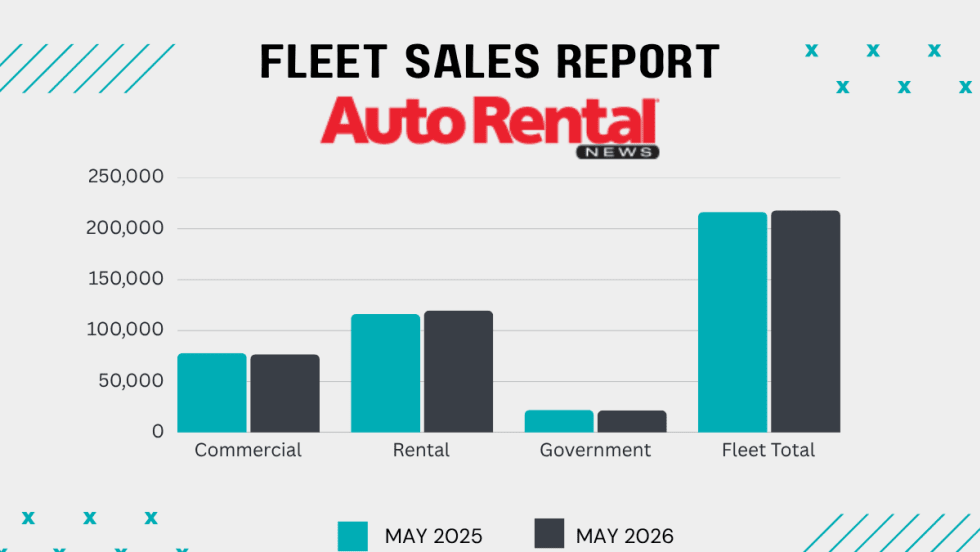
Rental Fleet Sales Skating Just Above 2025 Levels
The U.S. economy's continued growth and positive business investment are creating a favorable environment for fleet vehicle demand.
Read More →
Grow Your Rental Business Beyond Cars
Rental fleet operations are facing numerous evolving challenges and opportunities from AI technology to rate and revenue management, to customer service and business growth.
Read More →
Using AI to Create Clarity, Not Conflict, in Rental Car Damage
Rental companies still need people, policy, judgment, and thoughtful implementation, with operators remaining in control of the customer experience.
Read More →
Get Ready To Roll: No Stopping Self-Driving Rental Cars
The autonomous mobility technology revolution will move at its own pace, but sooner rather than later.
Read More →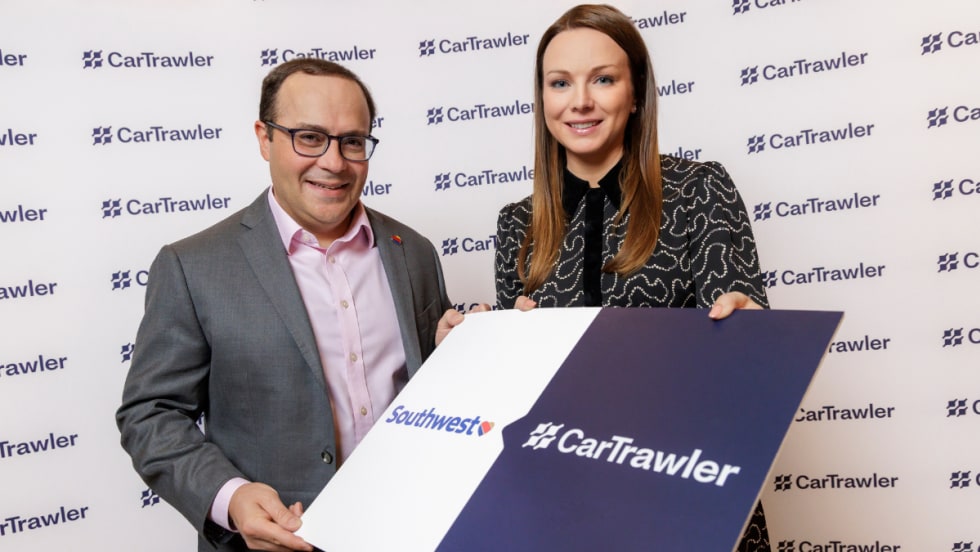
Southwest Airlines Selects CarTrawler For Its Car Rental Booking Platform
The platform is designed to allow customers to compare and book rental vehicles more easily during the travel booking process.
Read More →
Cross-Pressures, Evolving Trends Drive 2026 Rental Car Industry
A combination of cautious economic behavior, shifts in the rental vehicle market, and technological influences are shaping car rental operator decisions.
Read More →