




Hertz Muslim Shuttle Workers Terminated, Union Files ‘Unfair Labor Practice’
After suspending 34 Muslim workers at the Seattle-Tacoma International Airport for allegedly abusing their paid breaks, Hertz sent termination notices to a majority of these workers citing that they refused to agree to clock in and out for these breaks.
Hertz has terminated 26 Muslim employees out of the 34 that were suspended on Sept. 30, according to Rich Bloome, Hertz Corporation spokesperson. Teamsters Local Union 117 says it has only received 25 termination notices, according to Paul Zilly, spokesperson for Local 117.
The employees — whether it’s 25 or 26 — had been terminated because there was “widespread abuse” of their paid breaks, according to Hertz. The breaks are those mandated by state law that gives two 10-minute breaks to employees in an 8-hour day.
The breaks can also be taken in smaller increments of five or more, as long as it equals 20 minutes. According to Local 117, this typically is the type of break the Muslim workers take for purposes of praying.
Employee memos from February, which Auto Rental News obtained through Local 117, had read that, according to collective bargaining agreements, “employees must ‘clock’ in and out for all rest and meal breaks.” However, the memo also states that, “If you intend to take five or more breaks, you do not have to punch, but you must notify your senior and/or dispatch at the beginning and end of each break.”
In a memo posted Sept. 30, the same day the 34 workers were suspended, the notice on breaks changed slightly, “Per the CBA, all rest and meal periods must be punched, including all religious observation. Failure to punch for a rest period will result in progressive disciplinary action up to and including termination.” This newest memo doesn’t mention that people taking breaks broken up into at least five sessions aren’t required to clock in and out.
This latest memo and the subsequent suspension and then termination of Muslim employees are where the union claims Hertz is violating the workers’ contracts.
In a letter to The Seattle Times on Oct. 10, Tracey Thompson, secretary-treasurer for Local 117, wrote, “Setting aside that this policy is unenforceable because it conflicts with our agreement, Hertz did not give the union notice that it intended to implement such a policy or give us an opportunity to bargain over it, as the law requires the company to do.”
Hertz maintains that requirements in the Sept. 30 notice are part of the collective bargaining agreement. “It is important to note that the 26 unionized employees were only terminated after repeatedly rejecting offers to return to work subject to the clocking requirement, which is part of the transporters' collective bargaining agreement,” said Hertz in an official press statement.
The remaining workers out of the 34, have returned because they “have agreed to come back to work, joining several of their Muslim colleagues who previously agreed to clock out for their breaks,” the Hertz statement reads.
Local 117 will challenge the terminations through the contractual grievance and arbitration process; it has also filed several “Unfair Labor Practice” charges with the National Labor Relations Board and is filing religious discrimination complaints with the U.S. Equal Employment Opportunity Commission. The union also plans to file for wrongful discrimination with the Washington State Human Rights Commission.
“Hertz has violated our contract, violated labor laws, and even violated their own internal policy by not adhering to the principle of progressive discipline when workers were suspended without warning,” Thompson said in a union press release from Oct. 20. “Hertz then fired these workers after giving them an unconscionable ultimatum: choose between your livelihood and your dignity.”
- By Joanne Tucker
More Rental Operations
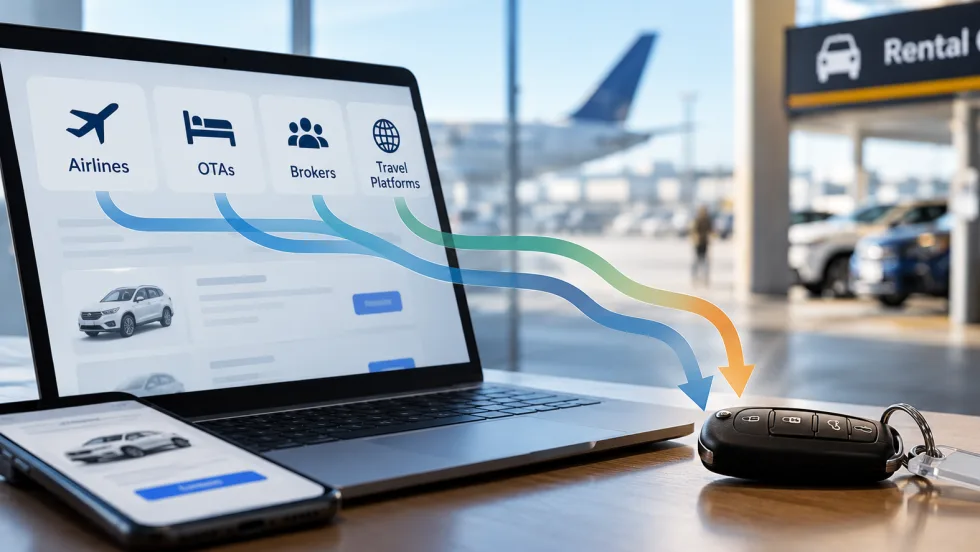
Direct, Broker or Hybrid? How Travel Retailers Source Rental Cars
As travel retailers weigh direct supplier relationships against third-party distribution, rental operators need to understand how those decisions affect their business.
Read More →
How Did This Independent Rental Operator Grow to 170 Vehicles in 4 Years?
With 170 vehicles across three Kentucky locations, Joel Price relies on an overseas team to handle reservations, payments, and after-hours customer service. It's one part of an unconventional approach to growing an independent rental operation.
Read More →
What Does It Take to Succeed in B2B Rentals?
The fundamentals may be familiar to daily car rental operators, but project-based truck rentals put different demands on the fleet and the business.
Read More →
NPR Builds on International Partnerships to Grow Rental Bookings
With Ana Laborde supporting broker development, NPR Auto Group is tailoring distribution strategies, rate packages, and partnerships to grow international reservations across its three brands.
Read More →
Advantage, Sixt Place Among Top Five in Annual Satisfaction Study
While Enterprise and National retain the top spots in JD Power’s 2026 rankings, the latest customer satisfaction results suggest renters can find competitive service beyond the biggest car rental names.
Read More →
The $100,000 Insurance Trap in Exotic Car Rentals
Exotic rental agencies often rely on customers’ personal auto policies to protect six-figure vehicles. But policy language can dramatically change the coverage for vehicles over $100,000 MSRP.
Read More →
The Booking Is Confirmed, But Is Your Customer Ready to Drive?
For international renters, a confirmed reservation doesn’t always mean they’re eligible to drive. Earlier checks can help operators catch documentation and payment issues before the customer reaches the counter.
Read More →
ICRS 2027 Opens Call for Papers
The International Car Rental Show seeks session proposals on the business, operational, and technology issues facing car rental operators. Submissions are due Jan. 15.
Read More →
Turo to Launch Vehicle Delivery Service
Turo Delivered will let travelers search for vehicles that hosts can deliver directly to hotels, homes, airports, train stations, and other locations.
Read More →
Palm Beach Airport Code Change Creates Car Rental Distribution Gap
A test of rental searches under the old PBI and new DJT airport codes returned largely different sets of brands and vehicles, highlighting a potential distribution problem for rental operators.
Read More →