



Enterprise's Flex-E-Rent Expands Commercial Fleet Offering in UK
Enterprise and Burnt Tree have joined forces under the Enterprise Flex-E-Rent brand, creating one of the U.K.’s largest commercial vehicle rental businesses.


Enterprise and Burnt Tree have joined forces under the Enterprise Flex-E-Rent brand, creating one of the U.K.’s largest commercial vehicle rental businesses.
Enterprise acquired Burnt Tree last year, and the final step in that integration process has been to unite both businesses under the Enterprise Flex-E-Rent brand, according to the company. The business will continue to operate from its base in Shrewsbury in Shropshire, England.
Under the Enterprise Flex-E-Rent banner, the company will operate a fleet in excess of 25,000 commercial vans and trucks, with a combined team of more than 450 employees.
“We have had a very strong first year since the acquisition of Burnt Tree almost a year ago, and we have to thank our customers for their positive response to the combined business,” said Danny Glynn, Enterprise Flex-E-Rent’s managing director. “The Burnt Tree brand had a fantastic reputation in the commercial vehicle industry, which made it such an attractive proposition in the first place. However, we believe that the time is right to unite the businesses under a single brand, Enterprise Flex-E-Rent, which stands for the highest levels of customer service, investment and innovation.”
All 21 Burnt Tree locations in England, Scotland and Wales will be rebranded as Enterprise Flex-E-Rent, according to the company.
Enterprise Flex-E-Rent will continue to offer all products and lines of business to commercial vehicle customers including vans, HGVs, specialist refrigerated trucks and accessible minibuses.
More Rental Operations

ICRS 2027 Opens Call for Papers
The International Car Rental Show seeks session proposals on the business, operational, and technology issues facing car rental operators. Submissions are due Jan. 15.
Read More →
Turo to Launch Vehicle Delivery Service
Turo Delivered will let travelers search for vehicles that hosts can deliver directly to hotels, homes, airports, train stations, and other locations.
Read More →
Palm Beach Airport Code Change Creates Car Rental Distribution Gap
A test of rental searches under the old PBI and new DJT airport codes returned largely different sets of brands and vehicles, highlighting a potential distribution problem for rental operators.
Read More →
U-Save Continues Dominican Republic Expansion with Launch in Punta Cana
The new franchise location builds on U-Save’s existing Santo Domingo operation and will begin taking reservations for October 2026.
Read More →
When AI Books the Rental Car, Who Controls the Sale?
As AI moves from comparing rental rates to completing transactions, operators need to understand how travelers find, interpret, rank, and ultimately see their offers. (Part 2 of 2.)
Read More →
European Booked Car Rental Rates Fell 5%, Results Varied by Country
Ireland, Cyprus, and the United Kingdom saw steep declines, while booked rates rose in Poland and Hungary.
Read More →
Is It Time to Rethink Rental Categories?
As traditional economy and compact cars disappear from the market, longtime rental operator Mike DeLorenzo asks whether the industry’s familiar vehicle categories still make sense — and what operators need to rethink along with them.
Read More →
Who Owns the Rate? AI Is Creating a New Distribution Problem for Car Rental
Generative Engine Optimization asks whether AI can find a rental company, but operators also need to know whether the agent inspected enough of the market, compared equivalent offers, and presented a rate the traveler can actually book. (Part 1 of 2)
Read More →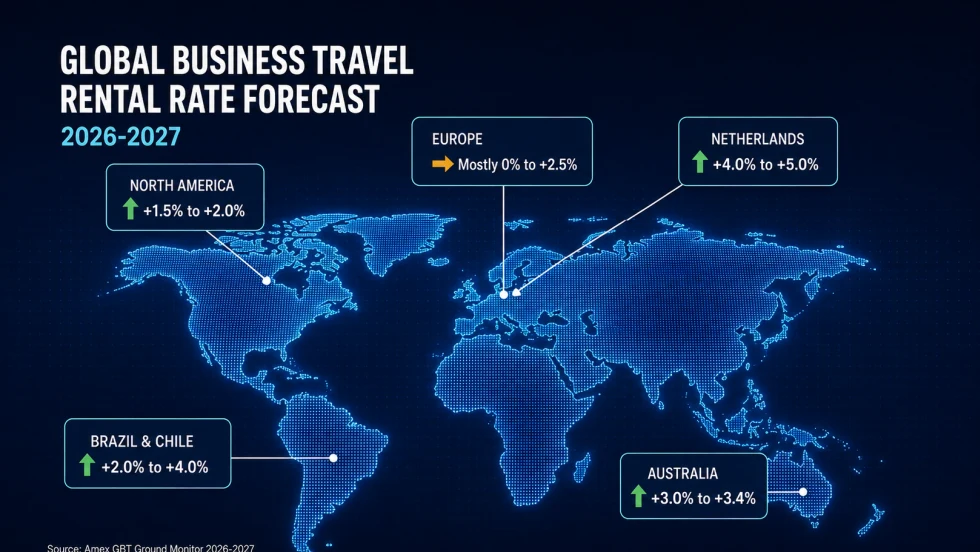
U.S. Business Travel Car Rental Rates Forecast to Rise Up to 2%
Improved fleet supply should limit pricing gains in 2026-27, while insurance, repair costs, and softer residual values continue to pressure rental operations, according to Amex GBT.
Read More →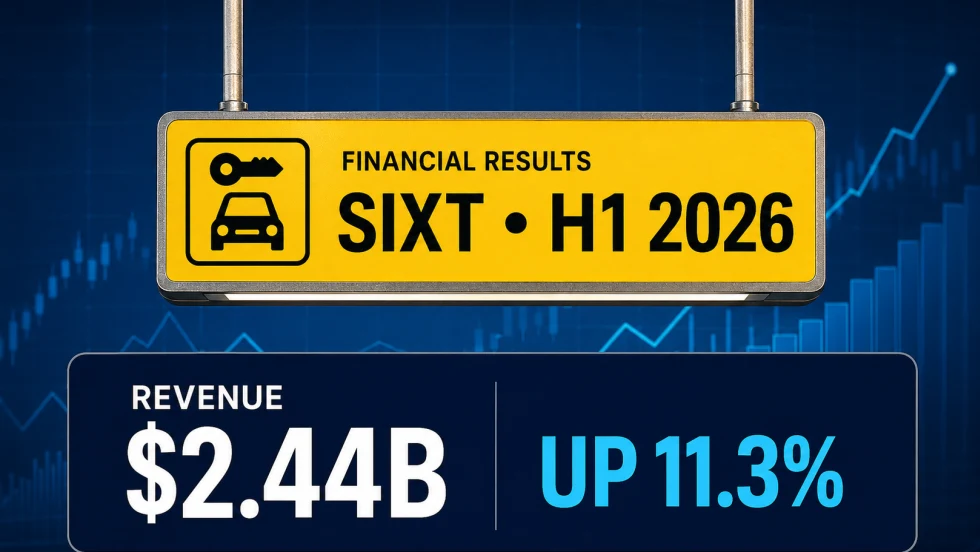
Sixt Revenue Tops $2.4 Billion in First Half of 2026
Sixt’s first-half revenue surpassed $2.4 billion for the first time as demand outpaced fleet growth, lifting utilization and earnings despite weaker consumer sentiment in North America.
Read More →