




Similar Story: Business Travel Spending Anticipated to Hit Full Recovery in 2026
Business Travel Growth Forecasted to Decline
Businesses have shown a willingness to get back on the road, but business travel’s growth is expected to decline due to high inflation and a looming recession.
October 31, 2022

Seventy-eight percent of business travelers are expecting to take at least one trip, but the U.S. Travel Association’s forecast projects that business travel’s growth cannot be sustained in the long term due to high inflation and an expected recession.
Photo: Canva
2 min to read
The latest Business Travel Tracker finds American companies increasingly trimming back pandemic-era restrictions on business travel amid developing high inflation and a looming recession.
Many companies slashed their business travel budgets during the pandemic, but less than half of companies (42%) still have policies in place restricting business travel — down from 50% in Q2.
Businesses have shown a willingness to get back on the road, with 78% of business travelers expecting to take at least one trip to attend conferences, conventions, or trade shows, according to the survey. And 75% of respondents are expecting to visit customers, suppliers, or other stakeholders in the next six months.
But the U.S. Travel Association’s forecast projects that business travel’s growth cannot be sustained in the long term, leading to a decline in the coming quarters.
In addition to the Business Travel Index, two separate surveys of corporate executives and business travelers form the Quarterly Business Travel Tracker, a product of the U.S. Travel Association, J.D. Power, and Tourism Economics.
The new survey data arrives as economists in the U.S. and around the world sound the alarm about worsening economic conditions. JPMorgan Chase CEO Jamie Dimon cautioned that “very, very serious” headwinds — including inflation, rising interest rates, and the ongoing war in Ukraine — were likely to tip the U.S. into a recession in the next six to nine months.
With many economists and business leaders anticipating a mild recession in 2023, companies may look for ways to limit investment and travel spending, delaying a full recovery in business travel activity — as reflected in the forward-looking Business Travel Index.
In the face of this slowdown, certain federal policies can help offset these headwinds and spur the recovery of business travel. The U.S. Travel Association is calling on Congress to support temporary tax provisions that would encourage companies to restore business travel spending, particularly spending that supports workers in the food service and entertainment sectors.
Additionally, the U.S. Department of State should take steps to reduce visitor visa interview wait times to facilitate more international business travel, which have crept to over 440 days on average from top source markets.
“Business travel is coming back slowly, and these policies will be essential to keeping employees on the road and helping still-recovering companies weather an oncoming recession,” said Geoff Freeman, president and CEO of the U.S. Travel Association.
More Rental Operations

How Did This Independent Rental Operator Grow to 170 Vehicles in 4 Years?
With 170 vehicles across three Kentucky locations, Joel Price relies on an overseas team to handle reservations, payments, and after-hours customer service. It's one part of an unconventional approach to growing an independent rental operation.
Read More →
What Does It Take to Succeed in B2B Rentals?
The fundamentals may be familiar to daily car rental operators, but project-based truck rentals put different demands on the fleet and the business.
Read More →
NPR Builds on International Partnerships to Grow Rental Bookings
With Ana Laborde supporting broker development, NPR Auto Group is tailoring distribution strategies, rate packages, and partnerships to grow international reservations across its three brands.
Read More →
Advantage, Sixt Place Among Top Five in Annual Satisfaction Study
While Enterprise and National retain the top spots in JD Power’s 2026 rankings, the latest customer satisfaction results suggest renters can find competitive service beyond the biggest car rental names.
Read More →
The $100,000 Insurance Trap in Exotic Car Rentals
Exotic rental agencies often rely on customers’ personal auto policies to protect six-figure vehicles. But policy language can dramatically change the coverage for vehicles over $100,000 MSRP.
Read More →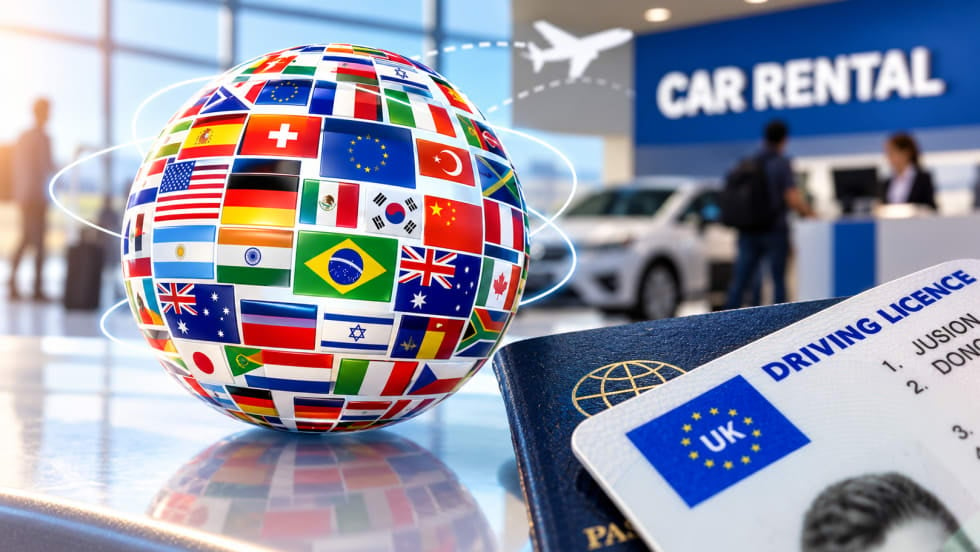
The Booking Is Confirmed, But Is Your Customer Ready to Drive?
For international renters, a confirmed reservation doesn’t always mean they’re eligible to drive. Earlier checks can help operators catch documentation and payment issues before the customer reaches the counter.
Read More →
ICRS 2027 Opens Call for Papers
The International Car Rental Show seeks session proposals on the business, operational, and technology issues facing car rental operators. Submissions are due Jan. 15.
Read More →
Turo to Launch Vehicle Delivery Service
Turo Delivered will let travelers search for vehicles that hosts can deliver directly to hotels, homes, airports, train stations, and other locations.
Read More →
Palm Beach Airport Code Change Creates Car Rental Distribution Gap
A test of rental searches under the old PBI and new DJT airport codes returned largely different sets of brands and vehicles, highlighting a potential distribution problem for rental operators.
Read More →
U-Save Continues Dominican Republic Expansion with Launch in Punta Cana
The new franchise location builds on U-Save’s existing Santo Domingo operation and will begin taking reservations for October 2026.
Read More →