





Background Article: Remote, Frictionless Car Rental Services Ready to Grow
Halo.Car Starts Beta Program for Remote Driven Vehicles
Vehicles equipped with its driving technology can be remotely connected to and driven over LTE and 5G which will help streamline operations and save on costs.
April 17, 2024
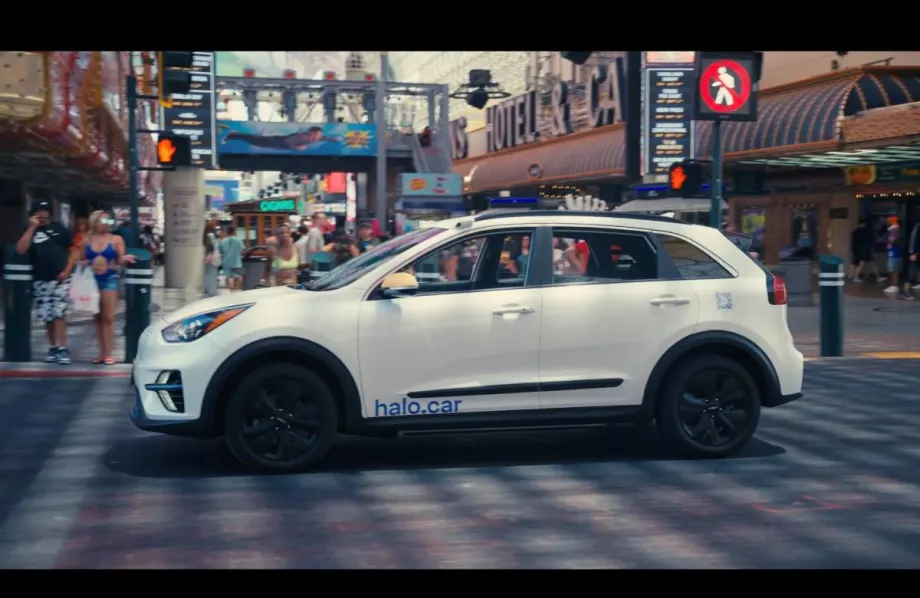
Rental car companies can deliver vehicles to customers easily and create more of a seamless experience.
Photo: Halo.Car
3 min to read
Halo.Car, a US-based company developing remote driving technology for cars, announced April 17 the launch of the Halo beta program along with three initial participants: electric vehicle (EV) rental companies EV Access and Joulez and Spring Free EV, an EV fleet leasing company.
Vehicles equipped with Halo.Car’s driving technology can be remotely connected to and driven over LTE and 5G. The vehicles stream video from the installed cameras to drive consoles at an operations center, where a trained Halo.Car driver remotely ‘pilots’ the vehicle.
Halo.Car founder and CEO Anand Nandakumar formally presented the breakthrough service on April 16 at the International Car Rental Show in Las Vegas.
“After two years operating remote driving in our own rental fleet, I’m thrilled to be launching our technology to other fleet operators,” Nandakumar said in a news release. “Remote drivers will transform fleet operations. Rental companies can deliver vehicles to customers easily and make profits. Commercial fleets can streamline driver operations and save on costs. This launch is a huge step to unleashing that value for the millions of vehicles in fleets globally.”
The Halo beta program is the first opportunity for fleets to access Halo’s remote driving technology, which has previously been used exclusively by Halo. ICE and EV fleets in California, Texas, Arizona, Florida and Nevada can apply to the beta until May 30.
The final participants selected will be the first in the world to access the technology, receiving discounted costs and hands-on support from Halo.Car to deploy the remote driving technology.
“Customers want seamless on-demand convenience, and that means delivery," said Justin Pappan, CEO of EV Access, in the release. "Rather than getting a shuttle or an Uber to get to their car, we’re excited to offer a unique delivery experience so customers’ vehicles come to them. We’re thrilled to join Halo’s beta program and to launch remote deliveries of our rental cars to our customers.” EV Access operates its EV-only rental fleet of 250 vehicles in Phoenix and Salt Lake City.
Micah Bergdale, CEO of Joulez, explained the changing customer expectations and how Joulez is rising to meet it. “Customers expect a modern, convenient, digital experience. We’ve thought about the EV renting experience from the ground up to improve it, and offering contactless delivery with Halo’s remote drivers will be a game-changer.”
Joulez operates an EV-only rental fleet of 150 vehicles across New York, Chicago, Los Angeles and Austin.
To support the expansion of the beta program, Halo.Car is partnering with Spring Free EV, which will offer the technology as an added customer benefit. Interested EV companies can lease new or used EVs from Spring Free EV with Halo's technology pre-installed.
Applications to the Halo beta program are open at halo.car/beta until May 30. The program is open to EV and ICE rental and carshare fleets in California, Texas, Arizona, Florida and Nevada, with a minimum of five cars to be enrolled in the beta program.
More Rental Operations
Direct, Broker or Hybrid? How Travel Retailers Source Rental Cars
As travel retailers weigh direct supplier relationships against third-party distribution, rental operators need to understand how those decisions affect their business.
Read More →
How Did This Independent Rental Operator Grow to 170 Vehicles in 4 Years?
With 170 vehicles across three Kentucky locations, Joel Price relies on an overseas team to handle reservations, payments, and after-hours customer service. It's one part of an unconventional approach to growing an independent rental operation.
Read More →
What Does It Take to Succeed in B2B Rentals?
The fundamentals may be familiar to daily car rental operators, but project-based truck rentals put different demands on the fleet and the business.
Read More →
NPR Builds on International Partnerships to Grow Rental Bookings
With Ana Laborde supporting broker development, NPR Auto Group is tailoring distribution strategies, rate packages, and partnerships to grow international reservations across its three brands.
Read More →
Advantage, Sixt Place Among Top Five in Annual Satisfaction Study
While Enterprise and National retain the top spots in JD Power’s 2026 rankings, the latest customer satisfaction results suggest renters can find competitive service beyond the biggest car rental names.
Read More →
The $100,000 Insurance Trap in Exotic Car Rentals
Exotic rental agencies often rely on customers’ personal auto policies to protect six-figure vehicles. But policy language can dramatically change the coverage for vehicles over $100,000 MSRP.
Read More →
The Booking Is Confirmed, But Is Your Customer Ready to Drive?
For international renters, a confirmed reservation doesn’t always mean they’re eligible to drive. Earlier checks can help operators catch documentation and payment issues before the customer reaches the counter.
Read More →
ICRS 2027 Opens Call for Papers
The International Car Rental Show seeks session proposals on the business, operational, and technology issues facing car rental operators. Submissions are due Jan. 15.
Read More →
Turo to Launch Vehicle Delivery Service
Turo Delivered will let travelers search for vehicles that hosts can deliver directly to hotels, homes, airports, train stations, and other locations.
Read More →
Palm Beach Airport Code Change Creates Car Rental Distribution Gap
A test of rental searches under the old PBI and new DJT airport codes returned largely different sets of brands and vehicles, highlighting a potential distribution problem for rental operators.
Read More →