




Read More: Are EVs Cost-Effective? Calculating Total Cost of Ownership
EVs: Residual Values and the Total Cost of Ownership
The EV market has totally evolved in the last decade and will continue to change as EVs become more affordable, longer lasting, and more efficient.
by Lawrence Knapp
November 1, 2021
Battery condition, charging infrastructure, government policy, and model choice all affect residual values of EVs.
Getty Images / Sushiman
4 min to read
Everyone is talking about EVs. From original equipment manufacturers (OEMs) to fleet management companies, the topic is top-of-mind at auto shows and conferences. When looking at the current EV landscape and marketplace, it is helpful to travel back in time around a decade ago. In 2010, there were about 17,000 EVs on the road globally with only a few models from which to choose; in contrast, by the end of 2020, there were about 10 million EVs and 370 models available worldwide. According to Consumer Reports, “A record number of almost 100 pure electric EV models are set to debut by the end of 2024.”
Given the growth over the past decade, it is no wonder that many companies have begun planning to incorporate EVs into their fleets. And as they do, one of the biggest challenges is determining total cost of ownership (TCO). In order to estimate TCO, companies need to know residual values. And residual values are tricky for EVs.
The used EV market is in its infancy and benchmark data is hard to find. Over the past decade, EVs have not retained their value as well as their internal combustion engine (ICE) counterparts. An average sedan depreciates by approximately 39% after three years while an average EV’s (excluding Tesla) average depreciation sits at 52%. The good news is that the tide is beginning to turn as experts say that EV values have reached “near parity” with their gas-powered counterparts.
Calculating Residual Value
Several primary factors impact EV residual values: battery technology, infrastructure maturity, government policy, and model choice.
Battery condition, range, and cost have a significant impact on EV residual values. Battery range has come a long way over the past decade. According to the Office of Energy Efficiency and Renewable Energy, “The median EPA estimated range for all EV models offered in the 2020 model year exceeded 250 miles. The 2020 model year also marked the first year that an EV achieved an EPA estimated maximum range of more than 400 miles.”
Looking back to 2011, the estimates were 68 miles and 94 miles, respectively. This year, median ranges for some models will exceed 300 miles. This improvement in range widens the potential market for EVs to include people who have longer distances to travel.
Battery Condition
One problem in determining the value of a used EV is evaluating the condition of the battery. Scare stories of customers who needed to replace battery packs on vehicles at astronomical costs did nothing to help the perception of used EVs in the secondhand market. If buyers believe EVs represent a huge risk, they either don’t buy or they require a hefty discount. The high cost of a replacement battery has a huge impact on a five-year-old vehicle and sometimes makes the repair not worthwhile.
Being able to reassure buyers about the battery life and condition is an important part of strengthening the secondhand market for used vehicles. Services that certify or independently assess the battery health could help to bolster demand and support higher resale values.
Charging
Most sources agree: Most charging takes place at home. As EV adoption increases, however, access to public charging stations becomes more and more important. Seeing additional public charging stations will help assuage the range anxiety that prevents many from crossing over to EVs – both new and used.
According to the U.S. Department of Energy, there are 43,944 public charging station locations with a total of 107,844 EVSE ports and less than 5% are fast charging. A decade ago, the charging infrastructure was immature and required multiple apps to pay for charging while confusing price structures caused uncertainty and range anxiety. But then Tesla’s supercharger network overcame this issue and is now a key factor in the stronger residuals on these vehicles. Accelerated development of a fast-charging network will go a long way toward improving EV residual values.
Model Choice
And then there is choice. For a nation used to driving pick-up trucks and SUVs, the passenger car has become less desirable. Ford has ceased production and most manufacturers are replacing sedans with small SUVs that have a higher seating position but are barely larger. But most EVs in the early days were small, passenger-car-based models, which is another strike against them on the secondhand market. Fortunately, with new models like the Chevrolet Bolt, the Nissan Ariya, and the Audi Q4 E-Tron, we have a new acronym in our vocabulary – EUV.
Government Policy
Finally, government policy plays its part in impacting EV residual values. The upfront cost of an EV purchase was ameliorated by tax credits which are a one-time event for the purchaser and dependent upon their personal tax status and domiciled location. The secondhand market does not have access to this advantage and as such just makes the depreciation curve in the early years even steeper.
As improvements to battery range and performance continue, the charging infrastructure expands, government subsidies expire, and new model choices evolve, the market for new EVs will grow and in turn so will the secondhand market. As new EVs improve and turn over, used EVs will depreciate less.
About the Author: Lawrence Knapp is the director of remarketing for Donlen.
Topics:EVsTotal Cost of OwnershipBattery Chargingcharging infrastructureGreen FleetRental Operations
Originally posted on Automotive Fleet
Subscribe to Our Newsletter
More Green Fleet

Fleet Forward Conference Introduces One-Day Passes for 2026
New one-day registration gives fleet professionals the flexibility to attend Tuesday, Wednesday, or Thursday, with passes available for $199 through Sept. 18.
Read More →
Portland Airport Adds Overhead EV Charging for Rental Fleets
The design is intended to address challenges associated with installing chargers in busy rental-car facilities.
Read More →
Running A Profitable Electric Rental Fleet
How do you successfully operate an all-electric rental car fleet? Whether you manage a rental fleet or another commercial fleet, this conversation offers practical lessons on deploying, operating, and scaling electric vehicles.
Read More →
Green Motion Expands Into Japan With Master Franchise Agreement
Japan's tourism industry, business travel market, and demand for vehicle rental services are reasons the country represents an important market for the company.
Read More →
Green Motion Expands Its African Presence with Mozambique Launch
This new rental car outlet reflects the growing demand for reliable transportation and the emphasis on sustainable travel across the continent.
Read More →
Survey: New Tech Tools, Sharper Pricing Plans, and Focused Service Can Improve Rental Car Industry
ICRS 2025: What are key trends, challenges, and opportunities confronting rental car operators this year?
Read More →
Green Motion Adds South Korea to Its Asian Service Region
The first Green Motion locations in South Korea are scheduled to open in key travel hubs during the coming months, including Seoul, Jeju, and Busan International Airports.
Read More →
Federal Highway Administration Halts EV Charger Funding, Delaying National Expansion Plans
The FHWA has rescinded funding for the NEVI Formula Program, delaying nationwide EV expansion as policies undergo federal review.
Read More →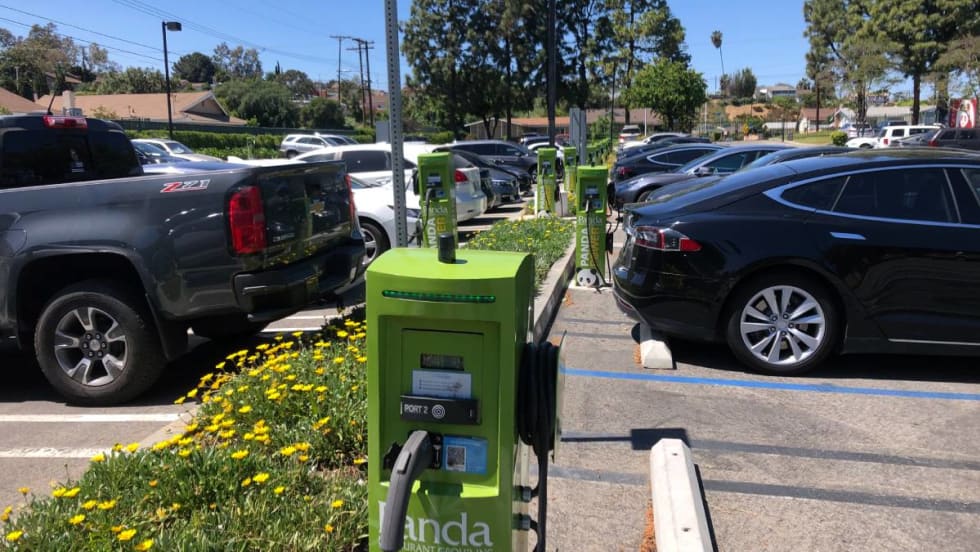
Operator Outlook: EVs Slow to Charm Rental Car Industry
2025 ARN Fact Book: Electric vehicles still must prove their reliability and worth in a fleet sector that puts rolling metal on the ground 24/7 for a demanding customer base.
Read More →
Green Motion Opens Franchise in Germany’s Most Populous State
The rental car outlet brings its hybrid and electric vehicles and sustainable approach to business to one of Europe’s most economically powerful regions.
Read More →