




ACNielsen Rates Travelocity, Expedia Leading Brands
NEW YORK -- Travelocity and Expedia are the most valuable brands in online travel, and their brand equity plays a key role in driving traffic to their sites, according to a new study released by...
NEW YORK -- Travelocity and Expedia are the most valuable brands in online travel, and their brand equity plays a key role in driving traffic to their sites, according to a new study released by ACNielsen International Research, a business unit of VNU.
The study, the first of its kind to examine the brand equity of U.S.-based online travel providers, found a strong correlation between brand equity and the number of unique visitors to a travel web site.
Based on Internet audience data compiled by Nielsen/NetRatings (a sister VNU business), Expedia and Travelocity ranked number one and number two as the most-visited travel Websites during the study period.
"Strong brand messages that resonate with consumers are very important to the online travel industry, and can make a big difference in the success of a travel Website," said Deepak Varma, senior vice president at ACNielsen International Research. "Online travel marketers need to better understand their brand equity so that they can either strengthen their already strong brand positions, like Travelocity and Expedia, or take actions to boost brand equity and drive more traffic to their sites."
Not surprisingly, the ACNielsen study found that consumer awareness was the foremost factor driving brand equity. ACNielsen defines "brand equity" as the distinct effect brand knowledge has on consumer response to marketing activity -- the relationship between what a consumer knows about a brand and what a consumer does as a result of this knowledge.
By understanding a brand's equity in the minds of consumers, marketers can develop more effective marketing plans, enhance product offerings, and hone pricing strategies.
After reviewing more than 80 travel sites, ACNielsen found that drivers of brand equity in online travel clearly differ by travel category.
"Travelocity and Expedia have become household names in online travel through very effective advertising," said ACNielsen's Varma. "However, when booking air travel or making hotel reservations, consumers have very specific needs and expectations, which often differ from category to category. This is where online travel category specialists such as Hotels.com can compete effectively with the generalist sites and build brand equity with consumers."
Along with driving brand equity for travel sites overall, consumer awareness is also the most important factor in determining brand equity for each of the five online travel categories studied -- air, hotels, car rentals, vacation packages and cruises.
However, when comparing the key drivers of brand equity across categories, the relative importance of other attributes becomes apparent.
"The brand marketing strategy for each online travel provider should be unique for each of the categories in which it competes, and tailored to the importance consumers place on differing brand aspects," noted Varma. "For instance, Southwest Airlines' Website provides the customer with simplicity and ease of navigation, a unique point of distinction from other airline travel sites and one that resonates well with online air travelers."
More Rental Operations

ICRS 2027 Opens Call for Papers
The International Car Rental Show seeks session proposals on the business, operational, and technology issues facing car rental operators. Submissions are due Jan. 15.
Read More →
Turo to Launch Vehicle Delivery Service
Turo Delivered will let travelers search for vehicles that hosts can deliver directly to hotels, homes, airports, train stations, and other locations.
Read More →
Palm Beach Airport Code Change Creates Car Rental Distribution Gap
A test of rental searches under the old PBI and new DJT airport codes returned largely different sets of brands and vehicles, highlighting a potential distribution problem for rental operators.
Read More →
U-Save Continues Dominican Republic Expansion with Launch in Punta Cana
The new franchise location builds on U-Save’s existing Santo Domingo operation and will begin taking reservations for October 2026.
Read More →
When AI Books the Rental Car, Who Controls the Sale?
As AI moves from comparing rental rates to completing transactions, operators need to understand how travelers find, interpret, rank, and ultimately see their offers. (Part 2 of 2.)
Read More →
European Booked Car Rental Rates Fell 5%, Results Varied by Country
Ireland, Cyprus, and the United Kingdom saw steep declines, while booked rates rose in Poland and Hungary.
Read More →
Is It Time to Rethink Rental Categories?
As traditional economy and compact cars disappear from the market, longtime rental operator Mike DeLorenzo asks whether the industry’s familiar vehicle categories still make sense — and what operators need to rethink along with them.
Read More →
Who Owns the Rate? AI Is Creating a New Distribution Problem for Car Rental
Generative Engine Optimization asks whether AI can find a rental company, but operators also need to know whether the agent inspected enough of the market, compared equivalent offers, and presented a rate the traveler can actually book. (Part 1 of 2)
Read More →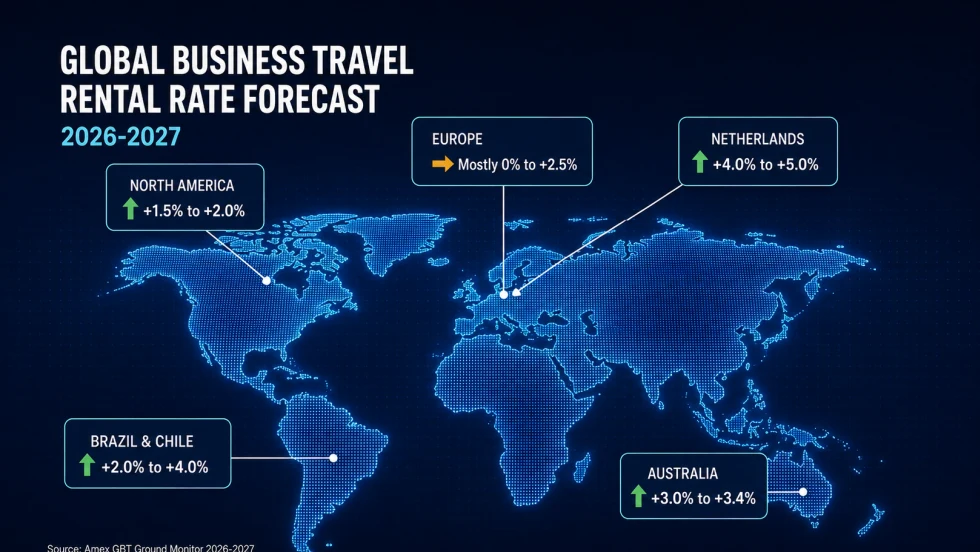
U.S. Business Travel Car Rental Rates Forecast to Rise Up to 2%
Improved fleet supply should limit pricing gains in 2026-27, while insurance, repair costs, and softer residual values continue to pressure rental operations, according to Amex GBT.
Read More →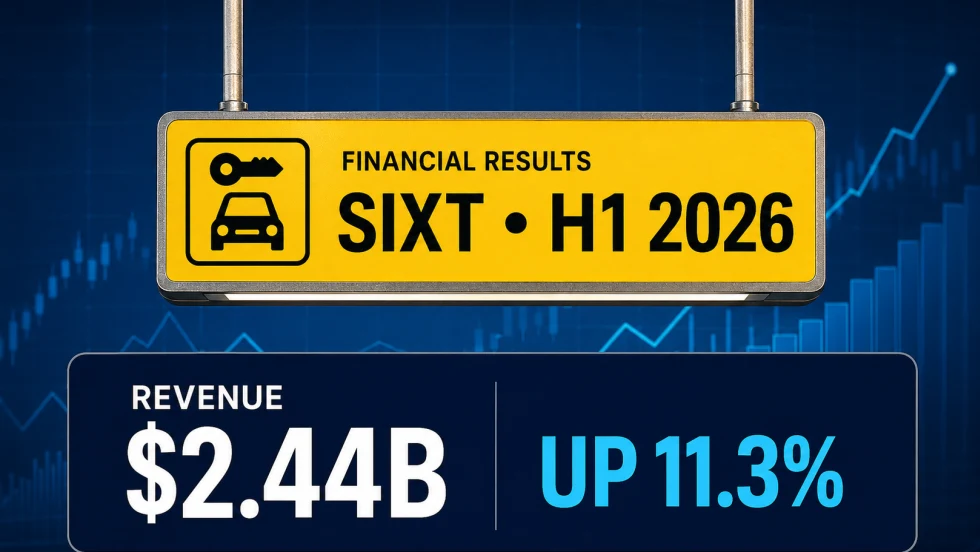
Sixt Revenue Tops $2.4 Billion in First Half of 2026
Sixt’s first-half revenue surpassed $2.4 billion for the first time as demand outpaced fleet growth, lifting utilization and earnings despite weaker consumer sentiment in North America.
Read More →