




GM Introduces Stability Enhancement and Traction Control System
The following information was developed by the Loss Control Department of ACTIF Member Philadelphia Insurance Companies.General Motors recently announced that the 2004 GMC Savana and Chevrolet ...
The following information was developed by the Loss Control Department of ACTIF Member Philadelphia Insurance Companies.
General Motors recently announced that the 2004 GMC Savana and Chevrolet Express, the industry's first and only 15-passenger vans with a stability enhancement and traction control system, would go on sale beginning in early November.
"Equipping our 15-passenger vans with the StabiliTrak stability enhancement system makes what we believe is already a very safe vehicle even better by providing our customers with another important tool to help them avoid some of the conditions that can lead to a crash," said Robert C. Lange, GM executive director, structure and safety integration.
StabiliTrak with traction control is standard on all 2004 GMC Savana and Chevrolet Express 15-passenger vans produced after Oct. 6.
How StabiliTrak works
Like many modern technologies — the cellular phone, the personal computer, the pocket calculator — StabiliTrak is made possible by simple, sophisticated hardware and powerful computer software.
At the heart of StabliTrak are a yaw rate sensor and a lateral acceleration sensor, which work in concert with the car’s suspension, steering, anti-lock brakes and traction control systems. The driver’s intentions are precisely measured by a digital steering angle sensor. Located on the steering column, it measures steering angle to a resolution of one degree.
The yaw of the car body — the rate at which it is actually turning — is measured by a small solid-state yaw rate sensor. Located under the parcel shelf, it uses a pair of tiny ceramic tuning forks to convert the turning motion of the body into a signal the computer can read.
A third sensor, which measures lateral acceleration, helps the computer determine whether available traction has been exceeded. This allows the computer to fine-tune corrections to match the cornering speeds and available traction.The same computer that operates the anti-lock brakes and traction control system also controls StabiliTrak.
Overall operation of the enhanced stability system is quite simple. The driver turns the wheel, and the car begins to turn. If the car doesn’t turn as much as the driver desires (the actual yaw rate is less than the desired yaw rate), the system applies the inside front brake to make the car turn more.
However, if the car turns too much, and the tail begins to come around (the actual yaw rate is greater than the desired yaw rate), the system quickly applies the outside front brake, helping tuck the tail back into place.
In addition to correcting vehicle yaw, this braking action also slows the vehicle in a safe, controlled manner, further improving the driver’s control.
Of course, real world maneuvers are much more complicated than this. A single emergency lane change may involve several quick steering inputs. The car may initially respond sluggishly, then quickly transition to a tail-out attitude. Throughout all of this, StabiliTrak calculates the desired direction of travel and adjusts the individual front brakes to optimize stability and control.
StabiliTrak also enhances the stability of the vehicle in any situation where the yaw rate of the car doesn’t correspond with the steering inputs from the driver. If the car is traveling in a straight line and starts to skid because of snow, ice, gravel or standing water, StabiliTrak will gently apply the correct front brake to straighten the car. If the driver enters a corner or off-ramp too quickly, StabiliTrak will help the driver bring the car under control in a safe, predictable manner.
Stability enhancement systems will help drivers maintain control of vehicles during certain difficult driving conditions such as ice, snow, gravel, wet pavement and uneven road surfaces. The systems also assist in maintaining control during emergency lane changes and avoidance maneuvers.
GM's system works by recognizing wheel skid. Sensors detect the difference between the steering wheel angle and the direction the driver is actually turning by "reading" the steering wheel position, the amount of sideways force in play, vehicle speed and the vehicle's response to steering wheel input.
The system then uses the brakes to enhance control of the vehicle's direction and to help keep it on course. The system automatically reduces the engine torque and applies precise amounts of pressure to front right or left brakes to help keep the vehicle on track. These brake and engine interventions help realign the vehicle's actual path with that being steered by the driver.
Lange said that while stability enhancement systems help drivers avoid some of the conditions that cause crashes, no system is foolproof.
"We will keep educating our customers on the unique loading and operating characteristics of full-size, extended passenger vans," Lange said. "We support the advice of the National Highway Traffic Safety Administration that drivers and passengers in vans -- and all other vehicles -- always use safety belts. And we remind all vehicle occupants to obey state seat belt use and child passenger safety laws." The Savana and Express 15-passenger vans have a 155-inch wheelbase, the longest in the 15-passenger van segment. The longer wheelbase and other chassis design features help improve handling characteristics that allow the driver more control under various road conditions.
Other standard crash-avoidance features include four-wheel antilock brakes for directional stability in emergency braking situations and daytime running lamps for improved visibility. Safety belts, driver and front passenger air bags, front and rear crush zones and side-door beams are standard features designed to help protect occupants in the event of a crash.
For other vehicles there is a fix. Adding rear dual wheels (an additional wheel on each side) to the rear of these vans has been shown in testing to improve the vans’ stability and improve handling in turns and in emergencies. A retrofit by the manufacturers of the 500,000 vehicles on the highway would cost $300-400 vehicle or about $135 in mass production for the new vehicles. A long-term solution is essential the vans must be redesigned to protect passengers in a rollover crash and to comply with the more stringent school bus and other federal safety standards from which they are currently exempt.
More Rental Operations
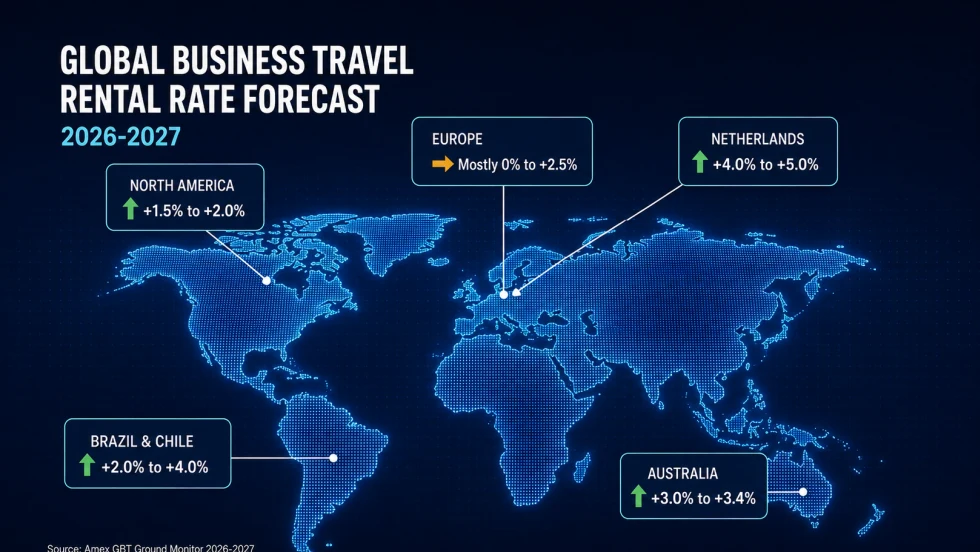
U.S. Business Travel Car Rental Rates Forecast to Rise Up to 2%
Improved fleet supply should limit pricing gains in 2026-27, while insurance, repair costs, and softer residual values continue to pressure rental operations, according to Amex GBT.
Read More →
Sixt Revenue Tops $2.4 Billion in First Half of 2026
Sixt’s first-half revenue surpassed $2.4 billion for the first time as demand outpaced fleet growth, lifting utilization and earnings despite weaker consumer sentiment in North America.
Read More →
In Memoriam: Bobby Klyce, Avis Licensee Legend
The longtime Birmingham Avis operator and 2018 Auto Rental News Impact Award recipient was remembered as an advocate for independent licensees and the broader car rental industry.
Read More →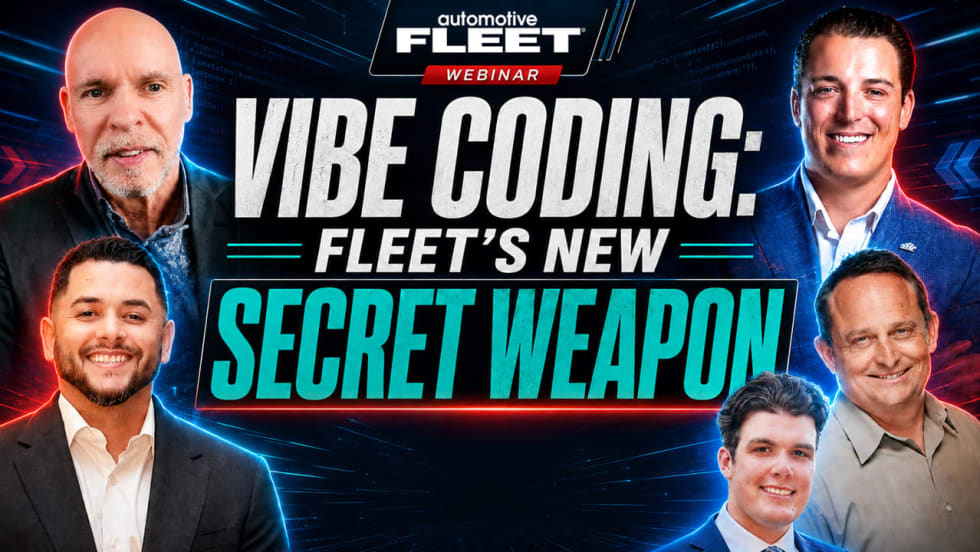
How to Build Custom Fleet Tools With AI and Vibe Coding [Webinar]
A new Automotive Fleet webinar explores how fleet managers are using AI and vibe coding to automate routine work and create simple operational tools without traditional programming skills.
Read More →
Car Rental Rates Forecast to Rise 3.6% in 2026 Before Easing in 2027
Car rental rates are projected to rise less than airfares and hotel rates in 2026, then become the only major travel category forecast to decline in 2027, according to projections from GBTA and ALTOUR.
Read More →
Avis Cuts Fleet as Summer Demand Trails Expectations
Avis Budget Group increased second-quarter earnings despite lower Americas revenue and softer-than-expected summer demand. The company also expanded Avis First and advanced its autonomous fleet operations with Waymo.
Read More →
Why Bookings Are Only the Start of the Rental Day
A reservation captures demand. The operating test is whether the business can keep the customer, vehicle, commercial terms, and next action aligned until the rental is closed.
Read More →
This Is the Oldest Car Rental Advertisement You’ll Ever See
This ad for Saunders Drive it Yourself, believed to be the first car rental company in the U.S., was found in an Omaha phone book from 1926.
Read More →
The Desk Upsell Is Costing Operators More Than it Earns
Counter upsells generate revenue, but they can also slow transactions, erode trust, and cost repeat business. Fully inclusive pricing may offer operators a better path to long-term value.
Read More →
U-Save Expands Indian Ocean Presence with New Master Franchise for Mauritius
The franchise has been acquired by Mauritian travel entrepreneur Umarfarooq Omarjee, an established figure in the island's tourism and mobility sector.
Read More →