




Hyperion Unveils Mobile Station to Widen EV Charging Access
The company will roll out fuel stations for hydrogen and battery vehicles that will be part of a dynamic nationwide charging network starting in 2023.

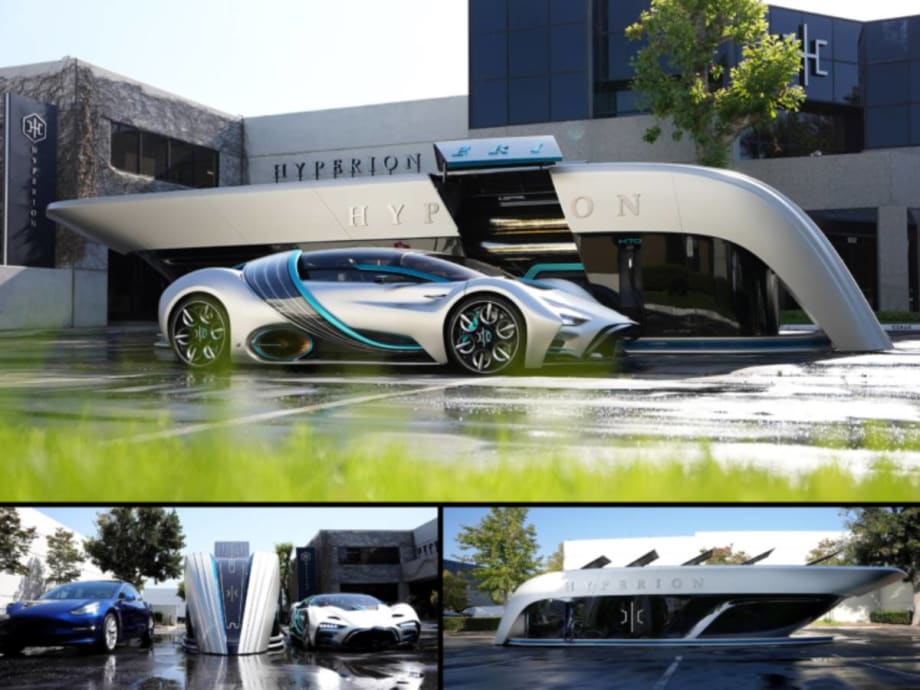
Mobile charging stations from Hyperion Motors will provide BEV and FCEV customers with state-of-the-art touch screen controls, contactless payment, and a self-sanitizing nozzle using UV light.
Photo: Hyperion Motors
Hyperion Motors, Inc., a hydrogen technology company, launched its Hyper:Fuel Mobile Stations, capable of refueling battery electric vehicles (BEVs) and hydrogen fuel cell electric vehicles (FCEVs), the company announced Nov. 22.
The mobilized refueling station will be available nationwide and can be easily deployed and redeployed when driving patterns change. Hyperion will roll out these stations nationwide to form a dynamic network with its partners starting in 2023.
Previously, Hyperion revealed its 1,000-mile range XP-1 in 2020 to demonstrate the benefits of hydrogen-ion storage over lithium-ion.
Using hydrogen-ion storage technology, Hyper:Fuel Mobile Stations address a primary challenge facing many commercial hydrogen trucks and battery cars on the road: refueling and recharging infrastructure.
Investment into infrastructure buildout is plagued and delayed by numerous issues, including site selection and construction costs. Many experts believe this lack of refueling and recharging infrastructure is the largest barrier to FCEV and BEV adoption. Hyperion’s mobile stations can travel to and from existing gas stations, big box stores, and other high-traffic locations to meet real-time demand.
Each station contains a hydrogen dispenser for FCEVs and an optional DC fast-charger for BEVs. This enables it to service two separate vehicle segments simultaneously at lower cost and risk compared with permanently installed charging stations or hydrogen dispensers. FCEV customers can refuel in five minutes and most BEV customers can recharge 80% of their battery in under 20 minutes.
The mobile stations can be equipped to produce hydrogen onsite via water electrolysis. This decentralized approach means it can generate green hydrogen from the sun when combined with solar. On-site fuel generation is clean, green, and can dramatically increase station uptime — another major hurdle for hydrogen stations. The mobilized station can be quickly deployed without long construction delays, opening new markets across the U.S. for automakers to increase FCEV and BEV sales.
Internal systems will include NASA and Shell GameChanger technologies to boost power and increase refueling efficiency. The roof is tiled with solar-tracking photovoltaic panels to maximize direct sunlight. Customers will experience state-of-the-art touch screen controls, contactless payment, and a self-sanitizing nozzle using UV light.
In addition to vehicles, the mobile stations are designed to provide electricity as stationary power sources. By storing electrons for much longer lengths of time than possible for batteries, the station can provide backup power across seasons to improve grid resiliency during weather emergencies or grid failures.
"Todays' energy infrastructure is pushed to its absolute limit,” CEO Angelo Kafantaris said in a news release. “The industry needed a versatile, scalable solution to power our growing needs."
Hyperion’s mobile stations will be manufactured at the company's 65-acre manufacturing headquarters in Columbus, Ohio.
Originally posted on Charged Fleet
More Green Fleet

Fleet Forward Conference Introduces One-Day Passes for 2026
New one-day registration gives fleet professionals the flexibility to attend Tuesday, Wednesday, or Thursday, with passes available for $199 through Sept. 18.
Read More →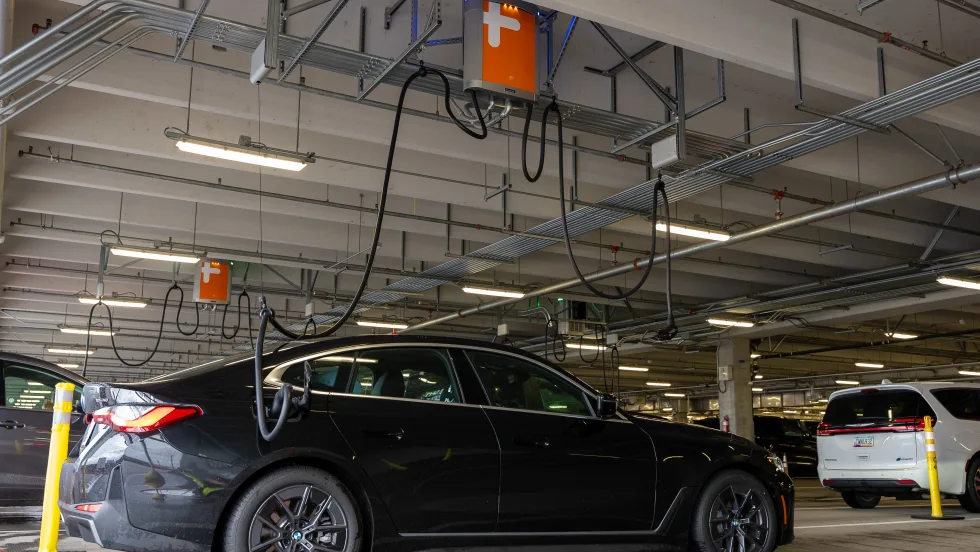
Portland Airport Adds Overhead EV Charging for Rental Fleets
The design is intended to address challenges associated with installing chargers in busy rental-car facilities.
Read More →
Running A Profitable Electric Rental Fleet
How do you successfully operate an all-electric rental car fleet? Whether you manage a rental fleet or another commercial fleet, this conversation offers practical lessons on deploying, operating, and scaling electric vehicles.
Read More →
Green Motion Expands Into Japan With Master Franchise Agreement
Japan's tourism industry, business travel market, and demand for vehicle rental services are reasons the country represents an important market for the company.
Read More →
Green Motion Expands Its African Presence with Mozambique Launch
This new rental car outlet reflects the growing demand for reliable transportation and the emphasis on sustainable travel across the continent.
Read More →
Survey: New Tech Tools, Sharper Pricing Plans, and Focused Service Can Improve Rental Car Industry
ICRS 2025: What are key trends, challenges, and opportunities confronting rental car operators this year?
Read More →
Green Motion Adds South Korea to Its Asian Service Region
The first Green Motion locations in South Korea are scheduled to open in key travel hubs during the coming months, including Seoul, Jeju, and Busan International Airports.
Read More →
Federal Highway Administration Halts EV Charger Funding, Delaying National Expansion Plans
The FHWA has rescinded funding for the NEVI Formula Program, delaying nationwide EV expansion as policies undergo federal review.
Read More →
Operator Outlook: EVs Slow to Charm Rental Car Industry
2025 ARN Fact Book: Electric vehicles still must prove their reliability and worth in a fleet sector that puts rolling metal on the ground 24/7 for a demanding customer base.
Read More →
Green Motion Opens Franchise in Germany’s Most Populous State
The rental car outlet brings its hybrid and electric vehicles and sustainable approach to business to one of Europe’s most economically powerful regions.
Read More →