




2012 Tax Hit: Are You Prepared?
Budget licensee uses like-kind exchange program to avoid a tax burden for 2012 as a result of the discontinuation of bonus depreciation.

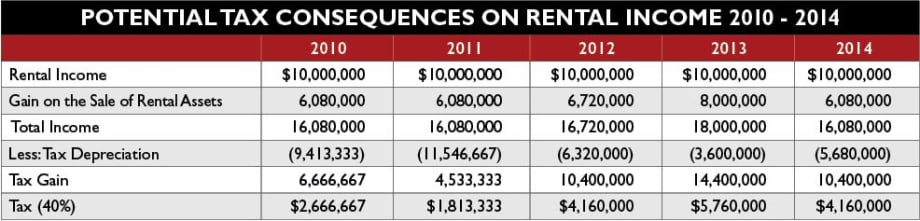
The chart highlights the increased taxes starting in 2012 for an average-sized rental car company. The higher taxes are primarily attributed to the expiration of 100 percent bonus depreciation at the end of this year. The taxes to be paid in 2012 are 229 percent higher than the taxes paid in 2011, and 318 percent higher in 2013.
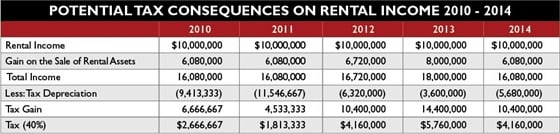
The chart highlights the increased taxes starting in 2012 for an average-sized rental car company. The higher taxes are primarily attributed to the expiration of 100 percent bonus depreciation at the end of this year. The taxes to be paid in 2012 are 229 percent higher than the taxes paid in 2011, and 318 percent higher in 2013.
"Get prepared for 2012 because things are going to change,” says Victoria Yambor, controller for Budget Rent A Car and Sales, a Budget licensee serving the Las Vegas market.
Yambor is referring to the end of “bonus depreciation.”
To give the economy a shot in the arm, the government implemented bonus depreciation in September 2010 through the end of 2011, which allows car rental companies to write off the entire cost of a new car in the year it was purchased. As a result, many car rental companies have paid little to no tax during that time.
“Bonus depreciation was wonderful; it helped small businesses like us,” Yambor says.
But that’s going away. The bonus depreciation rate decreases back to 50 percent in 2012, and to 0 percent in 2013. That means American businesses — especially car rental companies — could be facing a major tax liability in years to come.
Additionally, the vehicles sold in 2012 and future years will have little to no tax basis, which means that the tax gain recognized on the sale of rental vehicles will skyrocket. This is a double whammy — less depreciation deductions when buying new cars and higher taxes paid upon selling off the old cars.
“The substantial increase in taxes will begin in 2012 and drain the cash flow of many unsuspecting car rental companies,” says Ron Hodgeman, director of WTP Exchange. “The expiration of 100 percent bonus depreciation is truly a trap for the unwary.”
What is LKE?
However, businesses can reap the same type of tax benefits without bonus depreciation, Hodgeman says. A company that routinely buys and sells business assets, such as car rental fleets, can benefit from an ongoing, repetitive like-kind exchange (LKE) program.
Under section 1031 of the Internal Revenue Code, companies can structure the sales and purchases of their business assets as like-kind exchanges to continue recognizing substantially less tax gain. An LKE program allows a car rental company to defer the tax that would otherwise be recognized when a rental vehicle is sold, as long as another vehicle is purchased within 180 days.
Hundreds of companies have already implemented LKE programs, Hodgeman says. If done correctly, he adds, its implementation is seamless to current operations and will prevent a car rental company from paying substantially higher taxes starting in 2012.
The Time is Right
Yambor and the Mallo family, owners of the Budget franchise, had successfully used an LKE program in the past, when the company was growing. The company suspended its program when the recession hit in 2008.
Lately, however, “Deplanements are up in Las Vegas,” Yambor says. “We’re seeing a good upturn.” And with the expiration of bonus depreciation, the time was right to revisit an LKE program, Yambor says.
In March at the Car Rental Show, the company connected with Hodgeman and WTP Exchange, a provider of LKE programs. Yambor, John Mallo, president; Joe Mallo, vice president of operations; and Tom Mallo, vice president of fleet; sat down with the company’s outside CPA and the WTP team.
There are three general components to any like-kind exchange program, explains Hodgeman: LKE accounting software, tax consulting and a Qualified Intermediary to facilitate the transactions. “With WTP you don’t deal with three separate entities; they handle everything for you,” Yambor says.
WTP set the franchisee up with the bank and is working with its fleet department, while training the company on its proprietary software program. “The software is like an education vehicle,” Yambor says. “It’s ‘auto like-kind exchange.’”
According to Yambor, WTP is very involved in bringing everyone up to speed. “It isn’t like you’re on a like-kind exchange and you’re all of a sudden not going to pay taxes again; it doesn’t work that way,” Yambor says. “It’s very complex and a big decision to make. WTP has taken that concept and put more of a hands-on, user-friendly way of running a like-kind exchange.”
The franchisee expects to be up and running online by Oct. 1, the beginning of its fiscal year. And the tax savings promises to be tremendous, Yambor says.
After consulting with many car rental companies, Hodgeman claims that the average car rental company is facing an added tax bill of $1 million in 2012 due the expiration of bonus depreciation. However, “Our average client will add $2 million to their cash flow in 2012 with like-kind exchange,” he says.
Click here for information about a free LKE webinar provided by Auto Rental News and WTP Advisors. The webinar is CPE Eligible and takes place on Sept. 22.
More Rental Operations
How Did This Independent Rental Operator Grow to 170 Vehicles in 4 Years?
With 170 vehicles across three Kentucky locations, Joel Price relies on an overseas team to handle reservations, payments, and after-hours customer service. It's one part of an unconventional approach to growing an independent rental operation.
Read More →
What Does It Take to Succeed in B2B Rentals?
The fundamentals may be familiar to daily car rental operators, but project-based truck rentals put different demands on the fleet and the business.
Read More →
NPR Builds on International Partnerships to Grow Rental Bookings
With Ana Laborde supporting broker development, NPR Auto Group is tailoring distribution strategies, rate packages, and partnerships to grow international reservations across its three brands.
Read More →
Advantage, Sixt Place Among Top Five in Annual Satisfaction Study
While Enterprise and National retain the top spots in JD Power’s 2026 rankings, the latest customer satisfaction results suggest renters can find competitive service beyond the biggest car rental names.
Read More →
The $100,000 Insurance Trap in Exotic Car Rentals
Exotic rental agencies often rely on customers’ personal auto policies to protect six-figure vehicles. But policy language can dramatically change the coverage for vehicles over $100,000 MSRP.
Read More →
The Booking Is Confirmed, But Is Your Customer Ready to Drive?
For international renters, a confirmed reservation doesn’t always mean they’re eligible to drive. Earlier checks can help operators catch documentation and payment issues before the customer reaches the counter.
Read More →
ICRS 2027 Opens Call for Papers
The International Car Rental Show seeks session proposals on the business, operational, and technology issues facing car rental operators. Submissions are due Jan. 15.
Read More →
Turo to Launch Vehicle Delivery Service
Turo Delivered will let travelers search for vehicles that hosts can deliver directly to hotels, homes, airports, train stations, and other locations.
Read More →
Palm Beach Airport Code Change Creates Car Rental Distribution Gap
A test of rental searches under the old PBI and new DJT airport codes returned largely different sets of brands and vehicles, highlighting a potential distribution problem for rental operators.
Read More →
U-Save Continues Dominican Republic Expansion with Launch in Punta Cana
The new franchise location builds on U-Save’s existing Santo Domingo operation and will begin taking reservations for October 2026.
Read More →