





More News: 4 Global Trends In Carsharing
Global Carsharing Fleet Projected to Reach 768,000 Vehicles By 2030
A new Berg Insight forecast outlines several business models driving the projected growth in public carsharing worldwide through 2029.
July 14, 2026

Halo is one example of a carsharing service, known for using remote drivers working in front of screens to deliver vehicles to customers in certain areas of Las Vegas, Nevada.
Credit:
Credit: Halo
2 min to read
- Station-based round-trip service remains the dominant operating model globally, with users returning vehicles to the same location where they were picked up.
- Public carsharing can reduce traffic congestion, lower emissions, and decrease the need for personal vehicle ownership in urban areas.
*Summarized by AI
The global public carsharing fleet will likely grow from about 511,000 vehicles at the end of 2025 to 768,000 vehicles by the end of 2030, according to a new report from market research firm Berg Insight. The forecast represents a compound annual growth rate of 8.5%.
Berg Insight also forecasts worldwide carsharing membership will increase from 91 million users in 2025 to 141.1 million by 2030, reflecting a 9.2% compound annual growth rate. Asia-Pacific is expected to remain the largest market for carsharing vehicles, followed by Europe.
The report estimates the corporate carsharing segment will expand from about 154,000 vehicles at the end of 2025 to about 250,000 vehicles by 2030.
Carsharing services are offered by specialized operators, vehicle manufacturers, rental fleet companies, leasing firms, and public transportation organizations.
Station-based round-trip service remains the dominant operating model globally, with users returning vehicles to the same location where they were picked up. However, free-floating carsharing, which allows vehicles to be picked up and dropped off within a designated operating area, continues to gain market share. In Europe, free-floating services now account for the largest share of both memberships and fleet size, according to Berg Insight.
The report notes that connected vehicles and specialized software platforms drive modern carsharing operations. Operators rely on telematics, fleet management, booking, billing, analytics, and operational monitoring systems to manage their businesses.
While some companies develop their own technology, many rely on third-party vendors or partnerships for hardware and software.
Berg Insight said many carsharing providers have shifted their priorities in recent years from rapid market expansion to improving profitability and increasing vehicle usage.
Rental companies active in the sector include Sixt Share, operated by Sixt; Zipcar, owned by Avis Budget Group; ORIX CarShare; and G Car, operated by Lotte Rental. Automaker-backed services include Stellantis-owned Free2move, Toyota's Kinto Share, and Kia-backed Wible.
The world's 30 largest carsharing providers account for about 63% of all carsharing members and manage about 56% of the global public carsharing fleet.
More Rental Operations
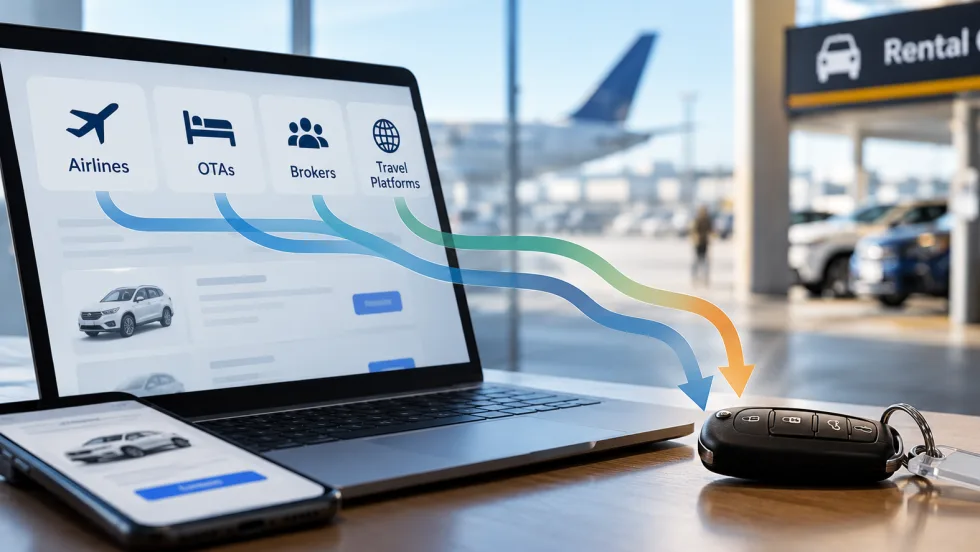
Direct, Broker or Hybrid? How Travel Retailers Source Rental Cars
As travel retailers weigh direct supplier relationships against third-party distribution, rental operators need to understand how those decisions affect their business.
Read More →
How Did This Independent Rental Operator Grow to 170 Vehicles in 4 Years?
With 170 vehicles across three Kentucky locations, Joel Price relies on an overseas team to handle reservations, payments, and after-hours customer service. It's one part of an unconventional approach to growing an independent rental operation.
Read More →
What Does It Take to Succeed in B2B Rentals?
The fundamentals may be familiar to daily car rental operators, but project-based truck rentals put different demands on the fleet and the business.
Read More →
NPR Builds on International Partnerships to Grow Rental Bookings
With Ana Laborde supporting broker development, NPR Auto Group is tailoring distribution strategies, rate packages, and partnerships to grow international reservations across its three brands.
Read More →
Advantage, Sixt Place Among Top Five in Annual Satisfaction Study
While Enterprise and National retain the top spots in JD Power’s 2026 rankings, the latest customer satisfaction results suggest renters can find competitive service beyond the biggest car rental names.
Read More →
The $100,000 Insurance Trap in Exotic Car Rentals
Exotic rental agencies often rely on customers’ personal auto policies to protect six-figure vehicles. But policy language can dramatically change the coverage for vehicles over $100,000 MSRP.
Read More →
The Booking Is Confirmed, But Is Your Customer Ready to Drive?
For international renters, a confirmed reservation doesn’t always mean they’re eligible to drive. Earlier checks can help operators catch documentation and payment issues before the customer reaches the counter.
Read More →
ICRS 2027 Opens Call for Papers
The International Car Rental Show seeks session proposals on the business, operational, and technology issues facing car rental operators. Submissions are due Jan. 15.
Read More →
Turo to Launch Vehicle Delivery Service
Turo Delivered will let travelers search for vehicles that hosts can deliver directly to hotels, homes, airports, train stations, and other locations.
Read More →
Palm Beach Airport Code Change Creates Car Rental Distribution Gap
A test of rental searches under the old PBI and new DJT airport codes returned largely different sets of brands and vehicles, highlighting a potential distribution problem for rental operators.
Read More →