



AI Redefining Vehicle Inspections
Doubts, disputes, and different views on the quality and state of auctioned vehicles and returned rental cars will recede as more data brings greater clarity.


The CAR panel on AI-driven vehicle inspections included: Dustin Cruz, vice president of operations of OPENLANE; Raj Pofale, founder and CEO of Claim Genius; Kevin Kostuk, co-founder and director of Ariaal; John Coles, vice president of data science and analytics at ACV Auctions; and moderator Dan Kennedy of DAK Consulting.
Photo: Ross Stewart / Stewart Digital Media
The clipboard-and-pen days of vehicle inspections are starting to look as quaint as Texas Instruments calculators and antenna TVs.
Artificial intelligence is rapidly transforming how vehicle remarketers and fleet operations inspect and rate vehicles.
Experts at the 2025 Conference of Automotive Remarketing in March shared insights on how auctions, dealers, consignors, and rental fleets can benefit from faster, more accurate real-time condition reports.
“When you take a look at what this industry has been through over the last five years, especially on the technology side, much change is being driven by the pandemic, forcing sales to go off or online, out of the physical auctions, and in between,” said Dan Kennedy of DAK Consulting, moderator of the session, “Future of AI in Vehicle Inspections.”
Since 2022, AI has emerged to transform vehicle inspections, leading to continuously evolving condition reports as it gorges on more and more data.
Joining Kennedy were panelists John Coles, vice president of data science and analytics at ACV Auctions, Dustin Cruz, vice president of operations of OPENLANE, Raj Pofale, founder and CEO of Claim Genius, and Kevin Kostuk, co-founder and director of Ariaal.
AI Can Augment the Work of Human Inspectors
Rather than replace human labor, AI so far has proven more of a helpful tool for human inspectors.
“The way we think about it is it gives our inspectors superpowers,” Cruz said. “It's making them better and more consistent at their jobs, allowing them and the process to be more efficient. They can do more inspections.”
By enabling vehicle inspectors to work faster with more precision, AI frees them to focus more on complex tasks that require human judgment.
In one example, Coles cited how AI tools can boost productivity and ease on-the-job hassles.
“By putting tools in our inspectors’ hands, they aren't kneeling on blacktop in Texas in the summer to see what's happening underneath a car while assessing that vehicle. When they use tools such as virtual lifts and mirror arrays to assess the undercarriage and convert that into insights without crawling to take pictures, it's a tremendous efficiency and quality-of-life improvement for our teammates.”
Pofale underscored how AI can provide unbiased decisions when assessing vehicles. “I can say confidently that all of us in the room would assess a vehicle differently, because our understanding of the assessment varies.”
AI-driven standards also make it possible to scale inspection procedures and processes across an entire auction operation or wholesale used vehicle markets, he said.
Kostuk sees AI as a tool to reduce relieve employees of the stresses of tedious and repetitive tasks.
“People are busy. They're running hard. Anything we can do to reduce the cognitive load and get them to do add value will be appreciated and help them live a better life and enjoy their jobs more.”
Challenges in Data Quality and Model Training
Despite AI's advantages, data quality challenges still must be resolved, panelists said. Barriers to training accurate AI models include poor image quality, inconsistent lighting, and mislabeling. The goal of AI is to ensure consistent performance across vehicle types and geographic regions.
Coles said older datasets often lack proper resolution or metadata, making them less effective for training AI systems. “That foundation of high-quality, consistent, and longitudinal data takes time to generate and to annotate, and you must continually refine it versus assuming you’ve got it.”
AI must constantly be learning, Cruz added. “When you think about all the locations across the country where we inspect cars, a 2020 Chevy Silverado will look different in the northeast in the snow than how it looks in California. AI must learn and understand all that.”
However, Cruz and Cole advised that while imperfect, an AI with a solid database is close at hand.
If images are unclear or poorly taken, even the most advanced AI will produce flawed assessments, said Pofale, whose company includes app-based guidance to help users capture the best photos instantly. The resolution of the pictures, the positioning, the light conditions — everything should be right. In such a case, you would get probably more than 90% of the accuracy.”
Kostuk pointed out a more systemic challenge — access to third-party data. “It is a huge opportunity and barrier as well, not only the APIs and technical access but alignment of business models to access what has been historically very tightly held data in the industry. If we can find a way to join those data sources with inspection data on the ground, it benefits everyone.”
Mobile vs. Fixed Inspection Platforms
Vehicle inspections need to accommodate a variety of platforms, from fixed-location kiosks to mobile apps, said panelists, whose business use different types. Each has its use cases and technical requirements, especially when dealing with user-generated content.
Coles said ACV Auctions uses apps for consumers, dealers, employees, and fixed sites.
“The key elements are guiding the person and the operational component at every level through the same set of steps and then providing rapid feedback,” Coles said.
Pofale pointed out that while inspectors are trained to take professional photos, consumers do not do so much. “We were working with one of the rental car companies, and on one car claim, [the renter] had 500 images. God knows what he did. But that brought down our algorithm. It depends on the end user and how we are training and educating them.”
Kostuk added that his company has adapted its algorithms for different use cases. Consumer devices, for example, need power-efficient, edge-based models, while fixed systems can process in the cloud.
“Thinking clearly about the use case is critical. What's the marketplace? Who's the buyer, and who's the inspector? If you consider all the combinations of those three questions, it can be a highly fragmented set of use cases, and a different value proposition for each of those different hardware requirements.”
Real-Time Processing and Edge AI
One promising trend is the move toward edge AI, where image processing occurs directly on mobile devices instead of on cloud servers. This reduces lag and improves inspection efficiency.
Such models can deliver results right away as inspectors walk around the car and the system detects and documents damages, Pofale said.
Such advancements depend on improved microchips and shorter algorithms that can streamline the process.
New Developments in AI Technology
Panelists offered a roundtable of forecasts for specific AI improvements in vehicle inspections:
Kostuk: “If we can look further from the current large language models, which have to do with humans interrogating an AI, we’re starting to see a pivot towards AI being able to interrogate a human, or AI being able to interrogate a vehicle via a human. That’s where it gets exciting when we look at some of the future agentic models for AI. A lot of our R&D on is not on the front-end technologies.”
Pofale: “Technologically, everything is getting more advanced. When we started six years ago, we had to train our algorithms with millions of images, which had to be labeled and curated. It took at least a quarter to train, but now with open frameworks, we can train and customize our models to every customer. It takes a few thousand images within three to four weeks to tweak the algorithms to deploy for that customer.”
Cruz: “When we think AI, we think of exterior damage. But there are so many other areas of the vehicle that AI can [evaluate], and that’s where we’ll see a lot of growth during the next six to 12 months. Whether it's the undercarriage, interior, mechanical, or audio sounds — all those [capabilities] are coming.”
Buyer and Seller Benefits
AI brings transparency and standards to condition reports, making them more trustworthy for all stakeholders, Pofale said. “When humans did them, buyers had to believe whatever the inspector was saying. Now everything is visible and open because the results are available immediately. It is giving more transparency to the buyers.”
Cruz added, “Vehicles become more consistent, which just helps with pricing and floors and better reconditioning. You can be smarter when you’re buying vehicles.”
AI is also helping reduce post-sale arbitration, especially for rare but serious oversights, Kostuk said. “We’ve caught things like bullet holes in headliners — stuff inspectors missed. That’s where back-end AI systems with their adaptive learning technologies have helped catch arbitrations before they become a problem.”
Coles raised concerns about information overload. “If damage is documented in image 500, what does that mean to the buyer?” He said future condition reports must summarize findings clearly to prevent disputes.
Cruz agreed, calling for “shared responsibility” and user-friendly interfaces that make critical information easily visible to sellers and buyers.
AI Realities and Precautions
Panelists offered the following tips about handling obstacles to AI-driven condition reports:
Many potential clients have been burned by vendors overselling AI’s capabilities.
Disillusionment cycles are common in tech. Overhyping AI leads to unrealistic expectations, which, when unmet, generate skepticism across the board.
Practical barriers can delay fitting AI into existing workflows without disrupting operations.
Being honest about what AI can and cannot do is vital. Overselling sets everyone up for failure.
Most Inspectors Will Keep Their Jobs
All panelists agreed that no matter how much AI advances, it will never replace vehicle inspectors.
“I go back to automation and the push in the 1980s and 90s to introduce a burger flipping machine at McDonald’s to replace everyone,” Coles said. “It didn’t work. It was too slow and couldn’t figure it out. If I think about where AI is being introduced, it’s intentional and effective, like introducing the PC into the office environment. I use a PC, but it has yet to replace me. AI is like introducing a computer, not a robot, to do a job.”
Pofale suggested some simple inspections may become fully automated, but humans will remain essential, especially when handling complex or high-stakes evaluations.
“The variability of the damages and the claims are so much that you would need humans to consistently and constantly train these models. Humans cannot go away 100% and AI cannot take 100%. It’s only good for repetitive kinds of tasks.”
AI won’t just change vehicle inspections — it will redefine them.
Coles summed up that AI is about providing new data sources and tools that enable faster, more reliable buyer-seller partnerships.
Originally posted on Automotive Fleet
More Remarketing
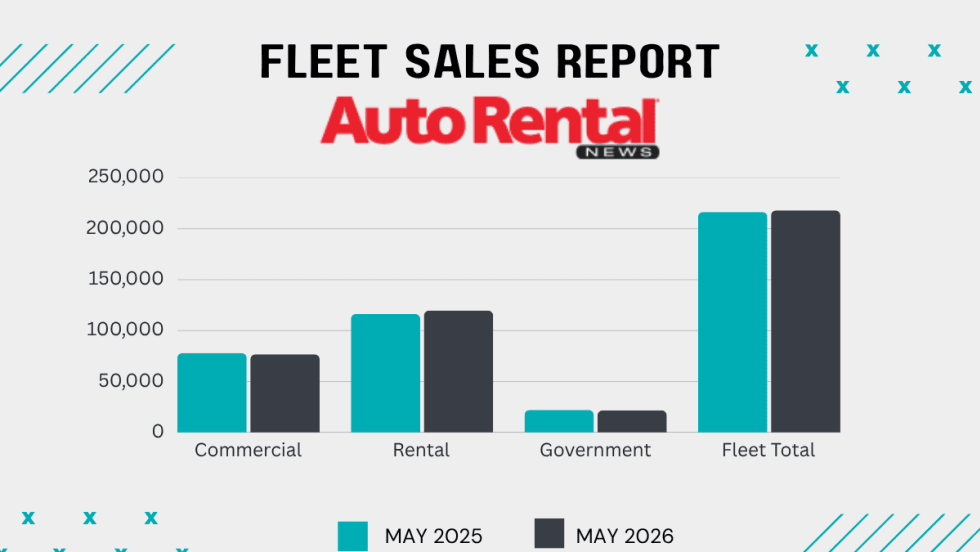
Rental Fleet Sales Skating Just Above 2025 Levels
The U.S. economy's continued growth and positive business investment are creating a favorable environment for fleet vehicle demand.
Read More →
Cross-Pressures, Evolving Trends Drive 2026 Rental Car Industry
A combination of cautious economic behavior, shifts in the rental vehicle market, and technological influences are shaping car rental operator decisions.
Read More →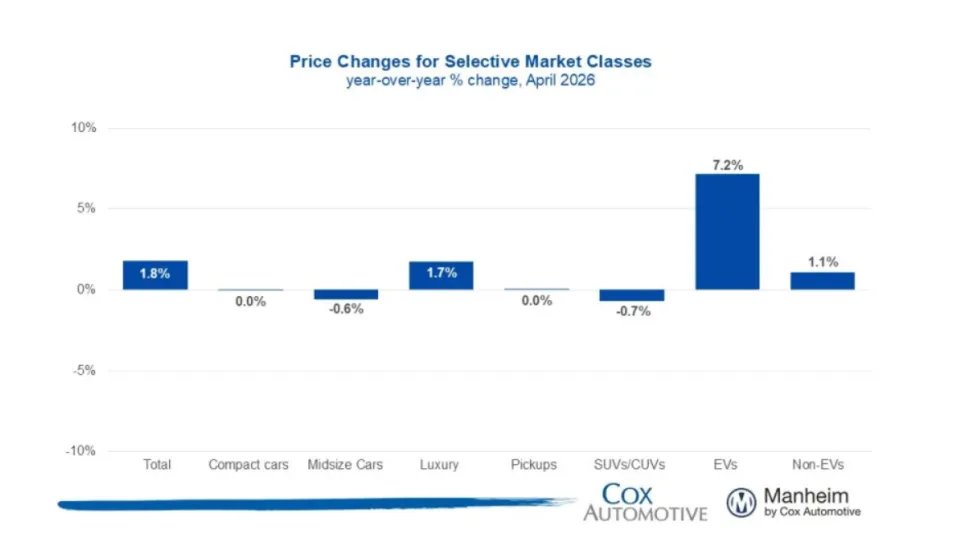
Wholesale Used Vehicle Prices Slightly Up In April
The Iranian conflict and rising gas prices inject much uncertainty into the future wholesale used vehicle markets, as higher gas prices soak up spendable income from vehicle buyers.
Read More →
Surprice Opens Two Rental Branches In Japan
The launch highlights the global car rental operation’s growing presence in Asia.
Read More →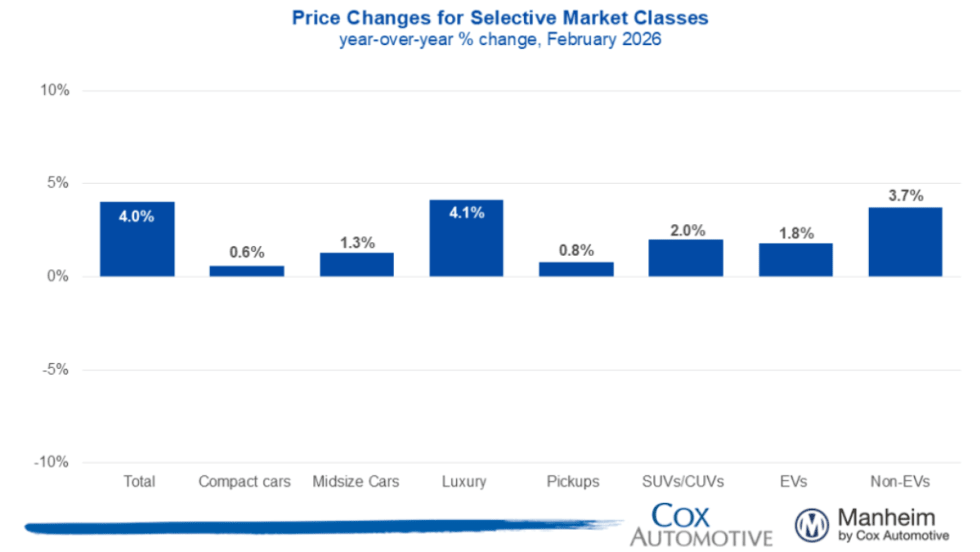
Wholesale Used Vehicle Prices Up In February
Solid demand at Manheim auctions with higher sales conversion rates indicate an appetite from dealers to buy.
Read More →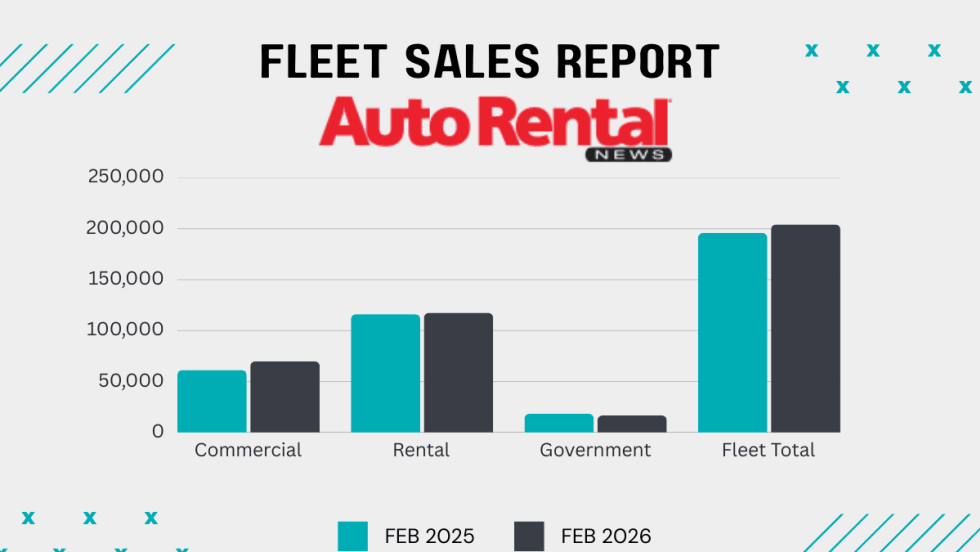
Rental Fleet Sales Slow In February Ending A Strong Streak
Commercial fleets posted the most gains, sustaining increases in monthly and year-to-date fleet sales
Read More →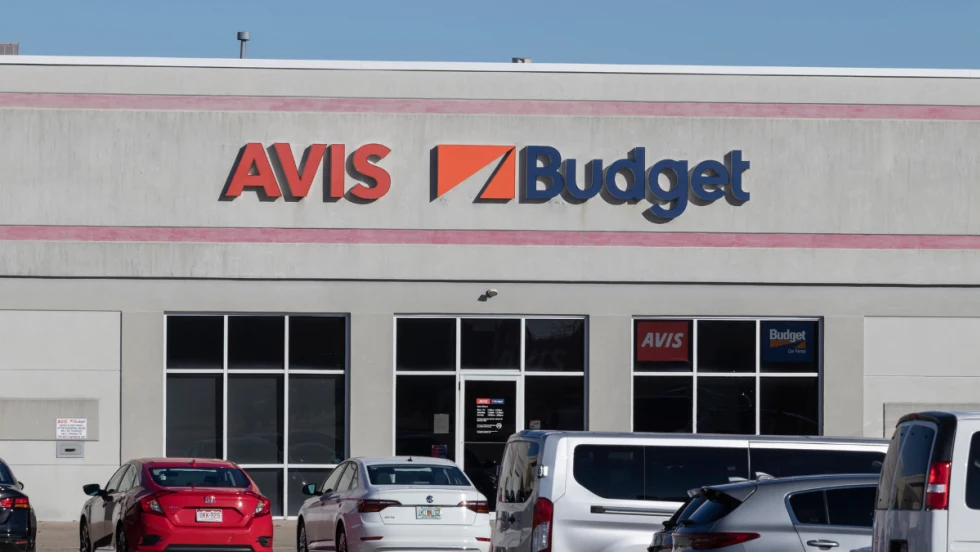
Avis Budget Group Reports Near $1 Billion Loss Tied To 2025 EV Fleet Write-Down
Following Hertz, the company is the second global car rental conglomerate to sustain sizable losses due to lower customer demand and usage of electric rental cars.
Read More →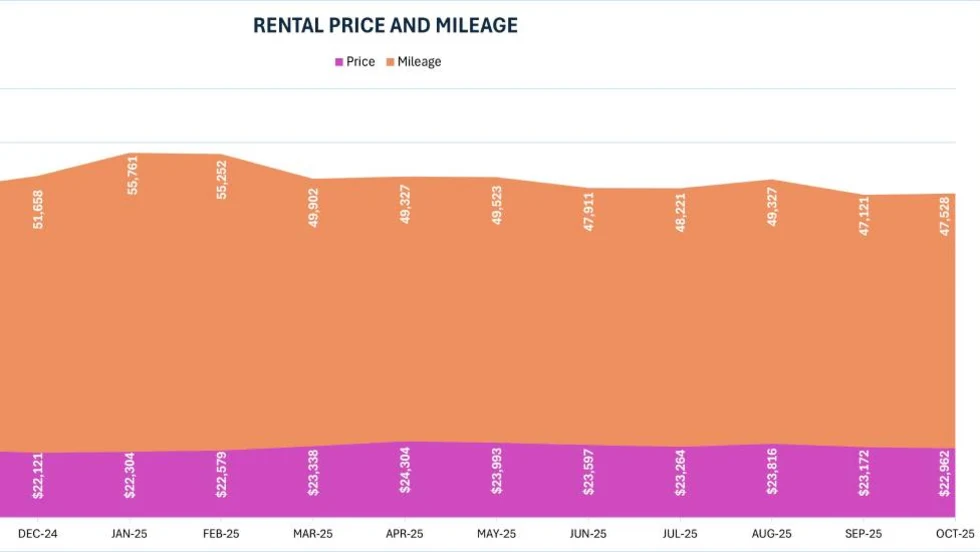
2025 Rental Vehicle Remarketing Summary And Outlook
The year brought modest and flatter results across wholesale values, total off-rental supply, and rental risk units.
Read More →
Auctions Record Highest Vehicle Sales Since 2019
2025 figures show a steady recovery in wholesale vehicle activity this decade.
Read More →
DriveItAway Holdings, Free2move Launch Operations In Nine Cities
The co-branded program with Stellantis’ mobility division scales up leasing and financing options nationwide with more cities to come online in 2026.
Read More →