



More State of the Industry: Mixes Signs Make for Unusual Outooks
Hits & Misses on 10 Remarketing Predictions for 2022
See how Cox Automotive scored when its earlier outlook met the economic and market realities so far this year.
by Jonathan Smoke, chief economist, Cox Automotive
September 29, 2022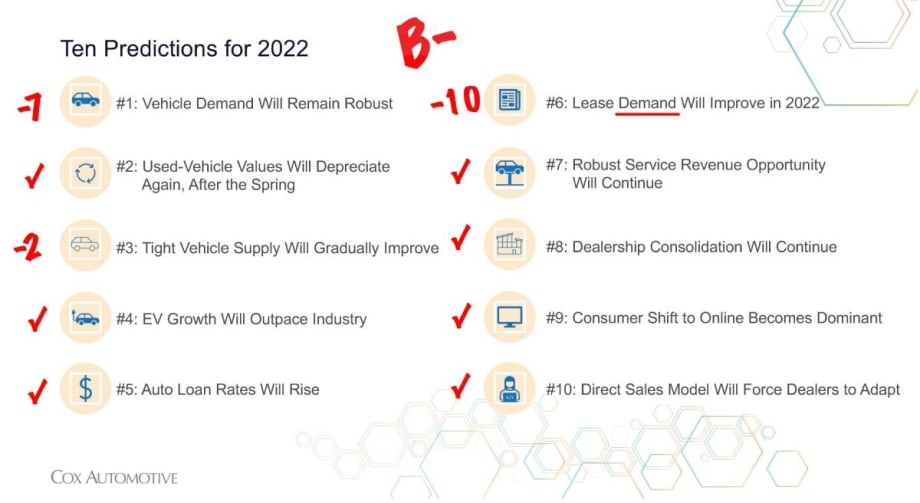
The Cox Automotive 3Q report card on their 10 primary predictions for 2022.
Graphic: Cox Automotive
3 min to read
As we did at the end of the second quarter, our team took a look back at the market predictions we posted in January. This quarterly review is helpful, as it allows us to see how the market has progressed compared to expectations. Forecasting is a tough business, especially in a year with so many changing market dynamics, but many of our initial predictions have held up reasonably well. As was the case at the end of last quarter, we have fallen short in three areas.
Robust Vehicle Sales?
We predicted vehicle demand would remain robust in 2022 but sales year to date are well off last year’s pace. Total retail sales did not improve in Q3. The third quarter saw the bite of higher rates, particularly in the used-vehicle market. Stubborn inflation has been the headline this year, and the Federal Reserve has moved aggressively to tackle it. We fully expected interest rates to increase in 2022 – as noted in prediction #5 – but the size and rate of the increases have surprised even us.The Fed is aggressively moving to reduce demand, and that’s exactly what the Fed is getting. Higher interest rates have already affected the housing market, and the auto industry is feeling that pain as well. We are seeing softening prices, rising inventory levels, and signs that buyers, particularly those with subprime credit ratings, are falling out of the market. Demand for new and used vehicles is no longer robust. As they say, you can’t fight the Fed. Our #1 prediction was wrong. Points off.
Inventory Gains and Losses
We again fully acknowledge that ourexpectation of improving vehicle inventory in 2022 has not happened as we thought it would. Yes, used-vehicle inventory is notably higher than in 2021 and, generally, is back above historic norms. New-vehicle inventory, however, remains stubbornly tight. Slower sales and some production improvements are helping, and new-vehicle inventory volume at the end of Q3 is up 40% from the same period in 2021. Even U.S. auto dealers are indicating that inventory is improving. But both new-vehicle inventory volume and days’ supply remain far below historic norms, so we can’t take full points on this prediction, but our score has improved since Q2.
Auto Leases Fall Off
Points have to be taken away for expecting leasing demand to improve in 2022. We do think the demand is there, but we can’t take credit for lease demand when lease penetration has fallen further. In this tight-inventory market, automakers are not pushing lease deals, and overall new-vehicle demand is showing signs of waning. In 2019, leasing accounted for about 30% of the retail market. In 2022, thanks to many factors, leasing will likely account for closer to 20% of retail, well below historic norms. We do believe leasing share will improve at some point, but that is not the case in 2022. On this topic we take all the points away.
While those three items definitely brought down our grade for the 2022 predictions, we did get many of the other points right. The electric-vehicle segment has gained share as we expected and, as noted above, auto loan rates are definitely rising. Used vehicles are depreciating assets again, after an unprecedented run-up in 2021, and service revenue continues to be robust, despite a decline in service volume. Dealership consolidation and a major shift in how consumers are buying cars continue to be headline makers this year.
Overall, while the only perfect crystal balls are in Disney movies, our Ten Predictions for 2022 are holding up reasonably well. Our grade through Q3 is a B-. With the economy struggling and inflation hurting many households, demand has not materialized as we had expected back in January. We will have a final assessment at the end of the year and, hard to believe, we are already considering a new set of predictions for 2023. It’s about that time again!
Jonathan Smoke is the chief economist for Cox Automotive
Topics:Used Vehicle SalesNew Vehicle SalesUsed Vehicle Pricesautomotive supply chainstate of industryLeased VehiclesRemarketing
Originally posted on Vehicle Remarketing
Subscribe to Our Newsletter
More Remarketing
Rental Fleet Sales Skating Just Above 2025 Levels
The U.S. economy's continued growth and positive business investment are creating a favorable environment for fleet vehicle demand.
Read More →
Cross-Pressures, Evolving Trends Drive 2026 Rental Car Industry
A combination of cautious economic behavior, shifts in the rental vehicle market, and technological influences are shaping car rental operator decisions.
Read More →
Wholesale Used Vehicle Prices Slightly Up In April
The Iranian conflict and rising gas prices inject much uncertainty into the future wholesale used vehicle markets, as higher gas prices soak up spendable income from vehicle buyers.
Read More →
Surprice Opens Two Rental Branches In Japan
The launch highlights the global car rental operation’s growing presence in Asia.
Read More →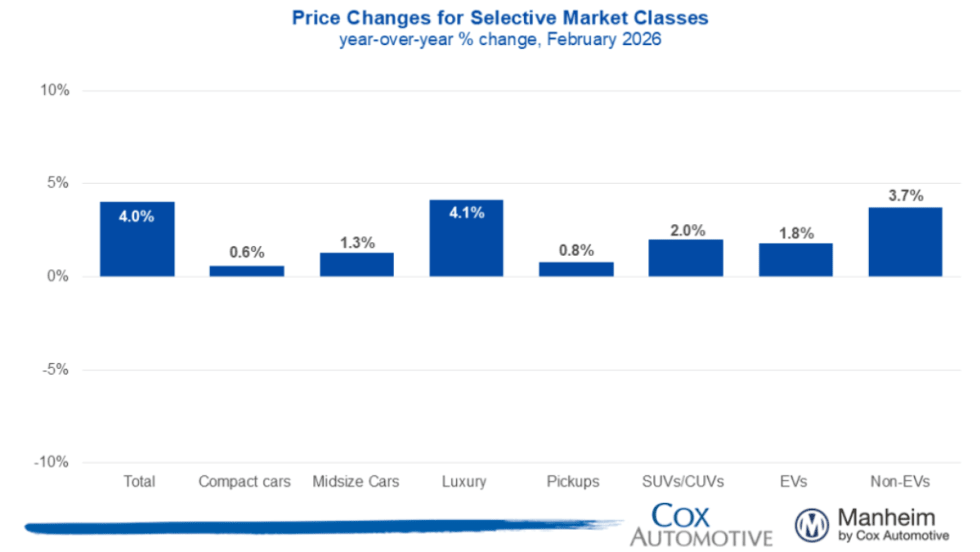
Wholesale Used Vehicle Prices Up In February
Solid demand at Manheim auctions with higher sales conversion rates indicate an appetite from dealers to buy.
Read More →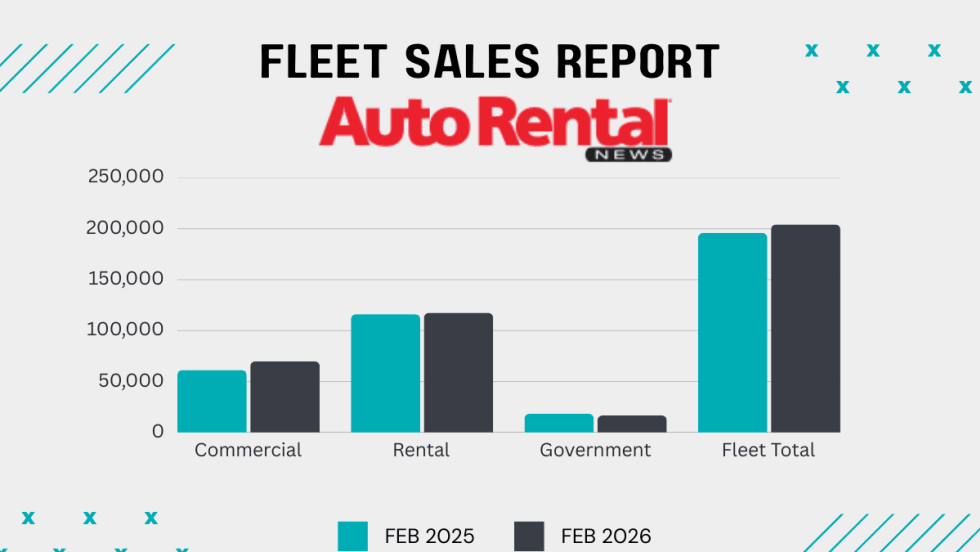
Rental Fleet Sales Slow In February Ending A Strong Streak
Commercial fleets posted the most gains, sustaining increases in monthly and year-to-date fleet sales
Read More →
Avis Budget Group Reports Near $1 Billion Loss Tied To 2025 EV Fleet Write-Down
Following Hertz, the company is the second global car rental conglomerate to sustain sizable losses due to lower customer demand and usage of electric rental cars.
Read More →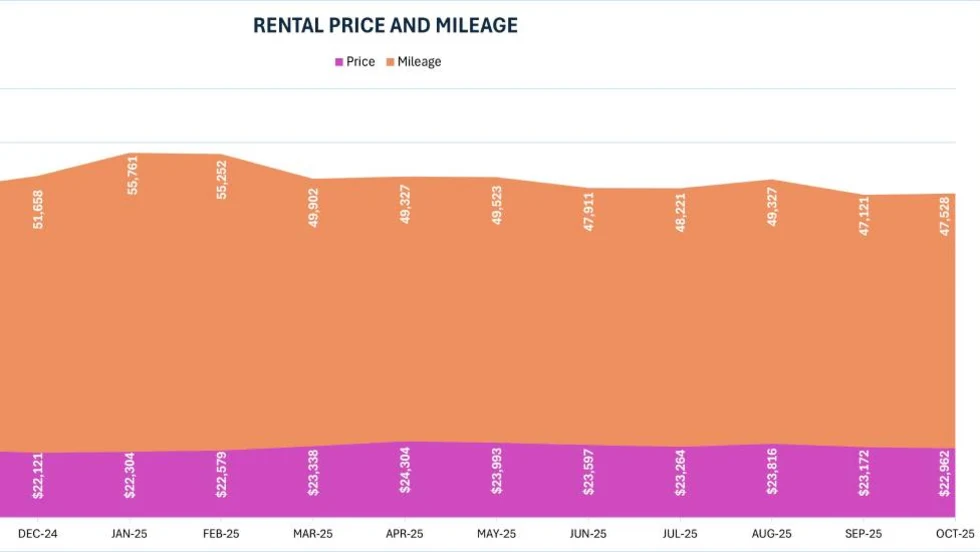
2025 Rental Vehicle Remarketing Summary And Outlook
The year brought modest and flatter results across wholesale values, total off-rental supply, and rental risk units.
Read More →
Auctions Record Highest Vehicle Sales Since 2019
2025 figures show a steady recovery in wholesale vehicle activity this decade.
Read More →
DriveItAway Holdings, Free2move Launch Operations In Nine Cities
The co-branded program with Stellantis’ mobility division scales up leasing and financing options nationwide with more cities to come online in 2026.
Read More →