



How Will a Recession Affect Fleet Sales?
The drawn-out vehicle shortage is producing a domino effect of issues for many fleet segments, says Cox Automotive’s Jonathan Smoke, but a potential recession may have a silver lining — if we even have one at all.
Today’s market is characterized by pent-up demand restrained by a dramatic lack of labor and supply shortages. A modest increase in unemployment will still leave a healthy consumer, which is a positive barometer for travel and vehicle sales.
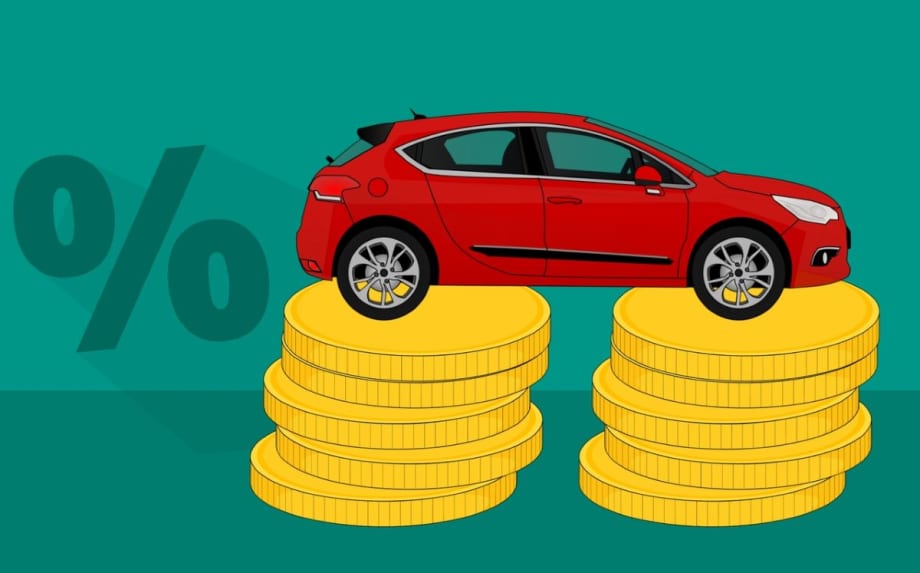
Image: Pixabay / Mohamed Hassan
The new and used car markets today feel like The Beatles song, “Getting Better.”
I admit it's getting better,
A little better all the time (It can't get no worse).
Jonathan Smoke, chief economist at Cox Automotive, could’ve included the song in his recent playlist that best describes the summer 2022 auto market. New vehicle sales aren’t showing signs of getting worse. However, “SAAR has still hardly changed over the last nine months (and) hasn't shown the improvement that coming into the year we’d thought we’d see,” Smoke says.
With a string of supply-chain setbacks, including the war in Ukraine, hopes for normalcy have shifted beyond 2023. “I think it’ll be 2024 and 2025 before we'll get back to a normal level of total volumes flowing into fleet,” he says.
That may not come as a surprise to anyone. But this drawn-out vehicle shortage is also producing a domino effect for many fleet segments:
Lack of Fleet Configurations
The lack of supply has caused automakers to prioritize profitability by building higher-contented vehicles, which has fleets of all types worrying about getting the configurations they need.
“Even if retail sales start to slow down and there’s more supply that could end up in fleet, those vehicles may not have the trim levels or configurations that make sense for fleets,” says Smoke. “And we're really not seeing the retail market soften enough that would detract automakers from going after profitability.”
More Ordering, Less Stock
With little supply on new dealers’ lots, some of the buying has shifted online. As ordering is a more efficient process that avoids heavy discounts to move metal, further migration is possible.
But not everyone is onboard. “I've heard from plenty of commercial fleets that they are struggling with the ordering model,” Smoke says. “They were used to the old way of actually seeing models and enjoy a bit of a dog and pony show from all the manufacturers courting their business.”
“In this environment, you place your order in the limited window of time and hope that you’ll come close to the actual numbers you ordered.”
There’s pushback to ordering on the dealer side too, particularly with dealers selling pickups. “It’s hard for many dealers to contemplate exclusively selling on order when there are plenty of people that want to see that specific truck,” he says. “(The dealers) believe they would be at a competitive disadvantage to the manufacturers and the dealers who have the inventory.”
Digital Transactions Will Stick
On the other side of the sales chute, the pandemic forced auctions into online digital sales.
Today, 80% of Manheim’s wholesale transactions are conducted digitally, whether through simulcast of live auctions or purely digital sales through Manheim.com, Manheim Express, or OVE. That’s up from about a 50/50 split between brick and mortar and digital in 2019.
Like new vehicle sales, going digital drives greater efficiencies in the wholesale market too — shortening time to sale, reducing physical activity at auctions and thus energy consumed, and decreasing accidents. “Manheim is never going to back to a world dominated by physical transactions,” Smoke says.
But a good portion of sales will remain in the physical lanes, particularly with older vehicles. That could change with more granular condition reports that incorporate artificial intelligence, he says.
EV Penetration a Question Mark
In this extremely restricted market, electric vehicles are hitting new highs for overall sales and penetration.
“Automakers are prioritizing EVs, and are prioritizing (semiconductor) chips for them,” says Smoke. With sky-high fuel prices along with record-high prices for ICE vehicles, consumers are more receptive to EVs than ever and hitting 6% overall EV penetration for the year is possible. “The context couldn't be more perfect.”
But with some longer-term prognostications of 40%-50% EV market share by 2030, Smoke questions if the industry can get there.
Worldwide production and supply chain issues could linger until then, but Smoke is more focused on demand: “There’s plenty of demand and capacity in urban areas where there is charging infrastructure and in places where people have garages and the ability to charge at work,” he says. “But we haven't started testing the waters of middle America.”
Charging infrastructure is a big concern outside of the cities and coasts. While the U.S. has surpassed a milestone of more than 100,000 charging outlets in the U.S. this year, we’d likely need a tenfold increase to satisfy those rosy sales projections, Smoke believes.
A comparison can be made to the growth of automobiles, which were fed by the explosion of gas stations and drove immense profits to oil companies. But the charging infrastructure industry is not profitable, at least not yet. “There's no there's no obvious player that can reap the financial rewards of taking on that substantial investment,” Smoke says.
And infrastructure, which depends on the electrical grid, is largely untested to date. Take Texas, one of the largest projected markets for EVs, which has seen its grid stressed to the max this summer. How would it react to a modest bump in EV penetration? “There are a lot of ‘what ifs,’” he says. “In the next five years, we're going to start to see the stresses of the charging infrastructure and how it can be managed.”
While EV sales to date have been predominantly on the retail side, Smoke sees fleets taking a greater share of the EV pie. Commercial fleets can fit EVs into duty cycles that have regular routes, while charging can take place predominantly at the depot. And car rental has untapped opportunity, Smoke says, as customer profiles and rental patterns, particularly for corporate customers, fit the improved ranges of newer models.
Vehicle Markets & Looming Recession
With all the chatter of recession in the news, how will one affect vehicle sales? Let’s back up: “I'm not willing to go there yet that we're destined for a recession,” Smoke says.
But if one does come to pass, don’t look to comparisons of the Great Recession of 2007-2009. That period saw a near collapse of the global financial system, causing credit to dry up and driving extreme imbalances in markets such as housing. In the auto sector back then the new vehicle market was oversupplied, which was exacerbated by an energy crunch that drove buyers away from pickups and gas guzzlers to fuel-efficient cars.
Today’s market is characterized by pent-up demand restrained by a dramatic lack of labor and supply shortages. “It's basically never happened in modern times in the U.S. that we go into a recession when we still have positive job creation and an unemployment rate at essentially a 50-year low.”
A modest increase in unemployment will still leave a healthy consumer, which is a positive barometer for travel and vehicle sales. “We still have pent-up demand and plenty of people who are willing to sacrifice in other areas of their budget to be able to travel.”
While some sectors could suffer, such as technology, many will stay strong, which will help absorb the layoffs. And that may help other businesses unleash more demand. “The car rental business would be doing better if the airlines and other portions of the travel sector could actually keep up with the demand that's out there, but they clearly can't. And a lot of that is purely about staffing and labor.”
Let’s go back to the pickup truck market. The Fed’s interest rate raises are helping to turn new construction numbers negative. But even with a downturn, the U.S. still has the most active units under construction in the country’s history, with much of those units not yet completed because of the scarcity of labor and materials and two years of inactivity.
Will those projects get mothballed? Because that's really what would drive down demand for pickup trucks. Smoke isn’t so sure. “We still are under-building relative to the household formation that's out there.”
Smoke did include a song on his playlist from the Top Gun: Maverick soundtrack, OneRepublic’s “I Ain’t Worried,” perhaps for this reason.
Originally posted on Automotive Fleet
More Fleet Acquisition
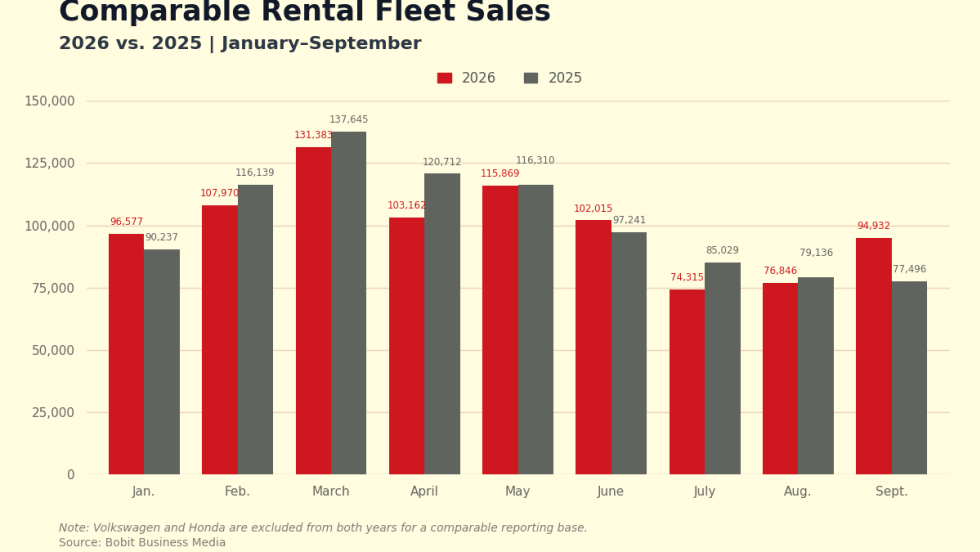
September Rental Fleet Sales Jump 22.5%, Narrowing Year-to-Date Decline
Comparable rental fleet sales remained 1.8% below 2025 through September, as a stronger month cut the year-to-date shortfall by more than half.
Read More →
Rental Vehicle Orders Remain Steady Amid Supply Concerns
With Hyundai’s South Korean strike creating uncertainty for 2027-model-year deliveries, Mike Muehlenfeld of Walser Automotive Group says rental operators are maintaining normal purchasing levels and generating strong returns at disposal.
Read More →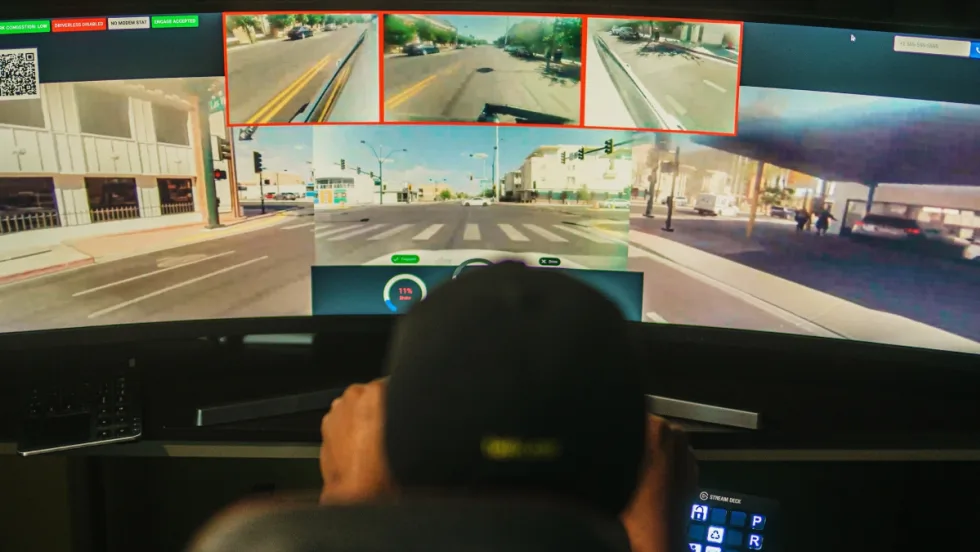
Global Carsharing Fleet Projected to Reach 768,000 Vehicles By 2030
A new Berg Insight forecast outlines several business models driving the projected growth in public carsharing worldwide through 2029.
Read More →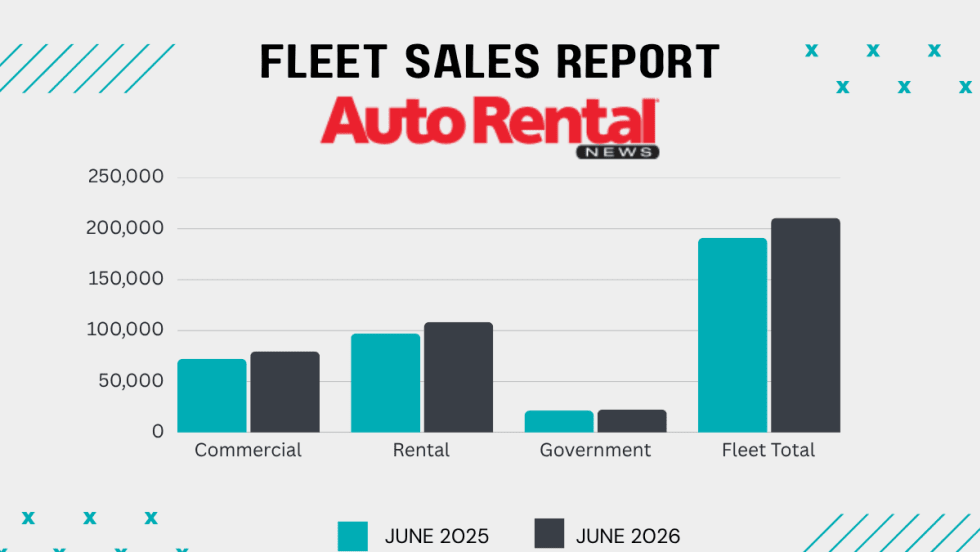
Rental Car Fleet Sales Show Mid-Year Strength
June gains ensured rental fleets closed out the first half of 2026 in positive territory.
Read More →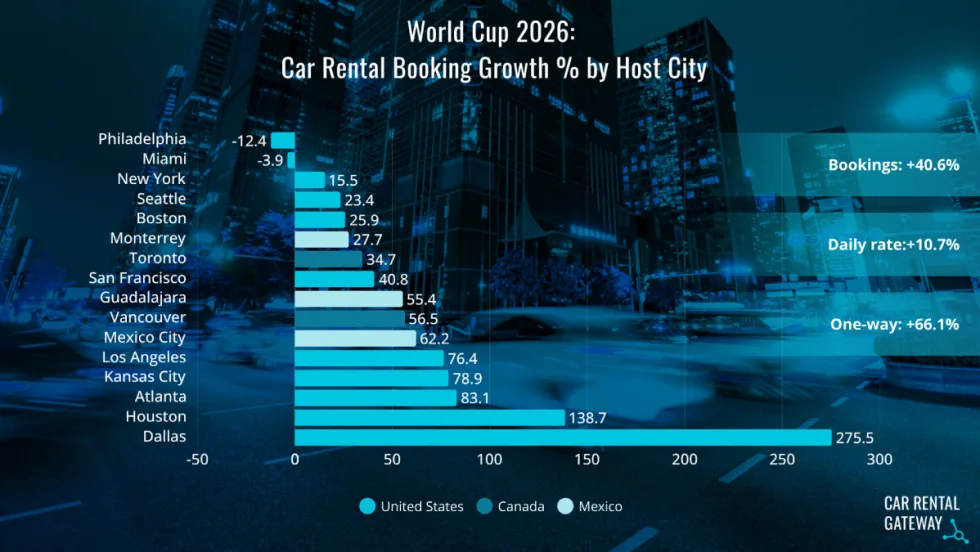
World Cup Travel Data Shows Longer Car Rentals and More One-Ways
A recent analysis of FIFA bookings found varied demand patterns that influenced rental car pricing.
Read More →
A Leveling Force: AI Morphs Into A Rental Car Profit-Seeker
Revenue managers can’t match the emerging AI tools gobbling lots of data that could counter the competitive race to the rate bottom.
Read More →
Rethink The Future To Avert A Race To The Bottom
Rental car operators heard a sobering industry message and a stern challenge at the close of the International Car Rental Show.
Read More →
DriveItAway, Free2move Plan Shared Fleet Program for Independent Rental Fleet Operators
Vehicles would be placed with participating rental operations to support car renter demand and provide additional fleet capacity.
Read More →
Stellantis Recalls 1.3 Million Jeep Vehicles Worldwide Over Fire Risk
Stellantis is recalling more than 1.3 million Jeep Wrangler and Gladiator models worldwide over a fire risk linked to power steering pump wiring.
Read More →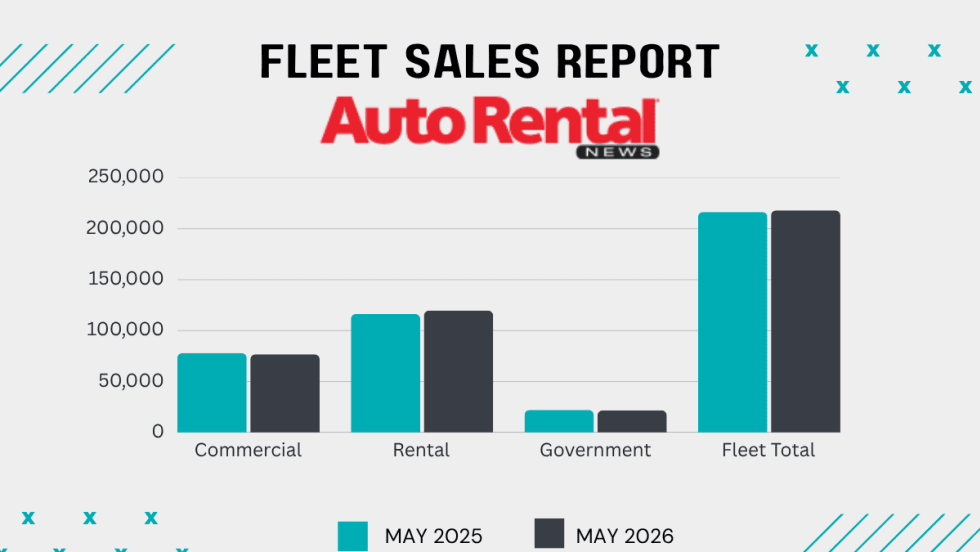
Rental Fleet Sales Skating Just Above 2025 Levels
The U.S. economy's continued growth and positive business investment are creating a favorable environment for fleet vehicle demand.
Read More →