




Further Reading: Four Steps to Reduce Vehicle Downtime
Multiple Parts Shortages Increasing Fleet Downtime
The automotive parts shortage that the industry is experiencing today goes far beyond just the shortage of microchips. Today, there is a wide cross-section of automotive parts that are in short supply varying by type of part and make and model of vehicle.
by Staff
January 5, 2022
There are many reasons for why parts shortages continue to linger, and we can only hope they improve in 2022.
Credit:
Automotive Fleet
5 min to read
- The current automotive industry is facing a widespread parts shortage impacting various components beyond just microchips.
- This shortage affects a diverse range of automotive parts, influencing different types and categories.
- Different vehicle makes and models are experiencing varied levels of part scarcity, exacerbating fleet downtime.
*Summarized by AI
As we all know, there have been ongoing inventory shortages for many automotive parts throughout the 2021 calendar year. The biggest impact has been the microchip shortage, which has led to sporadic, temporary shutdowns of a number of assembly plants instituted by most automotive manufacturers, resulting in lost new-vehicle production industry-wide.
But the automotive parts shortage the industry is experiencing today goes far beyond microchip shortages. Today, a wide cross-section of automotive parts are in short supply, varying by type of part and make and model of vehicle. Today, when a vehicle incurs an unscheduled repair and a part has to be ordered, no one seems to know exactly how long it will take to fix the vehicle. Repair facilities don’t know when back-ordered parts will be received.
The bottom line is that these parts constraints are causing repair jobs to take much longer to complete, thereby lengthening fleet vehicle downtime and increasing fleet costs.
Extended Service Lives
This situation has gotten worse as many of today’s fleet vehicles are being kept in service beyond their scheduled replacement date due to limited availability of new replacement vehicles. These high-mileage fleet vehicles that have been kept in service beyond their scheduled replacement dates are now experiencing the predictable uptick of unscheduled repair incidents. When this occurs, if the needed replacement part is not in inventory or is in short supply, it increases the time to complete the repair, delaying getting the fleet vehicle back on the road to generate revenue.
This is especially true for fleet vehicles that have been involved in an accident. Parts constraints are a major issue at collision repair shops. Today, on average, it is now taking 15-30 days longer to get parts at body shops compared to the pre-COVID period in 2019. The frequency of these delays increases when the replacement component contains embedded microchips, which are in woefully short supply.
In addition to national account vendors, franchised dealers and independent maintenance shops are also impacted by the constrained supply of automotive parts, often having to wait several weeks for shipments, with some parts on back order for as long as two to three months. All of which has resulted in longer repair cycles – measured by the time when a vehicle comes into the repair facility to when it is repaired and picked up by the vehicle owner. Nowadays, vehicles can sit non-productive at service centers for weeks just waiting for an essential part to arrive.
During this inventory shortage, parts prices have gone up 20%-30% on average. One factor driving higher parts prices has been the higher costs of the commodities used to manufacture them, especially if they are made of high-demand commodities, such as copper or steel. Higher commodity prices increase manufacturing costs and reduce parts manufacturers’ margins, putting upward pressure on parts prices. For instance, the prices of copper, aluminum, and steel are currently at elevated levels. These increased costs are being passed on to end-users.
We’ve heard the reasons why there is a shortage in automotive microchips, but no definitive answer as to why there is a general automotive parts shortage. There are a multitude of factors.
Among those cited for the parts shortage are:
- The high demand for some commodities that are being competed for by many different industries, which is lengthening the lead time to get these raw materials, thereby lengthening production time.
- Another reason given is that over the past several decades, there has been a widespread “off-shoring” or outsourcing of the manufacturing of spare parts. Since the COVID pandemic has been impacting different regions around the world at different times, it has disrupted some supply chains differently.
- A large volume of parts manufacturing has been outsourced to Asia. Those parts are typically shipped to the U.S. by container ship. And because there is a global backlog in maritime shipping, imported inventory to the U.S. is also delayed. This is true not only for automotive products, but for most merchandise being shipped to the U.S.
- There is a shortage of chassis trailers to haul shipping containers, which increases lead times. An additional factor is the shortage of drivers in the U.S., which constrains the over-the-road transport of parts from ports to distribution hubs to repair facilities. It seems that at every touch point in the manufacturing and distribution of automotive parts, there is some incremental delay.
- New container ships are being built larger than ever, with the larger mega-ships capable of carrying 24,000 containers. On average, today’s container ships are a third larger than yesteryear, so consequently they are taking about a third longer to unload.
- And there are other short-term impacts that are exacerbating the parts constraints. For instance, some companies are stockpiling automotive parts and/or even hoarding them for use for their customers, unwilling to sell parts to other dealers as they have done in the past.
In conclusion, most trace the start of today’s parts shortages back to the winter of 2020. But it is worth remembering that this isn’t the first time that parts shortages have occurred in the U.S. automotive industry. For instance, in the early years when import vehicle sales were increasing, their spare-parts inventory lagged behind sales growth, causing delays in the repair cycle.
While today’s parts shortage isn’t a new problem, what is new is the higher frequency of shortages that are being encountered, which is making for a more widespread impact on overall repair cycles for nationally dispersed fleets. So how long will this continue? The forecast is that the imbalance between supply and demand of automotive parts will continue deep into CY-2022.
Originally posted on Automotive Fleet
Subscribe to Our Newsletter
More Remarketing
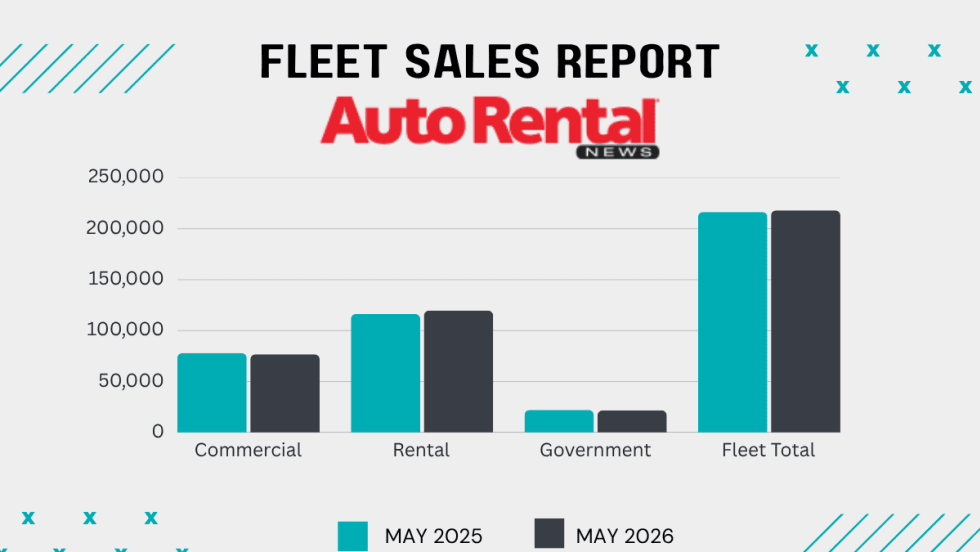
Rental Fleet Sales Skating Just Above 2025 Levels
The U.S. economy's continued growth and positive business investment are creating a favorable environment for fleet vehicle demand.
Read More →
Cross-Pressures, Evolving Trends Drive 2026 Rental Car Industry
A combination of cautious economic behavior, shifts in the rental vehicle market, and technological influences are shaping car rental operator decisions.
Read More →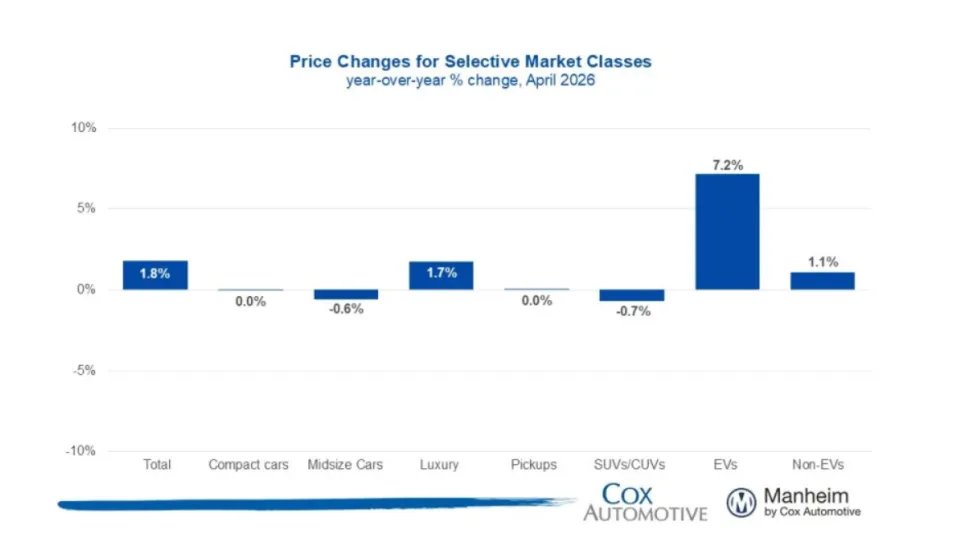
Wholesale Used Vehicle Prices Slightly Up In April
The Iranian conflict and rising gas prices inject much uncertainty into the future wholesale used vehicle markets, as higher gas prices soak up spendable income from vehicle buyers.
Read More →
Surprice Opens Two Rental Branches In Japan
The launch highlights the global car rental operation’s growing presence in Asia.
Read More →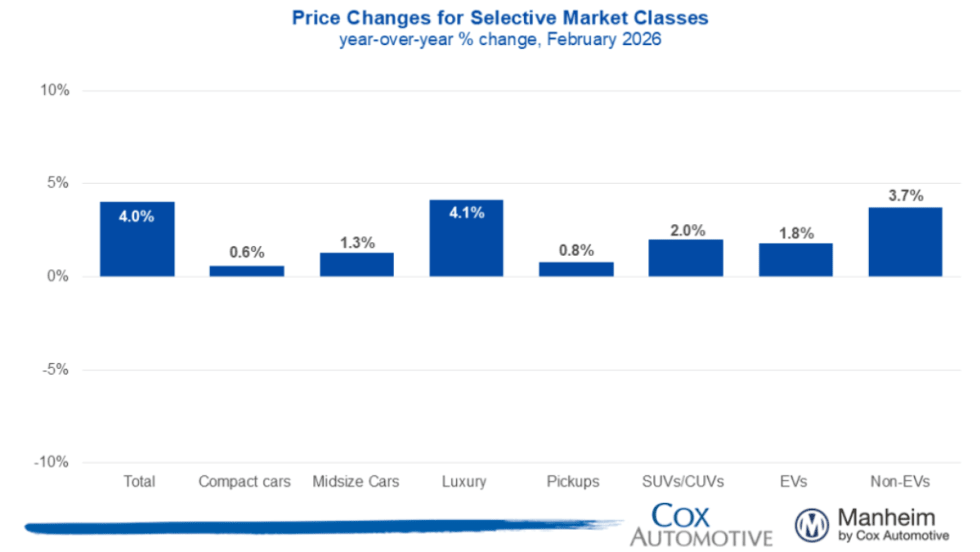
Wholesale Used Vehicle Prices Up In February
Solid demand at Manheim auctions with higher sales conversion rates indicate an appetite from dealers to buy.
Read More →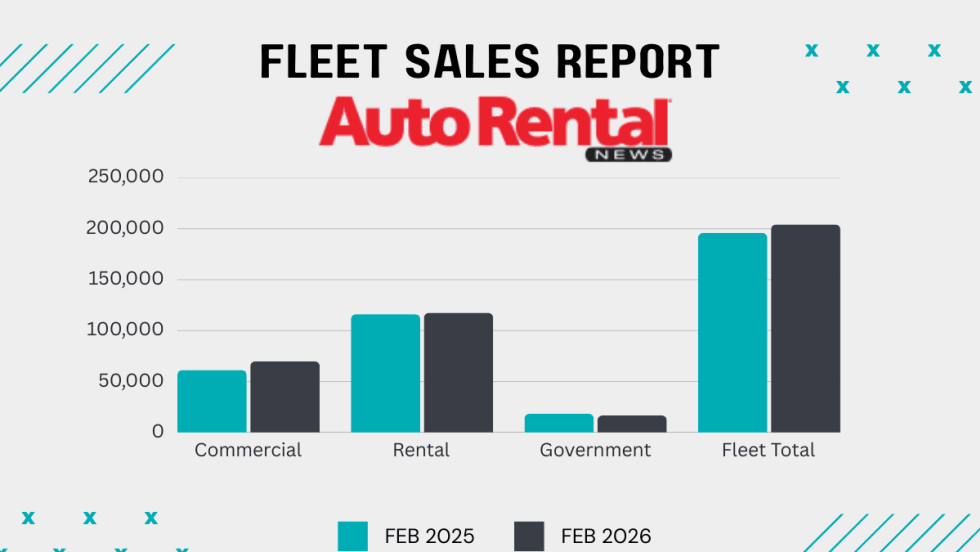
Rental Fleet Sales Slow In February Ending A Strong Streak
Commercial fleets posted the most gains, sustaining increases in monthly and year-to-date fleet sales
Read More →
Avis Budget Group Reports Near $1 Billion Loss Tied To 2025 EV Fleet Write-Down
Following Hertz, the company is the second global car rental conglomerate to sustain sizable losses due to lower customer demand and usage of electric rental cars.
Read More →
2025 Rental Vehicle Remarketing Summary And Outlook
The year brought modest and flatter results across wholesale values, total off-rental supply, and rental risk units.
Read More →
Auctions Record Highest Vehicle Sales Since 2019
2025 figures show a steady recovery in wholesale vehicle activity this decade.
Read More →
DriveItAway Holdings, Free2move Launch Operations In Nine Cities
The co-branded program with Stellantis’ mobility division scales up leasing and financing options nationwide with more cities to come online in 2026.
Read More →