




Questioning the Logic of New-Car Sales Incentives
At this year's Conference of Automotive Remarketing (CAR), Nissan’s Jed Connelly argued that incentives are not only taking a toll on used-vehicle residuals but also compromising R&D for future product.
The vehicle remarketing industry has grappled with the ill-effects of incentive-driven new-car sales since 9/11. So it came as no surprise that subvention was a hot-button topic at this year's Conference of Automotive Remarketing (CAR), held Feb. 16-18 at Mandalay Bay Resort in Las Vegas. But how many consignors in attendance, including car rental operators, anticipated that the conference's harshest criticism of runaway incentives would come from the manufacturer ranks?
In his keynote speech, Jed Connelly, senior vice president of sales and marketing for Nissan North America, argued that excessive incentives cut too deeply into industry profits. Each dollar spent on incentives roughly translates into a dollar lost in profits. As a result, he said, manufacturers are left with fewer resources for research and development of new technologies, including those to improve fuel efficiency and safety.
"We as an industry have to take a long, hard look at what else we're giving away besides pockets full of cash and billions in residual value. I think we're giving away our future," Connelly told conference attendees.
In 2004, new-vehicle marketers sold 16.9 million units, Connelly said. If the industry averaged a $3,000-per-vehicle incentive last year, that translates to nearly $51 billion off the bottom line. And that's money that didn't become available for future R&D.
Compared to many competitors, Nissan last year showed restraint in offering incentives, Connelly said, with the average incentive level at about $1,900. In spite of this, Nissan increased sales 26% compared to 2003, while Infiniti increased sales 10% over the previous year. At the same time, residuals on some of the most popular models rose dramatically.
But even with incentives much less than the industry average, "we're still spending way more than we had planned and way more than we would like to spend," Connelly said. The overall industry's reliance on cash rebates, low-interest loans and longer loan terms doesn't leave Nissan with much choice if the company wishes to remain competitive, he said. [PAGEBREAK]
"As long as the manufacturers continue playing the zero-zero game, as long as they're willing to devalue their big SUVs and trucks by $6,000 a pop, as long as they continue to sell the deal instead of the sheet metal, we're forced to go along for the ride," Connelly said.
When the industry relies on incentives to move inventory, Connelly argued, the strategy also cannibalizes future sales. Longer loan terms take buyers out of the market for longer periods of time.
"Most people fall out of love with their vehicle in two to three years, or they see something new that's a little more attractive," Connelly said. "That's when we'd like to have them back into the showroom."
Moreover, heavy incentives can sometimes attract unqualified buyers. Connelly cited an Edmonds.com estimate that 27% of new-vehicle buyers were upside-down on their loans in 2004.
And as car rental operators are well aware, new-car incentives can take a major toll on residual values of used cars. Some remarketing analysts have estimated that a $1,000 rebate on a new model deflates the price of a year-old version of that same model roughly dollar for dollar, Connelly said.
What manufacturers should be focusing on, Connelly said, is developing product for the upcoming generation of drivers: the so-called Millennials. Members of this generation have grown up with the Internet and instant messaging, TiVo, iPods and cell phones. Their expectations for technology will far exceed those of previous generations.
"We need a healthy, growing, innovative and technology-driven industry -— one that puts product development at the forefront," Connelly said. "And one that understands that great products drive profitability, and profitability continues to drive development of great products."
The conference's second-day keynote speaker, Manheim President and CEO Dean Eisner, also stressed the need to adapt to changes in the marketplace. For the remarketing industry, he said, this will require reassessing and improving industry processes, including all the elements that create the sale package –— transportation, marshaling, inspection, financing and arbitration. Eisner also called for vehicle condition report/inspection standards, further development of remarketing technology, better employee training, and more discriminate use of benchmarking.
In his presentation, Tom Kontos, vice president of industry relations for ADESA, pointed out that both rental and commercial fleets are expected to supply steady volumes of used vehicles in the coming years.
Off-lease volumes returning for wholesale remarketing in the U.S. dropped from an estimated 1.9 million units in 2003 to 1.4 million units in 2004. This decline, however, was offset by dealer consignment volumes, Kontos said.
Based on recent gains in the lease penetration rate (up to 23% penetration in early February), Kontos projected a modest recovery in off-lease volumes beginning in 2008. Overall used-car supply volumes are expected to grow 2% per year between 2004 and 2009.
Kontos underscored the growth of online auctions, including "hybrid sales," which accept both on-site and online bidding. ADESA estimated that 500,000 to 750,000 units sold online in 2004. Vehicles can be posted either on a buy-now basis with a fixed price, or on a bid-now basis with competitive bidding. ADESA's own LiveBlock is an example of this approach.
During a panel discussion on future vehicle residual values, Rene Abdalah, vice president of the RVI Group, called 2004 "definitely a positive year in terms of supply." Because of a 3.3% drop, used-car prices held up better in comparison to 2003.
"In 2005, we expect the trend to continue but with a slightly lower drop in supply -— around a 1% drop in 2005," Abdalah said. Again, the conversation turned to the domino effect of new-car incentives.
In 2004, subvention per unit averaged nearly $3,500 -- an all-time high, said Scott Lilja, COO of the National Automobile Dealers Association. "Almost 90% of new-vehicle sales had some form of subvention -— low-rate financing, cash rebate, extended terms, etc.," Lilja said. [PAGEBREAK]
The trend continued into January, Lilja said, although the Big Three pulled back somewhat. In January 2005, compared to the same month in 2004, Toyota's subvention was up 14%, Honda's 25% and Nissan's 17%, Lilja said.
Another factor likely to fuel incentives is the record number of new model introductions -— more than 50 -— planned for 2005, Lilja said. There will be tremendous pressure to hit sales quotas, and Asian manufacturers are focused on increasing market share.
Lilja also pointed out that some manufacturers are developing more creative sales incentives to entice consumers in the showroom. For example, Ford is offering a free Dell computer to Focus buyers.
Jesse Toprak, director of pricing and market analysis for Edmunds.com, predicted that rising interest rates will promote gradual gains in used-car residual values. "Interest rates will continue their steady climb in 2005," Toprak said. "We expect the federal funds rate to be around 3.5% by the end of '05."
As interest rates continue to rise, this should lead to the beginning of an upswing in vehicle residuals that will continue for several years, Toprak said. "But this will be a very slow and steady increase," he added. A federal funds rate of 3.5% is still relatively low.
"We think that the rising interest rates will have a more dramatic impact on residuals after 2005, provided that the federal funds rate keeps going over 3.5% in 2006," Toprak said.
Toprak also predicted that higher interest rates will prompt finance institutions to impose tighter lending policies. Loan terms will most likely shorten. For example, instead of offering a consumer 0% financing for 60 months, a new-car dealer may offer 0.9% for 48 months.
"There is no doubt that 0% financing will continue to lose its luster and [manufacturers] will find more creative and inventive incentives, which are needed to help bolster residual values," Toprak said.
More consumers will opt for leasing, and demand for certified, pre-owned vehicles will rise, Toprak projected.
Higher fuel prices are expected to boost demand and residuals for popular midsize cars, while diminishing demand and residuals for full-size SUVs, the panelists said.
"Dealers are scrambling to try to find clean, low-mileage certified [midsize] product in the auctions and through the upstream channels, and that's only going to continue," Lilja said.
The 10th annual Conference of Automotive Remarketing was produced by Bobit Business Media, which also owns Auto Rental News and co-produces the Car Rental Show.
More Remarketing
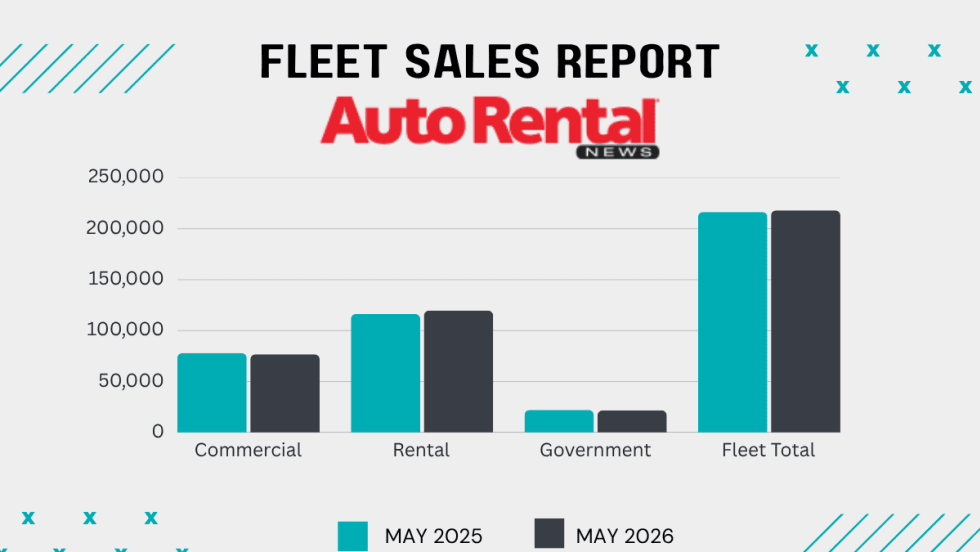
Rental Fleet Sales Skating Just Above 2025 Levels
The U.S. economy's continued growth and positive business investment are creating a favorable environment for fleet vehicle demand.
Read More →
Cross-Pressures, Evolving Trends Drive 2026 Rental Car Industry
A combination of cautious economic behavior, shifts in the rental vehicle market, and technological influences are shaping car rental operator decisions.
Read More →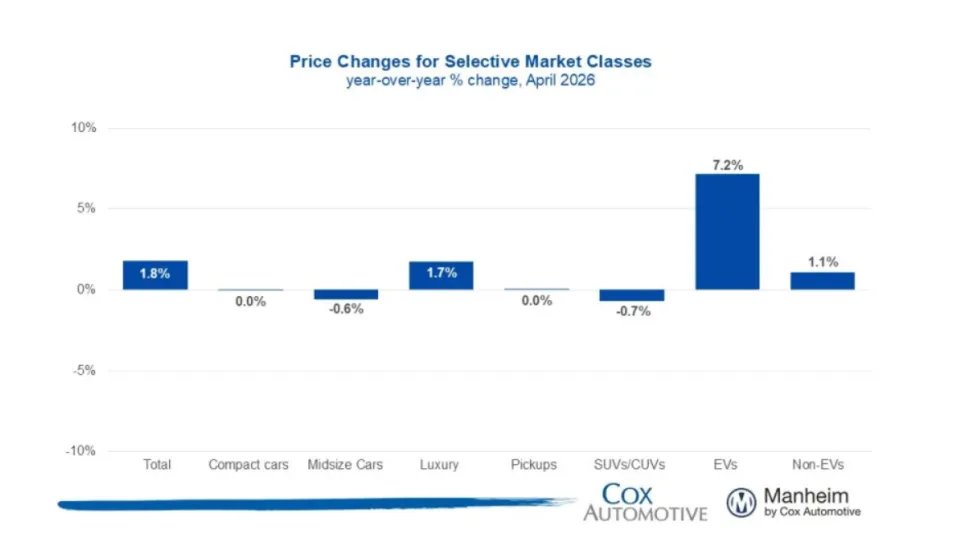
Wholesale Used Vehicle Prices Slightly Up In April
The Iranian conflict and rising gas prices inject much uncertainty into the future wholesale used vehicle markets, as higher gas prices soak up spendable income from vehicle buyers.
Read More →
Surprice Opens Two Rental Branches In Japan
The launch highlights the global car rental operation’s growing presence in Asia.
Read More →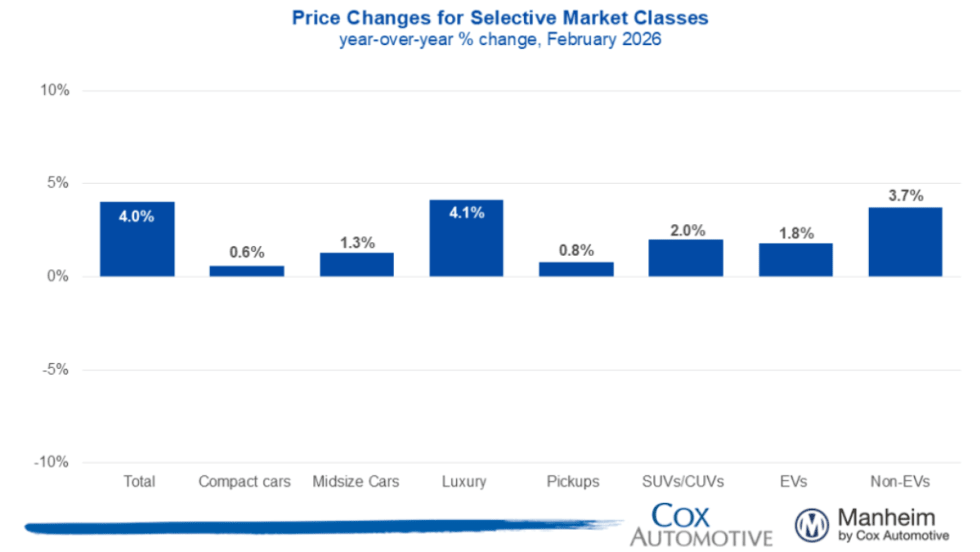
Wholesale Used Vehicle Prices Up In February
Solid demand at Manheim auctions with higher sales conversion rates indicate an appetite from dealers to buy.
Read More →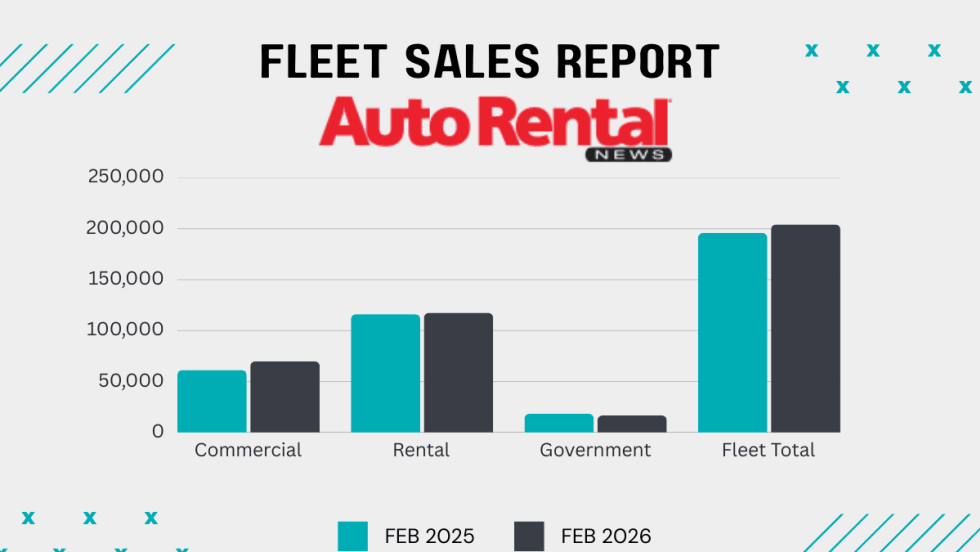
Rental Fleet Sales Slow In February Ending A Strong Streak
Commercial fleets posted the most gains, sustaining increases in monthly and year-to-date fleet sales
Read More →
Avis Budget Group Reports Near $1 Billion Loss Tied To 2025 EV Fleet Write-Down
Following Hertz, the company is the second global car rental conglomerate to sustain sizable losses due to lower customer demand and usage of electric rental cars.
Read More →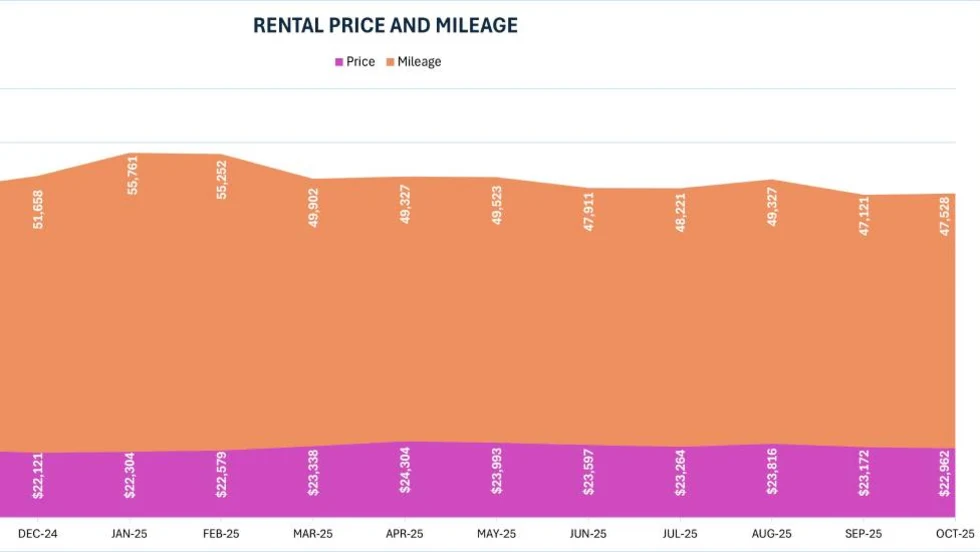
2025 Rental Vehicle Remarketing Summary And Outlook
The year brought modest and flatter results across wholesale values, total off-rental supply, and rental risk units.
Read More →
Auctions Record Highest Vehicle Sales Since 2019
2025 figures show a steady recovery in wholesale vehicle activity this decade.
Read More →
DriveItAway Holdings, Free2move Launch Operations In Nine Cities
The co-branded program with Stellantis’ mobility division scales up leasing and financing options nationwide with more cities to come online in 2026.
Read More →