




Car Rental Firm Won't Charge Parents After Sons Killed in Ice Collapse
After provoking an angry reaction from local police and a victim support group, a New Zealand car rental firm has decided not to bill the parents.
A New Zealand car rental company who originally wanted the parents of two men killed in an ice collapse to pay for transporting the rental car backed down on threats, according to the Herald Sun.
Even though the keys were buried with the dead sons under 100 tons of ice, rental car company NZRCS was determined to get its money back. However, after the NZRCS director Edwin Chan received negative feedback from the prime minister and local police and a victim support group, Chan conceded.
Ronnie and Winnie Miranda’s sons Ashish, 24, and Akshay, 22, died Jan. 8.
Chan said the company had to recoup about $800 for the car to be transported, and hundreds of dollars for a new transponder key to electronically unlock the car.
“Nobody will do it for free,” said Chan. “It’s always unfortunate. We feel for them. If there are things that are going to cost the company, we have no choice but to recover the costs. They should ... travel with insurance. It’s not up to us as a company to pay for the costs.”
Chan also questioned why Akshay Miranda had the rental car keys in his pocket when he was not permitted to drive the vehicle, saying the keys should be in the parents’ pockets.
The tragedy occurred when the two men crossed safety barriers to get a closer look at the Fox Glacier, which draws hundreds of thousands of visitors each year. Ashish’s body has been recovered, but the dangerous conditions mean the prospects of finding Akshay soon are slim.
More Rental Operations

ICRS 2027 Opens Call for Papers
The International Car Rental Show seeks session proposals on the business, operational, and technology issues facing car rental operators. Submissions are due Jan. 15.
Read More →
Turo to Launch Vehicle Delivery Service
Turo Delivered will let travelers search for vehicles that hosts can deliver directly to hotels, homes, airports, train stations, and other locations.
Read More →
Palm Beach Airport Code Change Creates Car Rental Distribution Gap
A test of rental searches under the old PBI and new DJT airport codes returned largely different sets of brands and vehicles, highlighting a potential distribution problem for rental operators.
Read More →
U-Save Continues Dominican Republic Expansion with Launch in Punta Cana
The new franchise location builds on U-Save’s existing Santo Domingo operation and will begin taking reservations for October 2026.
Read More →
When AI Books the Rental Car, Who Controls the Sale?
As AI moves from comparing rental rates to completing transactions, operators need to understand how travelers find, interpret, rank, and ultimately see their offers. (Part 2 of 2.)
Read More →
European Booked Car Rental Rates Fell 5%, Results Varied by Country
Ireland, Cyprus, and the United Kingdom saw steep declines, while booked rates rose in Poland and Hungary.
Read More →
Is It Time to Rethink Rental Categories?
As traditional economy and compact cars disappear from the market, longtime rental operator Mike DeLorenzo asks whether the industry’s familiar vehicle categories still make sense — and what operators need to rethink along with them.
Read More →
Who Owns the Rate? AI Is Creating a New Distribution Problem for Car Rental
Generative Engine Optimization asks whether AI can find a rental company, but operators also need to know whether the agent inspected enough of the market, compared equivalent offers, and presented a rate the traveler can actually book. (Part 1 of 2)
Read More →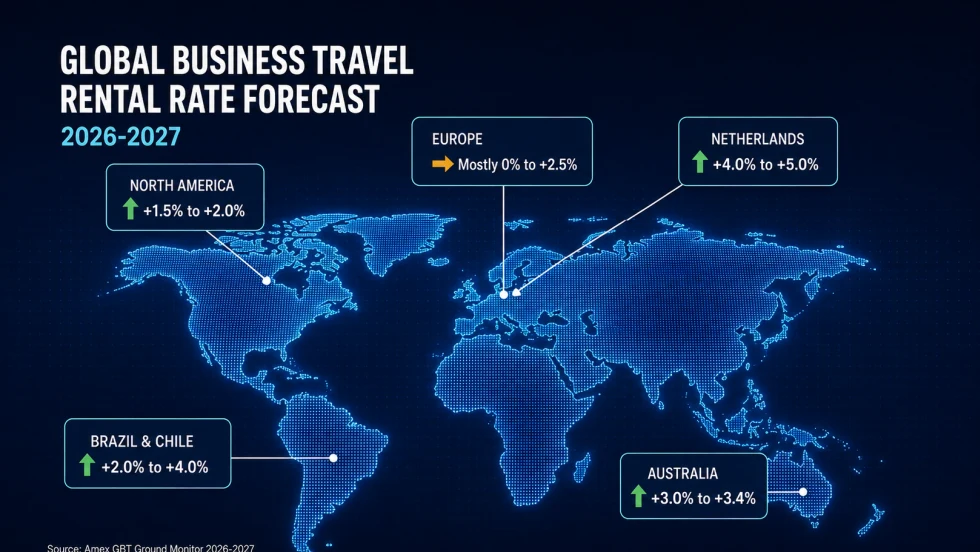
U.S. Business Travel Car Rental Rates Forecast to Rise Up to 2%
Improved fleet supply should limit pricing gains in 2026-27, while insurance, repair costs, and softer residual values continue to pressure rental operations, according to Amex GBT.
Read More →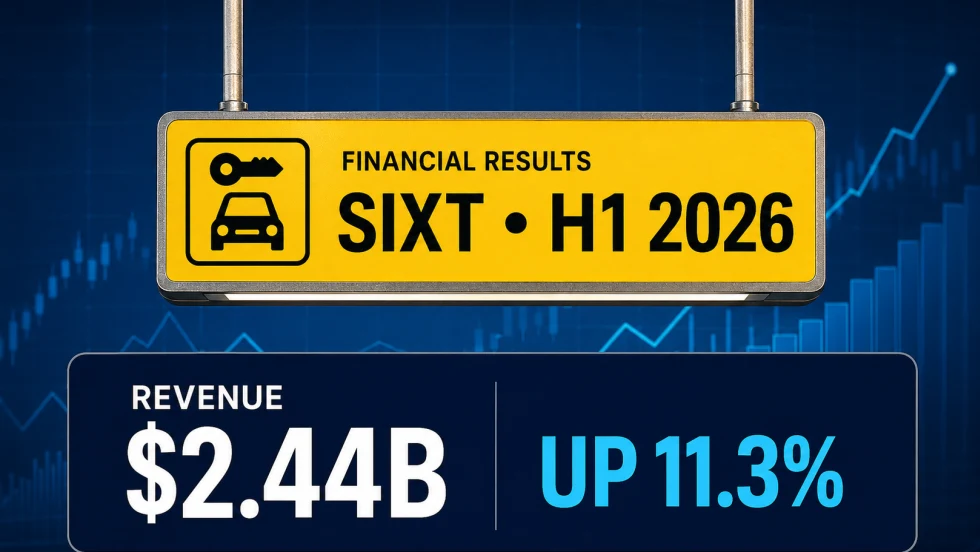
Sixt Revenue Tops $2.4 Billion in First Half of 2026
Sixt’s first-half revenue surpassed $2.4 billion for the first time as demand outpaced fleet growth, lifting utilization and earnings despite weaker consumer sentiment in North America.
Read More →