




Commercial Fleet Sales Rise in February
Commercial fleet sales from nine manufacturers totaled 65,848 in February 2020, representing an 8.7% year-over-year increase.

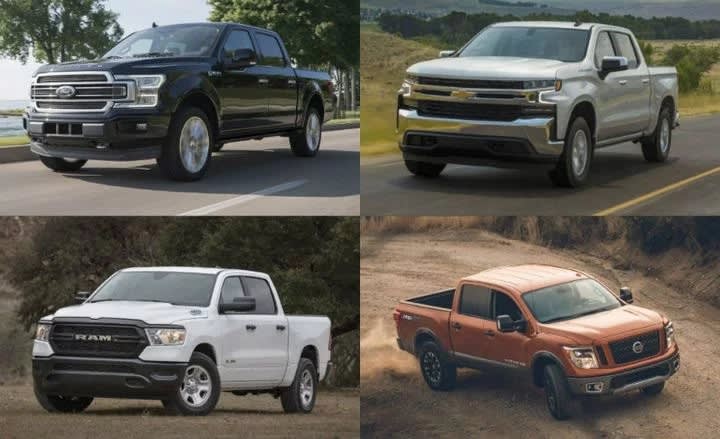
Commercial sedan sales were down 4.5% year-over-year during February at 6,616 units, while truck segment vehicle sales were up 10.4% at 59,232, according to Automotive Fleet data.
Photos courtesy of Ford, GM, FCA, and Nissan.
Commercial fleet sales from nine manufacturers totaled 65,848 in February 2020, representing an 8.7% year-over-year increase.
Total fleet sales for the month — which is comprised of commercial, rental, and government sales — came in at 278,561, which was 2.7% more than in the same time last year.
Commercial car sales were down 4.5% year-over-year during February at 6,616 units, while truck segment vehicle sales were up 10.4% at 59,232, according to Automotive Fleet data.
The rental fleet segment saw a similar trend of declining sedan sales and rising truck segment sales, however, due to the larger share of the rental fleet market that sedans account for, the gains in truck segment vehicle sales were not enough to offset the decline in sedan sales.
Through February 2020, rental fleet car sales fell 10.7%, totaling 61,357 units. Truck segment sales increased 4.1% at 128,374 units. Combined, rental fleet sales totaled 189,731, which represented a 1.2% year-over-year decline.
The government fleet sector again saw the same trend, lower car sales and higher truck segment sales, but in this case truck segment sales were able to offset the car sales decline.
In total, 2,725 cars were sold to government fleets, 14.5% less than last year; 20,257 truck segment vehicles were sold, 32.2% more than last year. Combined, truck and car vehicle sales amounted to 22,982 units, which was 24.2% more than last year.
Year-to-date, as of the end of February 2020, overall fleet sales from nine manufacturers total 484,487, 0.8% less on a year-over-year basis. Double digit losses in car segment sales are a large part of that decline. So far car sales are down 17.7% year-to-date and truck segment sales are up 6.2% year-to-date.
Originally posted on Automotive Fleet
More Fleet Acquisition
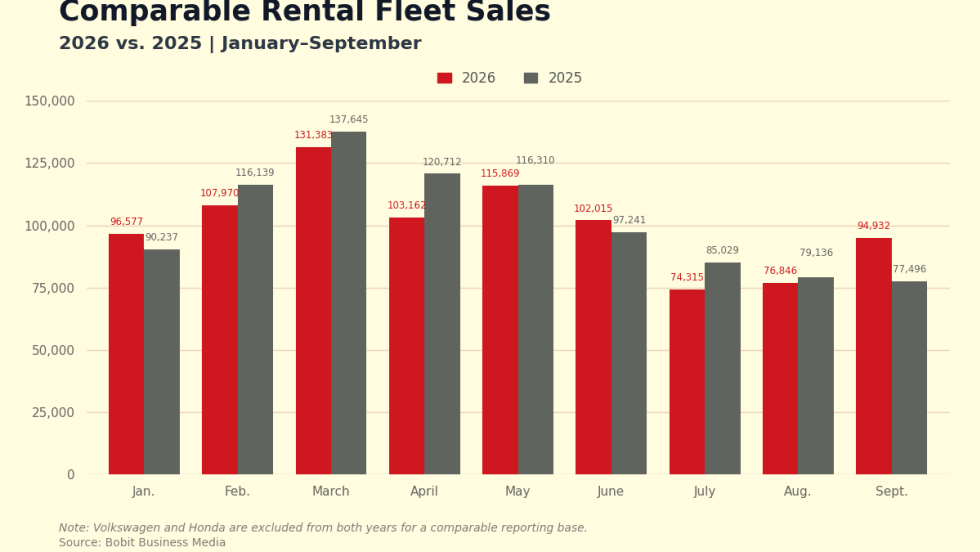
September Rental Fleet Sales Jump 22.5%, Narrowing Year-to-Date Decline
Comparable rental fleet sales remained 1.8% below 2025 through September, as a stronger month cut the year-to-date shortfall by more than half.
Read More →
Rental Vehicle Orders Remain Steady Amid Supply Concerns
With Hyundai’s South Korean strike creating uncertainty for 2027-model-year deliveries, Mike Muehlenfeld of Walser Automotive Group says rental operators are maintaining normal purchasing levels and generating strong returns at disposal.
Read More →
Global Carsharing Fleet Projected to Reach 768,000 Vehicles By 2030
A new Berg Insight forecast outlines several business models driving the projected growth in public carsharing worldwide through 2029.
Read More →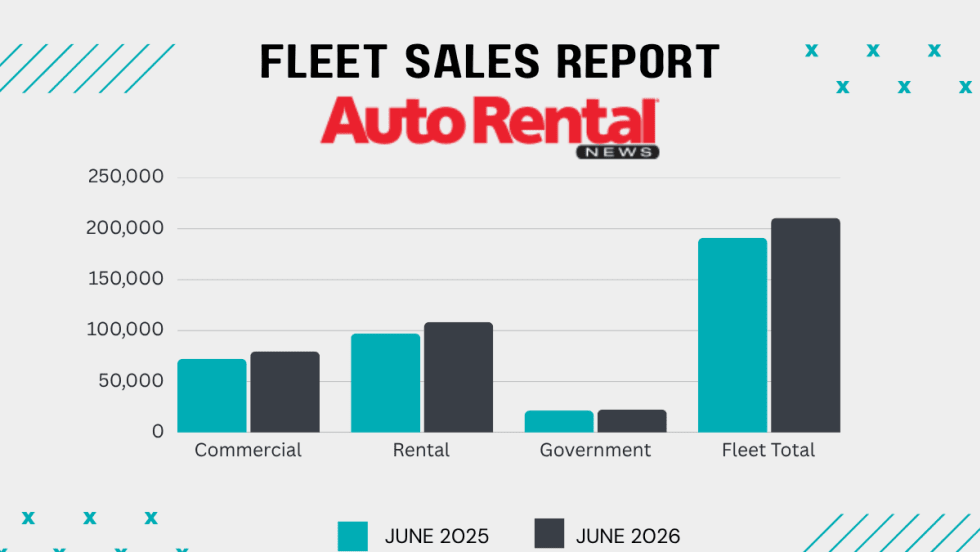
Rental Car Fleet Sales Show Mid-Year Strength
June gains ensured rental fleets closed out the first half of 2026 in positive territory.
Read More →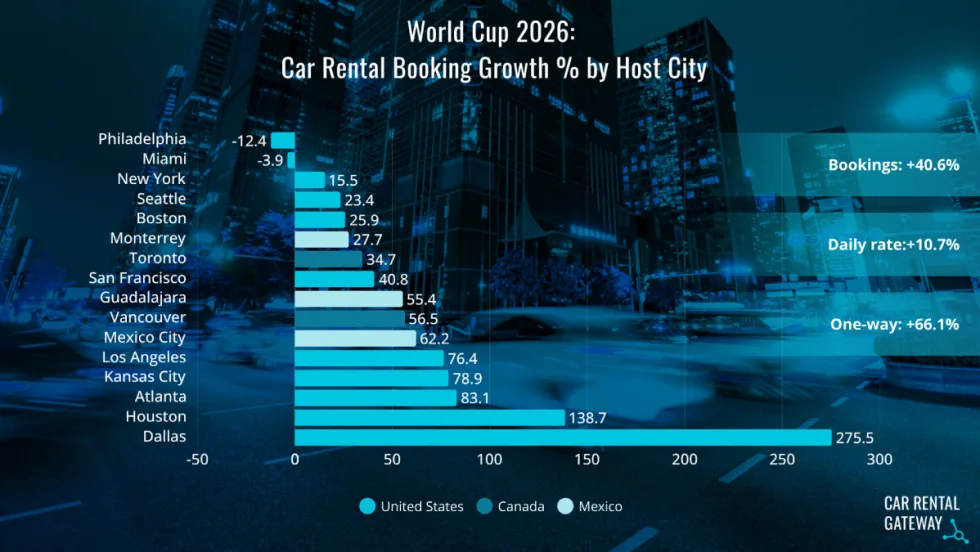
World Cup Travel Data Shows Longer Car Rentals and More One-Ways
A recent analysis of FIFA bookings found varied demand patterns that influenced rental car pricing.
Read More →
A Leveling Force: AI Morphs Into A Rental Car Profit-Seeker
Revenue managers can’t match the emerging AI tools gobbling lots of data that could counter the competitive race to the rate bottom.
Read More →
Rethink The Future To Avert A Race To The Bottom
Rental car operators heard a sobering industry message and a stern challenge at the close of the International Car Rental Show.
Read More →
DriveItAway, Free2move Plan Shared Fleet Program for Independent Rental Fleet Operators
Vehicles would be placed with participating rental operations to support car renter demand and provide additional fleet capacity.
Read More →
Stellantis Recalls 1.3 Million Jeep Vehicles Worldwide Over Fire Risk
Stellantis is recalling more than 1.3 million Jeep Wrangler and Gladiator models worldwide over a fire risk linked to power steering pump wiring.
Read More →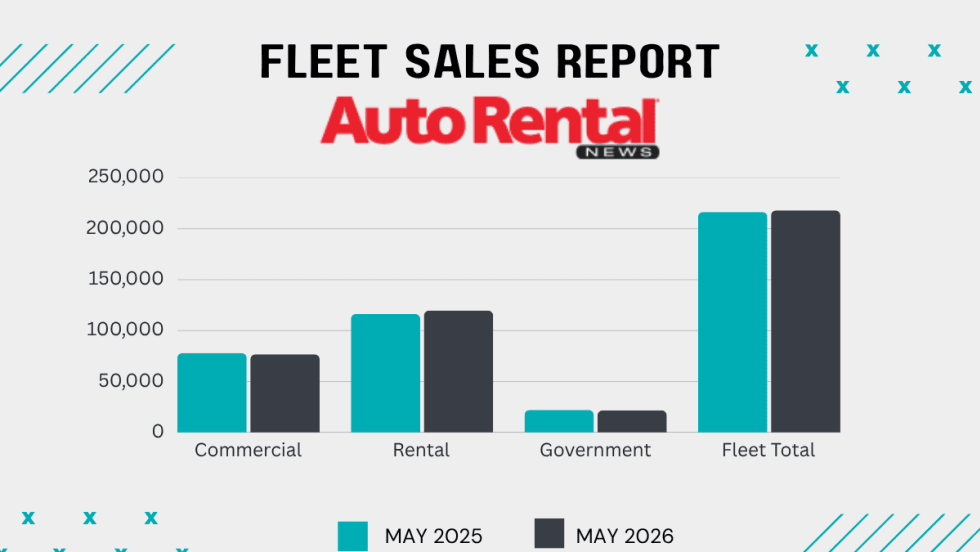
Rental Fleet Sales Skating Just Above 2025 Levels
The U.S. economy's continued growth and positive business investment are creating a favorable environment for fleet vehicle demand.
Read More →