


Edmunds: Ford Expected to Keep its Customers if Mercury Brand is Discontinued
Edmunds.com's cross-shopping analysis indicates that 46 percent of Mercury shoppers currently consider Ford vehicles, and that Chevrolet and Honda are also popular alternatives.
If Ford discontinues the Mercury brand, the automaker is likely to keep most of its customers, according to Edmunds.com.
Edmunds.com's cross-shopping analysis indicates that 46 percent of Mercury shoppers currently consider Ford vehicles, and that Chevrolet and Honda are also popular alternatives.
"Shutting down Mercury eliminates a distraction. Mercury is a brand that has lost its meaning in the American automotive marketplace and it isn't worth trying to change that," stated Edmunds.com CEO Jeremy Anwyl.
Bloomberg first reported that Ford will announce the discontinuation of the Mercury brand.
Mercury currently represents 5.6 percent of total Ford Motor Company sales. In April, the brand's True Cost of Incentives was approximately $3,326 per vehicle sold, compared with $3,172 for the Ford brand.
"For years Ford executives have been asked why they keep Mercury, but they had been adamant about keeping the brand for reasons that are unclear and now, apparently, dismissible," stated Edmunds.com Senior Analyst Michelle Krebs in her report for AutoObserver.com. "Clearly, it is more cost-effective to focus precious marketing dollars on fewer brands. Seemingly in preparation for this announcement, Ford had significantly cut back on Mercury marketing money of late."
"Like Plymouth and Oldsmobile, Mercury is a victim of both increased competition from outside its corporate parent and a lack of differentiation from within. Mercury products have been nothing more than modestly restyled Fords for decades, and that's not how you build or maintain a brand," commented Edmunds.com Senior Analyst Karl Brauer.
"Mercury was launched in the 1930s, when Henry Ford's son Edsel saw an opportunity to create an additional brand within the Ford hierarchy between the everyman Ford Deluxes and premium Lincoln Zephyrs," recalled Edmunds' InsideLine.com Editor Scott Oldham. "In the '50s, Mercury vehicles were renowned for style, performance and cutting-edge technology. A dash of glamour was added to the automaker's image when James Dean appeared onscreen in a Mercury car in the film Rebel Without A Cause."
A detailed history of Mercury can be found at http://www.edmunds.com/mercury/history.html.
More Rental Operations

Palm Beach Airport Code Change Creates Car Rental Distribution Gap
A test of rental searches under the old PBI and new DJT airport codes returned largely different sets of brands and vehicles, highlighting a potential distribution problem for rental operators.
Read More →
U-Save Continues Dominican Republic Expansion with Launch in Punta Cana
The new franchise location builds on U-Save’s existing Santo Domingo operation and will begin taking reservations for October 2026.
Read More →
When AI Books the Rental Car, Who Controls the Sale?
As AI moves from comparing rental rates to completing transactions, operators need to understand how travelers find, interpret, rank, and ultimately see their offers. (Part 2 of 2.)
Read More →
European Booked Car Rental Rates Fell 5%, Results Varied by Country
Ireland, Cyprus, and the United Kingdom saw steep declines, while booked rates rose in Poland and Hungary.
Read More →
Is It Time to Rethink Rental Categories?
As traditional economy and compact cars disappear from the market, longtime rental operator Mike DeLorenzo asks whether the industry’s familiar vehicle categories still make sense — and what operators need to rethink along with them.
Read More →
Who Owns the Rate? AI Is Creating a New Distribution Problem for Car Rental
Generative Engine Optimization asks whether AI can find a rental company, but operators also need to know whether the agent inspected enough of the market, compared equivalent offers, and presented a rate the traveler can actually book. (Part 1 of 2)
Read More →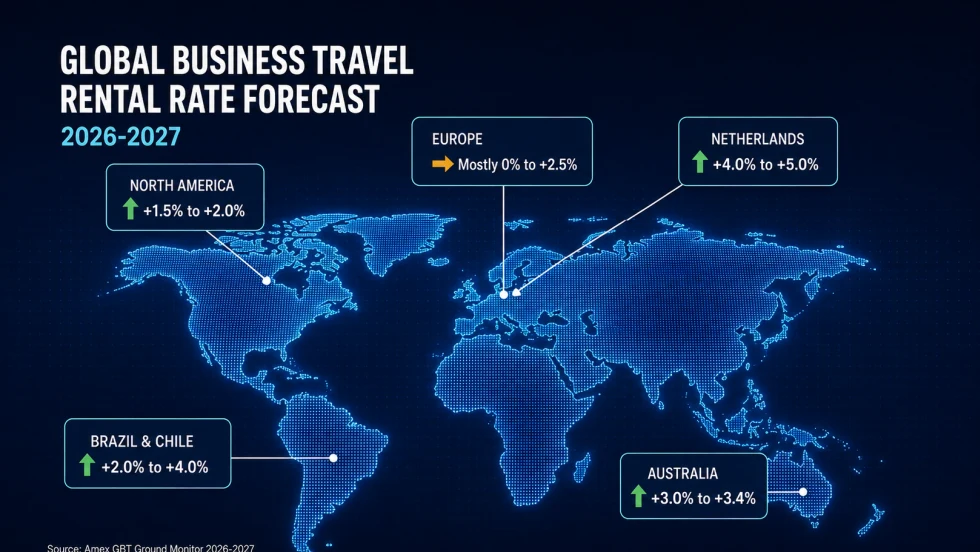
U.S. Business Travel Car Rental Rates Forecast to Rise Up to 2%
Improved fleet supply should limit pricing gains in 2026-27, while insurance, repair costs, and softer residual values continue to pressure rental operations, according to Amex GBT.
Read More →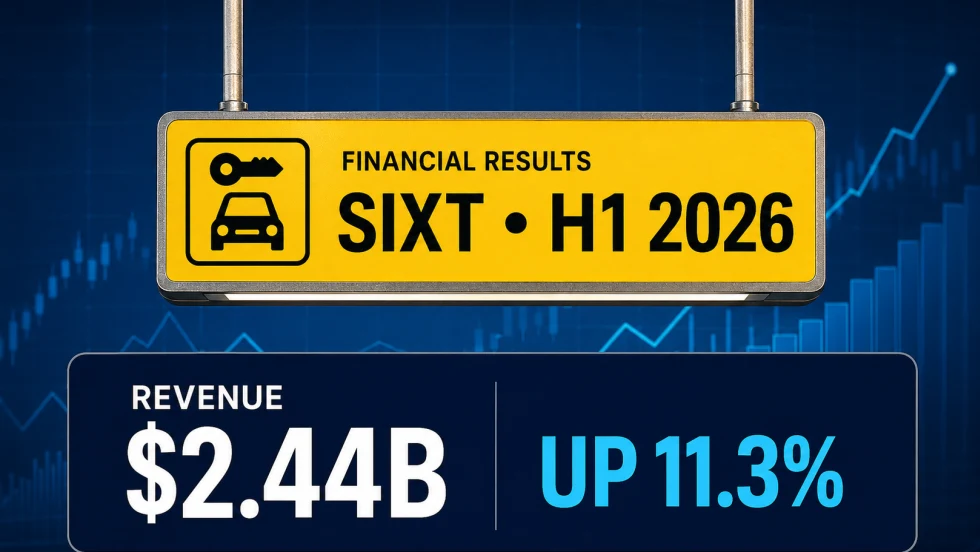
Sixt Revenue Tops $2.4 Billion in First Half of 2026
Sixt’s first-half revenue surpassed $2.4 billion for the first time as demand outpaced fleet growth, lifting utilization and earnings despite weaker consumer sentiment in North America.
Read More →
In Memoriam: Bobby Klyce, Avis Licensee Legend
The longtime Birmingham Avis operator and 2018 Auto Rental News Impact Award recipient was remembered as an advocate for independent licensees and the broader car rental industry.
Read More →
How to Build Custom Fleet Tools With AI and Vibe Coding [Webinar]
A new Automotive Fleet webinar explores how fleet managers are using AI and vibe coding to automate routine work and create simple operational tools without traditional programming skills.
Read More →