





Related: Enterprise CarShare Launches at University of Delaware
Enterprise Relaunches Rideshare Service
Enterprise's commuting programs typically consist of four to 15 coworkers who meet at a central location to board a newer van or SUV — sometimes equipped with Wi-Fi, GPS, and satellite radio — and travel to and from work together.
April 11, 2019
Commute with Enterprise also provides 24-hour roadside assistance, insurance, and scheduled maintenance.
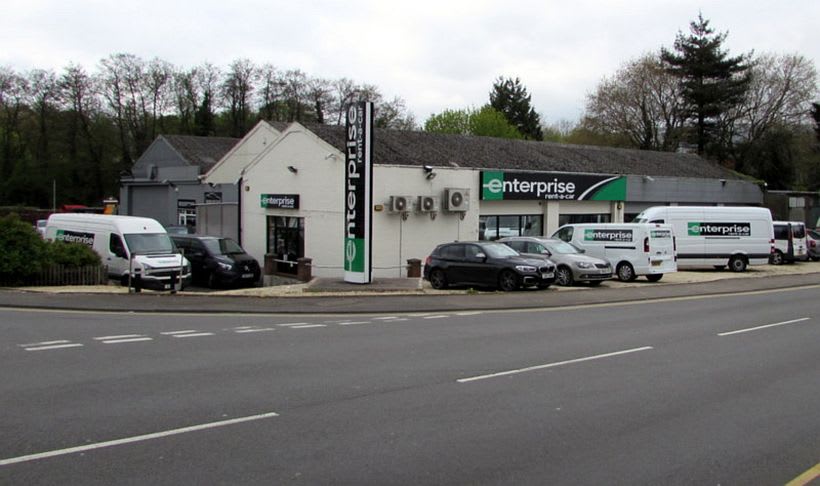
Photo via Jaggery/Geograph.
2 min to read
Enterprise Holdings recently launched Commute with Enterprise — an enhanced service of the Enterprise Rent-A-Car brand that offers a sustainable, comprehensive, and cost-effective local transportation option.
This new name for the company’s vanpooling service (formerly known as Enterprise Rideshare) reflects its longtime mission: creating solutions that not only immediately lower transportation costs for commuters, but also reduce businesses’ environmental impact and improve their corporate sustainability profiles.
Enterprise’s commuting programs typically consist of four to 15 coworkers who meet at a central location to board a newer van or SUV — sometimes equipped with Wi-Fi, GPS, and satellite radio — and travel to and from work together.
Commute with Enterprise also provides 24-hour roadside assistance, insurance, and scheduled maintenance.
Reducing the Cost of Commuting
Enterprise says it can help individuals save thousands of dollars every year by reducing ongoing costs such as gas, tolls, and vehicle depreciation.
A recent analysis of U.S. Census data from Bloomberg showed that employees in the Washington, D.C., metro area have the longest commutes, with a daily average of more than 73 minutes traveling to and from work. Close behind are New York City commuters, who spend 70 minutes, while workers in Atlanta, Dallas and Chicago all log roughly an hour of commuting time each day.
Bloomberg’s report also indicates that commuters in the nation’s capital pay the most to get to work. Seven out of the 10 U.S. counties with the most expensive commutes surround Washington, D.C.
Vanpooling programs address both local and national needs by reducing carbon emissions, parking real estate and traffic congestion. Commute with Enterprise operates 11,100 vanpools in 45 states, eliminating 1.4 billion commuter miles each year and taking nearly 65,000 cars off the road as well as off parking lots. The program also collectively reduces more than 1.1 billion pounds of carbon emissions annually.
According to U.S. Department of Transportation data, commuter vanpools also are the safest mode of public transportation when compared to motor bus, light rail, heavy rail, commuter rail, and other demand response services.
More Rental Operations

The $100,000 Insurance Trap in Exotic Car Rentals
Exotic rental agencies often rely on customers’ personal auto policies to protect six-figure vehicles. But policy language can dramatically change the coverage for vehicles over $100,000 MSRP.
Read More →
The Booking Is Confirmed, But Is Your Customer Ready to Drive?
For international renters, a confirmed reservation doesn’t always mean they’re eligible to drive. Earlier checks can help operators catch documentation and payment issues before the customer reaches the counter.
Read More →
ICRS 2027 Opens Call for Papers
The International Car Rental Show seeks session proposals on the business, operational, and technology issues facing car rental operators. Submissions are due Jan. 15.
Read More →
Turo to Launch Vehicle Delivery Service
Turo Delivered will let travelers search for vehicles that hosts can deliver directly to hotels, homes, airports, train stations, and other locations.
Read More →
Palm Beach Airport Code Change Creates Car Rental Distribution Gap
A test of rental searches under the old PBI and new DJT airport codes returned largely different sets of brands and vehicles, highlighting a potential distribution problem for rental operators.
Read More →
U-Save Continues Dominican Republic Expansion with Launch in Punta Cana
The new franchise location builds on U-Save’s existing Santo Domingo operation and will begin taking reservations for October 2026.
Read More →
When AI Books the Rental Car, Who Controls the Sale?
As AI moves from comparing rental rates to completing transactions, operators need to understand how travelers find, interpret, rank, and ultimately see their offers. (Part 2 of 2.)
Read More →
European Booked Car Rental Rates Fell 5%, Results Varied by Country
Ireland, Cyprus, and the United Kingdom saw steep declines, while booked rates rose in Poland and Hungary.
Read More →
Is It Time to Rethink Rental Categories?
As traditional economy and compact cars disappear from the market, longtime rental operator Mike DeLorenzo asks whether the industry’s familiar vehicle categories still make sense — and what operators need to rethink along with them.
Read More →
Who Owns the Rate? AI Is Creating a New Distribution Problem for Car Rental
Generative Engine Optimization asks whether AI can find a rental company, but operators also need to know whether the agent inspected enough of the market, compared equivalent offers, and presented a rate the traveler can actually book. (Part 1 of 2)
Read More →