



U.S. Business Travel Car Rental Rates Forecast to Rise Up to 2%
Improved fleet supply should limit pricing gains in 2026-27, while insurance, repair costs, and softer residual values continue to pressure rental operations, according to Amex GBT.

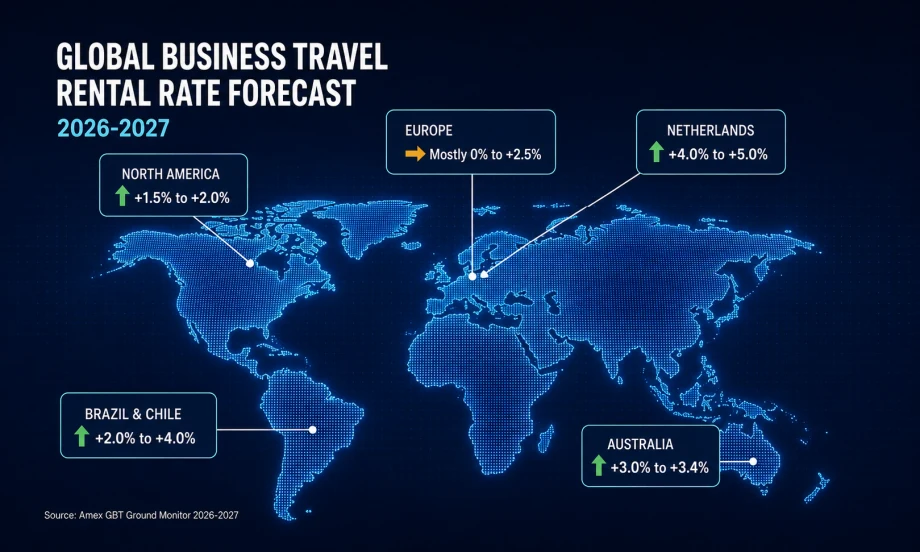
Amex GBT expects relatively modest rate growth in North America because vehicle availability has improved and economic growth remains restrained.
Auto Rental News
Business travel car rental rates in the United States and Canada are forecast to increase between 1.5% and 2% in 2026-27, according to the latest Ground Monitor report from American Express Global Business Travel.
The forecast is based on car rental activity within Amex GBT’s corporate travel programs and should not be interpreted as a forecast for the entire leisure and retail rental market.
Amex GBT expects relatively modest rate growth in North America because vehicle availability has improved and economic growth remains restrained. New-vehicle deliveries globally have generally kept pace with demand, allowing rental companies to rebuild fleets and bring supply more closely in line with demand.
That improved availability may limit operators’ ability to generate larger pricing gains. At the same time, several fleet ownership and operating costs remain elevated.
Amex GBT used Prophet time-series modeling and its car rental transaction data to develop the forecasts. Inflation and gross domestic product projections came from the International Monetary Fund. All forecasts are expressed in local currency.
Higher Fleet Costs Pressure Rental Operations
Rising auto insurance costs remain one source of pressure for rental companies, although the pace of those increases has moderated from recent years. Amex GBT expects providers may seek to recover some of those costs through business travel pricing.
More complex vehicle technology is also adding to acquisition, repair and downtime costs. Advanced driver-assistance systems can improve safety and the customer experience, but repairs involving cameras and sensors often require specialized labor and recalibration.
Replacing the windshield on an ADAS-equipped vehicle, for example, can add as much as $1,500 to the repair bill when sensor and camera recalibration is required, according to the report.
Recalls and downtime can also force operators to carry additional inventory to maintain availability. That requirement can affect utilization and ownership costs even as the overall supply of vehicles improves.
Softer Residual Values Change Fleet Economics
Declining used-vehicle values represent another challenge for rental operators.
During the vehicle shortage early in the decade, strong used-car demand allowed some rental companies to sell vehicles at or near their original acquisition prices. Those conditions improved fleet economics and offset a portion of the vehicle’s depreciation during its rental life.
Used EV and internal-combustion vehicle prices have since declined in the United States and Europe, reducing disposal proceeds and placing more importance on revenue generated while the vehicle remains in rental service.
Amex GBT said lower used-car income and the resulting effect on rental fleet book values could contribute to higher business travel rental rates.
Amex GBT Reports Growth in Local Surcharges
Amex GBT also said it has observed “significant growth” in the number and value of city surcharges in North America.
According to the report, the additional charges can include day-of-week surcharges and fees applied at airports. Amex GBT said charges once limited to a handful of major cities are becoming more common and increasing the customer’s total rental cost.
The report did not identify the markets experiencing the increases, quantify the average surcharge, or distinguish between government- or airport-imposed fees and provider-applied charges.
For rental companies, the finding suggests that relatively moderate growth in the base business travel rate may not fully reflect changes in the final transaction value.
Improved Vehicle Availability May Affect Corporate Sourcing
Improved vehicle availability could also change how business travel programs select rental suppliers.
During periods of severe fleet scarcity, corporate travel managers often spread volume across several providers to improve access to vehicles. With rental companies rebuilding inventories, Amex GBT said it now believes consolidating a corporate rental program with one or two providers carries less availability risk.
That could create an opportunity for rental companies to secure a larger share of a corporate customer’s volume in exchange for favorable pricing, service and availability commitments.
Outside North America, Amex GBT forecasts business travel car rental rate increases of 2% to 4% in Brazil and Chile, 3% to 3.4% in Australia and 4% to 5% in the Netherlands. France and Spain are expected to remain roughly flat, while Germany and Scandinavia could record moderate increases.
More Rental Operations

Hertz, Avis: Parsing the Q3 Headwinds and Tailwinds
Third-quarter results from Hertz and Avis show resilient pricing despite softer travel demand. Meanwhile, higher operating costs, recalls, uneven vehicle depreciation, and international weakness continue to put pressure on profits.
Read More →
How Better Cleaning Processes Improve Rental Fleet Efficiency
A consistent approach to vehicle cleaning helps rental operators reduce turnaround delays and return vehicles to service without compromising cleanliness.
Read More →
Clean on Paper: Red Flags in Exotic Car Rental Verification
A suspicious $45,000 Lamborghini booking reveals the strengths and limitations of renter verification, from forged insurance documents to coverage gaps and unauthorized drivers. (Part 2 of 3)
Read More →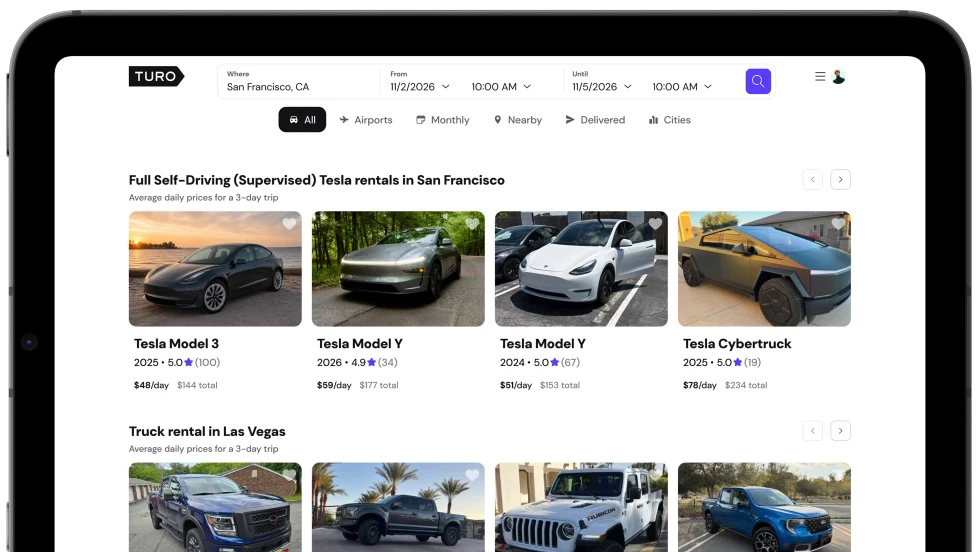
Turo and Tesla Take the Next Step Toward Autonomous Car Rentals
The partnership brings Tesla's Full Self-Driving (Supervised) technology into the rental experience, offering a glimpse of how increasingly automated vehicles could change car rental.
Read More →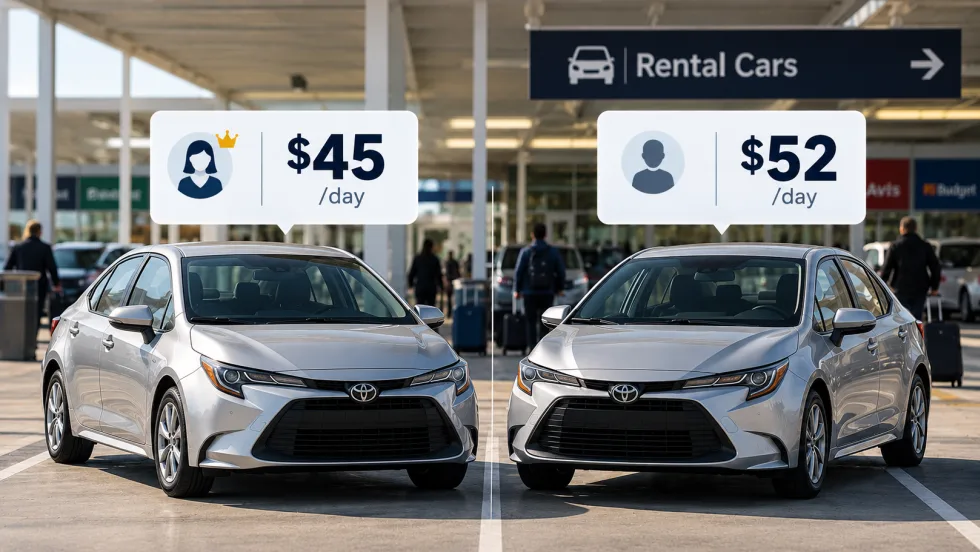
How Rental Operators Can Navigate Personalized Pricing Rules
As regulators scrutinize the use of customer data in pricing, rental operators need to know whether they can explain why one renter pays more than another.
Read More →
Direct, Broker or Hybrid? How Travel Retailers Source Rental Cars
As travel retailers weigh direct supplier relationships against third-party distribution, rental operators need to understand how those decisions affect their business.
Read More →
How Did This Independent Rental Operator Grow to 170 Vehicles in 4 Years?
With 170 vehicles across three Kentucky locations, Joel Price relies on an overseas team to handle reservations, payments, and after-hours customer service. It's one part of an unconventional approach to growing an independent rental operation.
Read More →
What Does It Take to Succeed in B2B Rentals?
The fundamentals may be familiar to daily car rental operators, but project-based truck rentals put different demands on the fleet and the business.
Read More →
NPR Builds on International Partnerships to Grow Rental Bookings
With Ana Laborde supporting broker development, NPR Auto Group is tailoring distribution strategies, rate packages, and partnerships to grow international reservations across its three brands.
Read More →
Advantage, Sixt Place Among Top Five in Annual Satisfaction Study
While Enterprise and National retain the top spots in JD Power’s 2026 rankings, the latest customer satisfaction results suggest renters can find competitive service beyond the biggest car rental names.
Read More →