




Enterprise Urges Industry to Lower Refueling Charges
Enterprise, National and Alamo charge roughly 65 percent less than what some of the other major car rental brands charge their customers for refueling charges.
As the busy Memorial Day weekend approaches, thousands of travelers may get a shock at the airport rental car counter: return a vehicle with no time to fill up the tank, only to get hit with a staggering $7-$8 per gallon refueling charge from many of the major car rental brands.
With the cost of self-serve gasoline averaging about $2 per gallon, the parent company of Enterprise Rent-A-Car, National Car Rental and Alamo Rent A Car agrees that just doesn’t add up.
Enterprise, National and Alamo charge customers only about $3 per gallon when they bring a car back to the airport without a full tank of gas (depending on market pricing). From Boston to Phoenix, that’s roughly 65 percent less than what some of the other major car rental brands charge their customers.
Enterprise, National and Alamo already led the car rental industry with the most competitive and fair refueling policies in the country. In fact, last year the Maryland Attorney General’s Office announced agreements with other rental car operators to bring their refueling prices more in line with the much lower rates charged by Enterprise, National and Alamo. At the time, the Baltimore Sun referred to Enterprise, National and Alamo’s practices as “a model in setting refueling rates.”
Airport customers continue to have several refueling options with Enterprise, National and Alamo – returning their rental vehicles full of gas, prepaying for a full tank at a discount, or asking for the tank to be refilled after returning the rental car.
“We remain committed to charging a reasonable fee to cover refueling costs,” said Matthew Darrah, senior vice president of North American operations for Enterprise, National and Alamo.
“Furthermore, because refueling rates sometimes can be a source of confusion, we’ve revised our policy to provide not only value, but also greater transparency and clarity.”
Effective immediately, Enterprise, National and Alamo airport customers will pay the local-market price of self-serve gasoline, plus a mark-up not to exceed 50 percent of the fuel cost (at all corporate-owned locations and participating franchises). “Our policy is now based on familiar and highly visible self-serve gas prices,” explained Darrah. “In the end, it is about listening to customers. It is the same approach that is behind our promise never to charge our customers a so-called Energy Recovery Fee.”
In 2008, several major car rental companies began charging customers Energy Recovery Fees on top of their extremely high refueling charges. Although gasoline prices eventually dropped, many of their Energy Recovery Fees remained. However, Enterprise, National and Alamo never implemented Energy Recovery Fees because – as Darrah noted during his keynote address at the annual Car Rental Show last month – these fees are unfair, misleading and almost impossible to calculate.
“We believe that our refueling policy and our position on arbitrary Energy Recovery Fees underscore the fact that car rental companies need to deal with consumers in a fair, honest and transparent way across all areas of service,” Darrah noted. “As the industry leader, we try to set an example on behalf of the customer – and we urge the rest of the industry to do the same.”
More Rental Operations

Turo to Launch Vehicle Delivery Service
Turo Delivered will let travelers search for vehicles that hosts can deliver directly to hotels, homes, airports, train stations, and other locations.
Read More →
Palm Beach Airport Code Change Creates Car Rental Distribution Gap
A test of rental searches under the old PBI and new DJT airport codes returned largely different sets of brands and vehicles, highlighting a potential distribution problem for rental operators.
Read More →
U-Save Continues Dominican Republic Expansion with Launch in Punta Cana
The new franchise location builds on U-Save’s existing Santo Domingo operation and will begin taking reservations for October 2026.
Read More →
When AI Books the Rental Car, Who Controls the Sale?
As AI moves from comparing rental rates to completing transactions, operators need to understand how travelers find, interpret, rank, and ultimately see their offers. (Part 2 of 2.)
Read More →
European Booked Car Rental Rates Fell 5%, Results Varied by Country
Ireland, Cyprus, and the United Kingdom saw steep declines, while booked rates rose in Poland and Hungary.
Read More →
Is It Time to Rethink Rental Categories?
As traditional economy and compact cars disappear from the market, longtime rental operator Mike DeLorenzo asks whether the industry’s familiar vehicle categories still make sense — and what operators need to rethink along with them.
Read More →
Who Owns the Rate? AI Is Creating a New Distribution Problem for Car Rental
Generative Engine Optimization asks whether AI can find a rental company, but operators also need to know whether the agent inspected enough of the market, compared equivalent offers, and presented a rate the traveler can actually book. (Part 1 of 2)
Read More →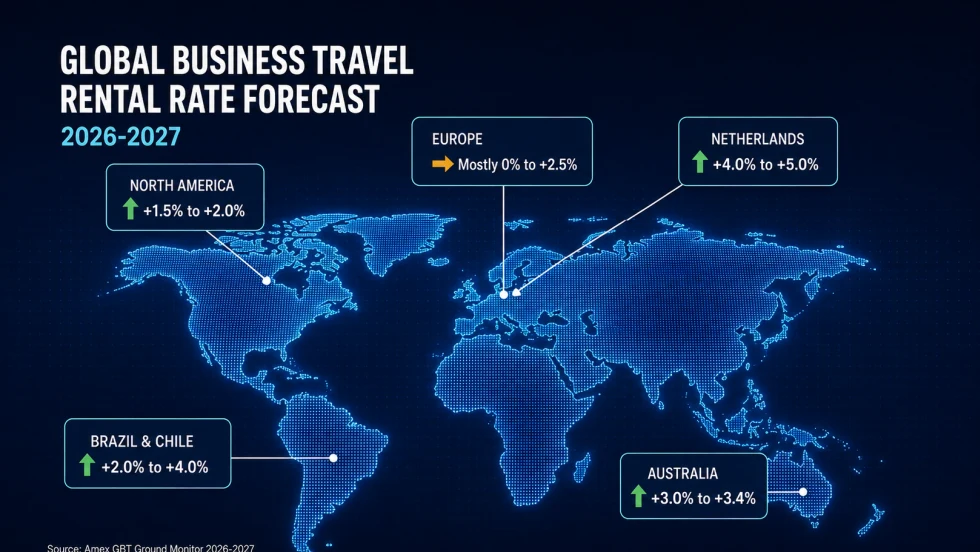
U.S. Business Travel Car Rental Rates Forecast to Rise Up to 2%
Improved fleet supply should limit pricing gains in 2026-27, while insurance, repair costs, and softer residual values continue to pressure rental operations, according to Amex GBT.
Read More →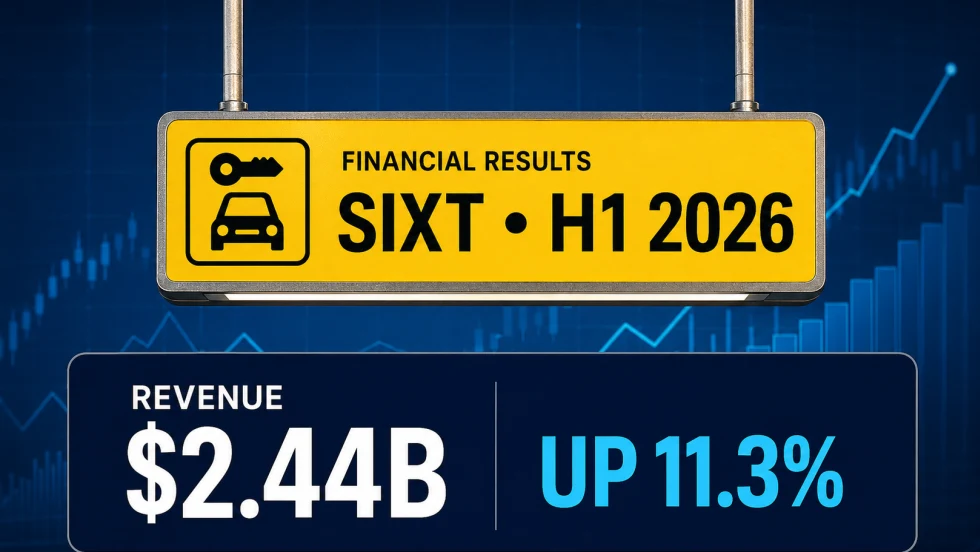
Sixt Revenue Tops $2.4 Billion in First Half of 2026
Sixt’s first-half revenue surpassed $2.4 billion for the first time as demand outpaced fleet growth, lifting utilization and earnings despite weaker consumer sentiment in North America.
Read More →
In Memoriam: Bobby Klyce, Avis Licensee Legend
The longtime Birmingham Avis operator and 2018 Auto Rental News Impact Award recipient was remembered as an advocate for independent licensees and the broader car rental industry.
Read More →