


Hertz Board Approves Separation of Equipment Rental Business
The Hertz Corp. has announced that its board of directors approved plans to separate into two independent, publicly traded companies. The companies will be “Hertz” (Hertz, Dollar, Thrifty, Firefly rental car businesses and Donlen fleet leasing) and “HERC,” the Hertz Equipment Rental Corp.
The Hertz Corp. today announced that its board of directors has approved plans to separate into two independent, publicly traded companies. The two companies will be "Hertz" — comprised of the Hertz, Dollar, Thrifty and Firefly rental car businesses as well as Donlen, a provider of fleet leasing and management services — and "HERC," the Hertz Equipment Rental Corp.
The separation is planned to be in the form of a tax-free spin-off to Hertz shareholders, and Hertz has received a private letter ruling from the Internal Revenue Service that allows Hertz to separate the businesses in a tax-efficient manner. Hertz expects the separation of HERC to close by early 2015, says the company.
Hertz will receive net cash proceeds from a HERC spin-off of approximately $2.5 billion, which will be used to pay down Hertz debt and support a newly approved $1 billion share repurchase program, says the company. Under the new share repurchase program, the majority of the shares are likely to be purchased following the HERC separation, dependent on market conditions.
The share repurchases could reach 20% of Hertz's outstanding shares of common stock, which includes the $1 billion already approved, says the company. This new program replaces the $300 million share repurchase program that Hertz announced in 2013, under which it has utilized approximately $87.5 million to repurchase Hertz shares.
Post separation, Hertz expects to maintain a target net corporate leverage ratio of between 2.5x to 3.5x net debt/EBITDA, says the company. Given Hertz's new target net corporate leverage ratio, it may opportunistically look to return additional capital to shareholders on an ongoing basis — subject to market conditions and other factors.
"The actions announced today will create separate companies, which we expect to benefit from improved financial profiles that include increased earnings stability and higher returns on capital," said Mark P. Frissora, chairman and chief executive officer of The Hertz Corp. "Our rental car and equipment rental businesses are leaders in their respective markets with valuable assets and tremendous long-term potential. Through unbundling these undervalued assets, we unleash current and future shareholder value. In fact, we believe there is a potential for multiple expansion, even if both businesses only trade in line with their peers.”
“Additionally, the separation will help each business focus on its strategic and operational performance. With respect to capital allocation, our new leverage ratios may allow for incremental return of capital to our shareholders given the current credit environment," added Frissora.
Here are some advantages to separating the equipment rental business from the car rental business, according to the Hertz Board:
Create a stronger growth profile and more competitive position for each company with enhanced management focus, resources and processes that are more directly aligned with each business's unique strategic priorities.
Optimize the companies' capital structures based on the objectives of each independent company.
Allow each business to attract and retain personnel by offering equity-linked compensation.
Create a more targeted investment opportunity with multiples and trading valuations that more accurately reflect the strengths and opportunities of each business.
Following the HERC separation, Frissora will continue to lead as Hertz’s chairman and chief executive officer. And HERC will determine and announce its board of directors and management positions as the separation plans are finalized, according to Hertz.
Originally posted on Automotive Fleet
More Rental Operations

What Does It Take to Succeed in B2B Rentals?
The fundamentals may be familiar to daily car rental operators, but project-based truck rentals put different demands on the fleet and the business.
Read More →
NPR Builds on International Partnerships to Grow Rental Bookings
With Ana Laborde supporting broker development, NPR Auto Group is tailoring distribution strategies, rate packages, and partnerships to grow international reservations across its three brands.
Read More →
Advantage, Sixt Place Among Top Five in Annual Satisfaction Study
While Enterprise and National retain the top spots in JD Power’s 2026 rankings, the latest customer satisfaction results suggest renters can find competitive service beyond the biggest car rental names.
Read More →
The $100,000 Insurance Trap in Exotic Car Rentals
Exotic rental agencies often rely on customers’ personal auto policies to protect six-figure vehicles. But policy language can dramatically change the coverage for vehicles over $100,000 MSRP.
Read More →
The Booking Is Confirmed, But Is Your Customer Ready to Drive?
For international renters, a confirmed reservation doesn’t always mean they’re eligible to drive. Earlier checks can help operators catch documentation and payment issues before the customer reaches the counter.
Read More →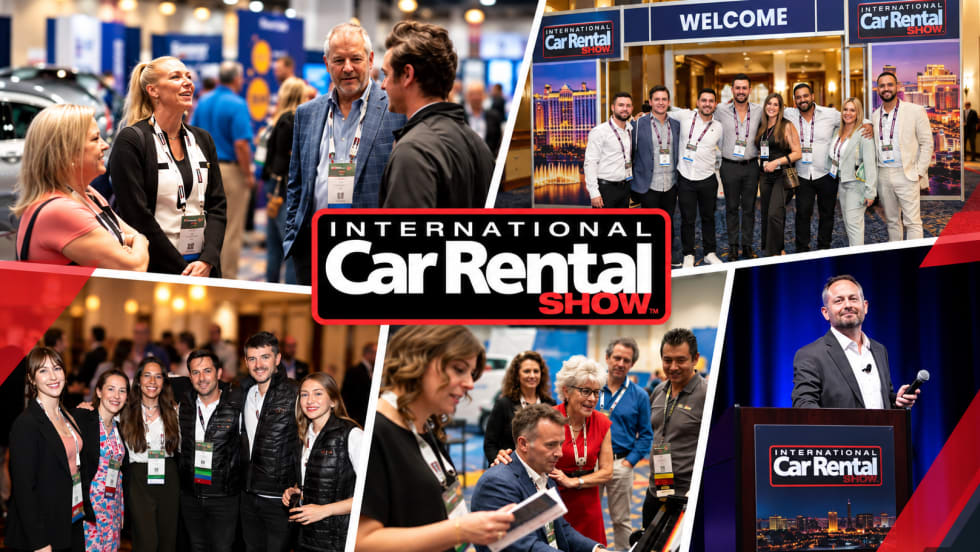
ICRS 2027 Opens Call for Papers
The International Car Rental Show seeks session proposals on the business, operational, and technology issues facing car rental operators. Submissions are due Jan. 15.
Read More →
Turo to Launch Vehicle Delivery Service
Turo Delivered will let travelers search for vehicles that hosts can deliver directly to hotels, homes, airports, train stations, and other locations.
Read More →
Palm Beach Airport Code Change Creates Car Rental Distribution Gap
A test of rental searches under the old PBI and new DJT airport codes returned largely different sets of brands and vehicles, highlighting a potential distribution problem for rental operators.
Read More →
U-Save Continues Dominican Republic Expansion with Launch in Punta Cana
The new franchise location builds on U-Save’s existing Santo Domingo operation and will begin taking reservations for October 2026.
Read More →
When AI Books the Rental Car, Who Controls the Sale?
As AI moves from comparing rental rates to completing transactions, operators need to understand how travelers find, interpret, rank, and ultimately see their offers. (Part 2 of 2.)
Read More →