




New York City Proposes New Zoning Plan to Expand Car Sharing
Under the proposal, car-share vehicles will be permitted to locate in greater numbers in higher density neighborhoods and in public parking facilities where there are concentrations of existing and potential customers. The proposal would promote greener transportation option, reducing individual car ownership, congestion and pollution in keeping with the city’s PlaNYC commitment.
New York City Planning Commissioner Amanda M. Burden announced April 26 the beginning of public review for new zoning that would promote and expand the use of car sharing.
The Department of City Planning's proposal would allow car sharing vehicles to park in garages and lots in appropriate locations with space limitations depending on neighborhood density.
Commissioner Burden said, "As part of our growing commitment to promote cleaner air and affordable transportation options to New Yorkers, we are excited to advance this zoning change to bring the benefits of car sharing to communities throughout the city. By facilitating this efficient and affordable transportation alternative, we expect to give families more choice in transportation, increase New Yorkers' mobility, reduce neighborhood parking woes and traffic congestion and ensure cleaner air, quieter streets and an improved quality of life."
The car-sharing model did not exist when the zoning resolution was written, so current zoning does not offer rules on where car-sharing vehicles can be located. The proposed rules will clarify where car-share vehicles can be located.
Under the proposal, car-share vehicles will be permitted to locate in greater numbers in higher density neighborhoods and in public parking facilities where there are concentrations of existing and potential customers. They will be limited to larger garages and lots in lower density multi-family residential districts and commercial, manufacturing and community facility parking. Car-share vehicles will generally not be permitted to be based in one- and two-family residential areas. This change, if approved, would be applicable to both new and existing garages and lots throughout the city.
Individual parking facilities can choose whether to allow access to self-serve car-sharing vehicles. The number of vehicles that car-share operators locate in an area will be determined by market demand, with vehicles placed only where they will be used and provide benefits. In addition to allowing for car-sharing vehicles to occupy up to 40 percent of the spaces in public parking lots and garages - of which there are more than 1,800 in the city - car-sharing vehicles would be permitted to occupy up to 20 percent of spaces in higher density residential parking facilities or 10 percent of the spaces in other accessory parking facilities.
Roughly 40 to 50 members typically share the use of each car-share vehicle, rather than one or two people per privately owned automobile. And national studies show that as many as a third of car-share members give up a vehicle, meaning that each car-sharing vehicle replaces the need for multiple private cars.
There are three known car share organizations currently operating in New York City, ZipCar, Connect by Hertz and Mint Cars On-Demand. The largest of these claims over 100,000 members in the metropolitan area and over 1,500 vehicles. Given the experience of car-share companies in New York City and other metropolitan areas, membership in these car-share services is likely to grow, and the industry expects the zoning will enable further expansion of the service in the city.
The car share zoning would expand on the city's PlaNYC commitment to reduce its carbon footprint and promote sustainable transportation for a greener and healthier city.
In October 2009, the New York City Department of Transportation also announced plans for a pilot a car-share program in Lower Manhattan that would reduce the agency's fleet size. The car share vehicles would be used by the agency during business hours, and made available to individual car-share subscribers during evenings and weekends, expanding the availability of car sharing when demand is greatest.
More Rental Operations

Turo to Launch Vehicle Delivery Service
Turo Delivered will let travelers search for vehicles that hosts can deliver directly to hotels, homes, airports, train stations, and other locations.
Read More →
Palm Beach Airport Code Change Creates Car Rental Distribution Gap
A test of rental searches under the old PBI and new DJT airport codes returned largely different sets of brands and vehicles, highlighting a potential distribution problem for rental operators.
Read More →
U-Save Continues Dominican Republic Expansion with Launch in Punta Cana
The new franchise location builds on U-Save’s existing Santo Domingo operation and will begin taking reservations for October 2026.
Read More →
When AI Books the Rental Car, Who Controls the Sale?
As AI moves from comparing rental rates to completing transactions, operators need to understand how travelers find, interpret, rank, and ultimately see their offers. (Part 2 of 2.)
Read More →
European Booked Car Rental Rates Fell 5%, Results Varied by Country
Ireland, Cyprus, and the United Kingdom saw steep declines, while booked rates rose in Poland and Hungary.
Read More →
Is It Time to Rethink Rental Categories?
As traditional economy and compact cars disappear from the market, longtime rental operator Mike DeLorenzo asks whether the industry’s familiar vehicle categories still make sense — and what operators need to rethink along with them.
Read More →
Who Owns the Rate? AI Is Creating a New Distribution Problem for Car Rental
Generative Engine Optimization asks whether AI can find a rental company, but operators also need to know whether the agent inspected enough of the market, compared equivalent offers, and presented a rate the traveler can actually book. (Part 1 of 2)
Read More →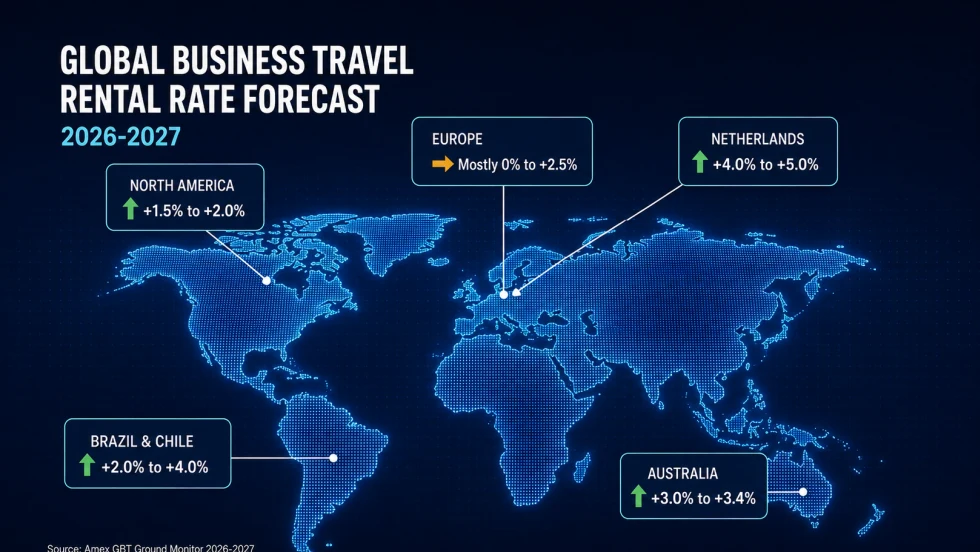
U.S. Business Travel Car Rental Rates Forecast to Rise Up to 2%
Improved fleet supply should limit pricing gains in 2026-27, while insurance, repair costs, and softer residual values continue to pressure rental operations, according to Amex GBT.
Read More →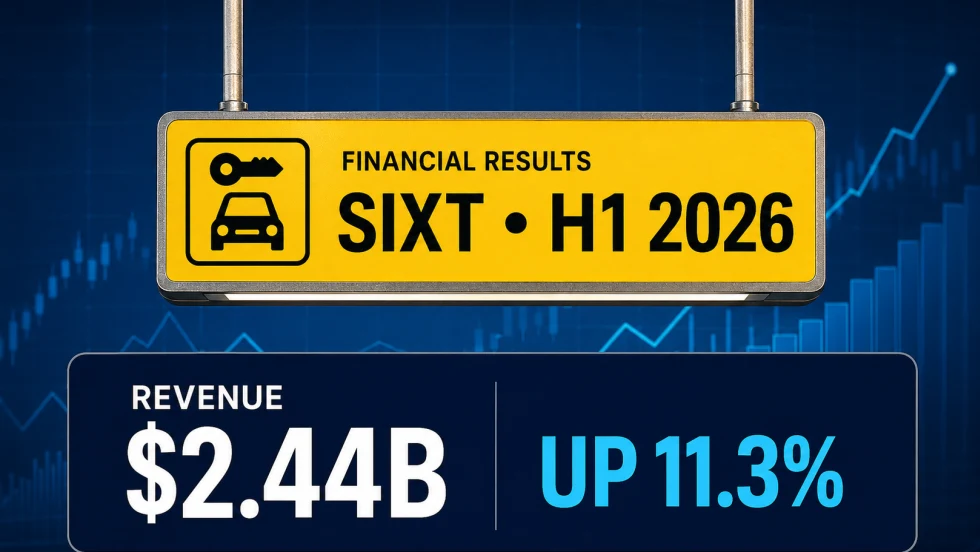
Sixt Revenue Tops $2.4 Billion in First Half of 2026
Sixt’s first-half revenue surpassed $2.4 billion for the first time as demand outpaced fleet growth, lifting utilization and earnings despite weaker consumer sentiment in North America.
Read More →
In Memoriam: Bobby Klyce, Avis Licensee Legend
The longtime Birmingham Avis operator and 2018 Auto Rental News Impact Award recipient was remembered as an advocate for independent licensees and the broader car rental industry.
Read More →