




Volvo to Supply Autonomous Vehicles to Uber
Volvo and Uber have formed a $300-million partnership in which the Swedish automaker will supply fully autonomous vehicles to Uber for use by the ride-sharing service by 2021.
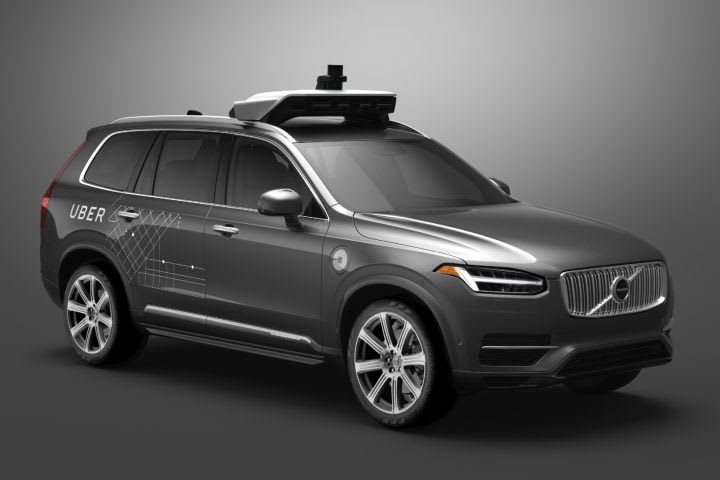
Photo courtesy of Volvo.
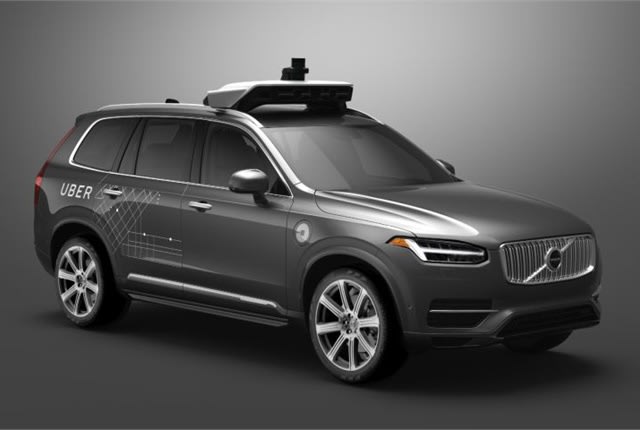
Photo courtesy of Volvo.
Volvo and Uber have formed a $300-million partnership in which the Swedish automaker will supply fully autonomous vehicles to Uber for use by the ride-sharing service by 2021.
Volvo will also supply modified XC90 SUVs for use in Pittsburgh later this month, reports Bloomberg. Uber will allow customers summon the self-driving cars from their mobile phones.
The joint project will focus on the development of new base vehicles using the latest autonomous driving technologies, including driverless cars, Volvo announced. Volvo Cars will manufacture the base vehicles for purchase by Uber. Volvo and Uber are contributing a combined $300 million to the project.
“Both Uber and Volvo will use the same base vehicle for the next stage of their own autonomous car strategies,” according to a Volvo statement. “This will involve Uber adding its own self-developed autonomous driving systems to the Volvo base vehicle. Volvo will use the same base vehicle for the next stage of its own autonomous car strategy, which will involve fully autonomous driving.”
The new base vehicle will be developed on Volvo Cars’ Scalable Product Architecture (SPA), currently used on Volvo’s XC90, S90, and V90.
Volvo Cars and Uber engineers will work closely together on project development, extending the scalability of the SPA platform to include all needed safety, redundancy, and new features required for autonomous vehicles, according to Volvo.
In related news, Uber announced it has acquired Otto, a driverless-truck startup founded earlier this year.
Originally posted on Automotive Fleet
More Rental Operations

The $100,000 Insurance Trap in Exotic Car Rentals
Exotic rental agencies often rely on customers’ personal auto policies to protect six-figure vehicles. But policy language can dramatically change the coverage for vehicles over $100,000 MSRP.
Read More →
The Booking Is Confirmed, But Is Your Customer Ready to Drive?
For international renters, a confirmed reservation doesn’t always mean they’re eligible to drive. Earlier checks can help operators catch documentation and payment issues before the customer reaches the counter.
Read More →
ICRS 2027 Opens Call for Papers
The International Car Rental Show seeks session proposals on the business, operational, and technology issues facing car rental operators. Submissions are due Jan. 15.
Read More →
Turo to Launch Vehicle Delivery Service
Turo Delivered will let travelers search for vehicles that hosts can deliver directly to hotels, homes, airports, train stations, and other locations.
Read More →
Palm Beach Airport Code Change Creates Car Rental Distribution Gap
A test of rental searches under the old PBI and new DJT airport codes returned largely different sets of brands and vehicles, highlighting a potential distribution problem for rental operators.
Read More →
U-Save Continues Dominican Republic Expansion with Launch in Punta Cana
The new franchise location builds on U-Save’s existing Santo Domingo operation and will begin taking reservations for October 2026.
Read More →
When AI Books the Rental Car, Who Controls the Sale?
As AI moves from comparing rental rates to completing transactions, operators need to understand how travelers find, interpret, rank, and ultimately see their offers. (Part 2 of 2.)
Read More →
European Booked Car Rental Rates Fell 5%, Results Varied by Country
Ireland, Cyprus, and the United Kingdom saw steep declines, while booked rates rose in Poland and Hungary.
Read More →
Is It Time to Rethink Rental Categories?
As traditional economy and compact cars disappear from the market, longtime rental operator Mike DeLorenzo asks whether the industry’s familiar vehicle categories still make sense — and what operators need to rethink along with them.
Read More →
Who Owns the Rate? AI Is Creating a New Distribution Problem for Car Rental
Generative Engine Optimization asks whether AI can find a rental company, but operators also need to know whether the agent inspected enough of the market, compared equivalent offers, and presented a rate the traveler can actually book. (Part 1 of 2)
Read More →